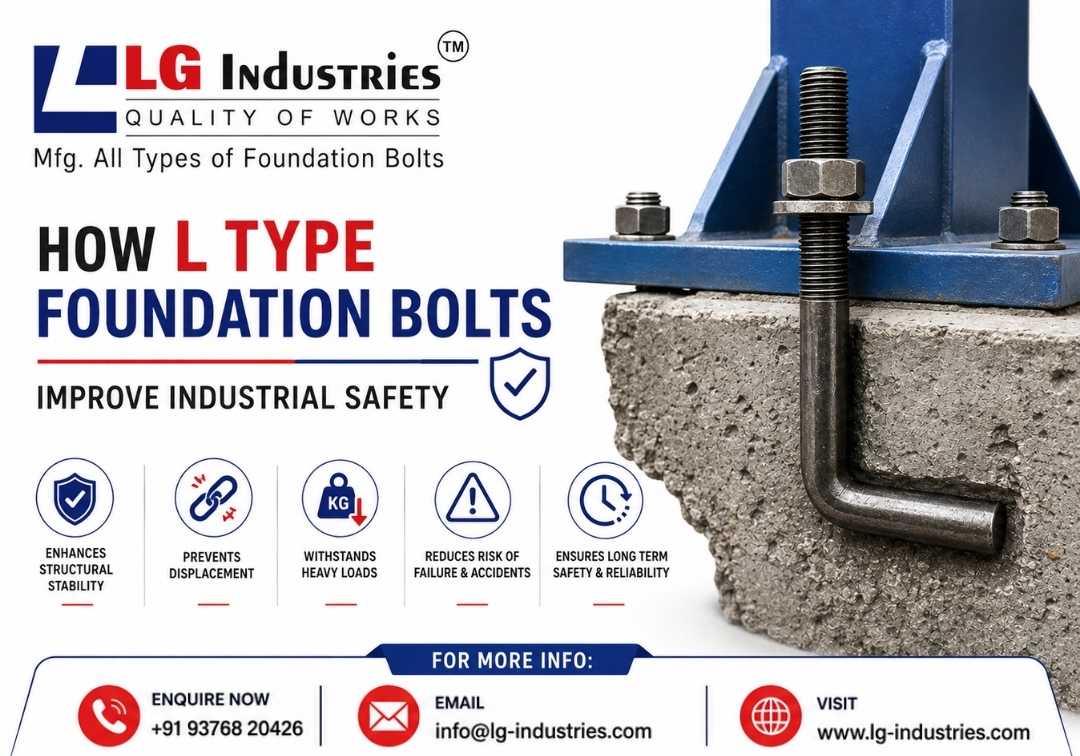
Why Choose L Type Foundation Bolts?
A strong structure begins with a strong connection. When steel columns, machinery, structural frames, or heavy equipment need to be firmly anchored to a concrete base, L Type Foundation Bolts provide a practical and dependable fastening solution.
Unlike ordinary fasteners, these bolts are designed to become an integral part of the foundation. Their bent L-shaped profile provides a mechanical anchoring effect inside concrete, helping resist movement, vibration, and pulling forces.
Whether you are sourcing fasteners for a factory project, industrial shed, steel structure, equipment foundation, or infrastructure application, selecting the right Foundation Bolt can directly influence installation quality and long-term stability.
This guide explains how L-type foundation bolts work, where they are used, why MS foundation bolts remain popular, and what buyers should check before placing an order.
Why L Type Foundation Bolts Matter in Industrial Construction
Industrial construction projects require reliable anchoring systems to handle static loads, vibration, wind forces, temperature changes, and operational movement. L-Type Foundation Bolts help create a strong connection between steel structures and concrete foundations, supporting stability, alignment, and long-term performance.
01. Strong Steel-to-Concrete Connection
L-shaped foundation bolts provide an embedded section that grips the surrounding concrete and helps resist movement. The threaded upper portion allows base plates and structural components to be securely fastened with suitable nuts and washers.
Key benefits include:
- Strong connection between steel and concrete
- Secure positioning of base plates
- Improved resistance to structural movement
- Easy fastening with nuts and washers
02. Better Stability Under Heavy Loads
Industrial machinery and structural frames can experience significant loads during operation. A properly installed L Foundation Bolt helps hold the base plate securely in position and reduces unwanted movement.
When selecting the bolt, important factors include:
- Bolt diameter and length
- Material and strength grade
- Required embedment depth
- Concrete strength
- Application-specific load requirements
Therefore, choosing the correct Foundation Bolt can improve the stability and reliability of industrial structures.
03. Effective Load Transfer
Foundation bolts transfer forces from the supported structure into the concrete foundation. Depending on the application, these forces may include tension, shear, compression, or a combination of different loads.
Engineers should consider:
- Load direction and magnitude
- Bolt spacing
- Edge distance
- Embedment length
- Concrete foundation strength
- Installation and tightening requirements
Proper consideration of these factors helps ensure that the anchoring system performs effectively under expected operating conditions.
04. Resistance to Vibration and Movement
Industrial equipment such as pumps, compressors, motors, conveyors, and heavy machinery can generate continuous vibration. Over time, repeated movement can affect alignment and connection stability if the anchoring system is not properly designed.
A correctly installed L Type Foundation Bolt can help:
- Minimize unwanted movement
- Maintain base plate alignment
- Improve equipment stability
- Support reliable long-term operation
Consequently, L Type Foundation Bolts are an important fastening solution for industrial construction where strength, stability, and dependable anchoring are required.
Key Benefits of Foundation Bolts for Industrial Structures
A dependable anchoring system provides several advantages beyond simply holding a structure in place. Foundation Bolts help create secure connections between concrete foundations and steel structures while supporting accurate installation, equipment stability, and long-term structural performance.
01. Secure Anchoring for Heavy Structures
Foundation anchoring creates a direct connection between the concrete base and the supported structure. As a result, steel columns, equipment supports, base frames, and other heavy components can remain securely positioned.
Key advantages include:
- Secure connection between concrete and steel
- Better positioning of structural components
- Improved resistance to unwanted movement
- Suitable configurations for different load requirements
Therefore, project designers can select appropriate bolt dimensions and configurations according to the structural requirements.
02. Flexible Applications Across Industrial Projects
Industrial construction includes manufacturing plants, warehouses, energy facilities, process plants, infrastructure projects, and equipment foundations. Each application may have different anchoring requirements.
MS Foundation Bolts can be suitable for many general structural applications when their material, dimensions, and configuration meet the engineering requirements.
Common applications include:
- Steel columns and structural frames
- Equipment support foundations
- Base plates and machinery frames
- Industrial buildings and warehouses
03. Reliable Support for Steel Structures
Steel structures require accurate and stable foundation connections. During construction, contractors position the anchor bolts according to the approved foundation layout. Afterward, the base plate is placed over the projecting threaded sections and secured using compatible nuts and washers.
This installation method can provide:
- Accurate base plate positioning
- Stable structural connections
- Proper alignment during erection
- Easier adjustment during installation
Consequently, correctly positioned Foundation Bolts can contribute to a strong and dependable steel-to-concrete connection.
04. Stable Foundations for Heavy Machinery
Industrial machinery needs stable foundations to maintain proper alignment during operation. Pumps, compressors, motors, generators, and processing equipment can produce vibration and operational forces.
A suitable MS Foundation Bolt can provide the threaded connection required for securing machinery or support frames.
Important considerations include:
- Equipment weight and operating loads
- Vibration levels
- Bolt diameter and embedment
- Foundation design
- Nut and washer compatibility
Proper anchoring can help minimize unwanted movement and support reliable equipment operation.
05. Long-Term Structural Reliability
Industrial structures often operate for many years under demanding environmental and mechanical conditions. Therefore, material selection, thread quality, corrosion protection, and correct installation are important for maintaining long-term performance.
When selecting Foundation Bolts, consider:
- Moisture and outdoor exposure
- Chemical or corrosive environments
- Operating temperature
- Expected structural loading
- Required corrosion protection
- Thread and nut compatibility
For general construction, mild steel can provide a practical balance of performance and cost. However, demanding environments may require corrosion-resistant materials or protective coatings. In addition, clean and properly formed threads should be inspected before installation to ensure compatibility with the selected nuts and washers.
How to Select the Right L Type Foundation Bolts
Choosing the right L-Type Foundation Bolt involves more than selecting the correct diameter. The complete fastening arrangement should match the foundation design, load requirements, installation conditions, and environmental exposure. Consider the following important factors before selecting foundation bolts:
01. Bolt Diameter
The bolt diameter should be selected according to the expected structural loads and project requirements. A suitable diameter helps provide the required strength and supports secure anchoring of the structure.
02. Overall Length
The overall length should provide sufficient embedment inside the concrete foundation while also leaving adequate exposed thread for nut engagement. Proper length ensures secure installation and reliable load transfer.
03. Material Selection
The material should be chosen according to the load conditions and surrounding environment. MS Foundation Bolts are commonly used for many structural applications, while suitable material grades can be selected for demanding or corrosive environments.
04. Thread Specification
Correct thread dimensions are essential for proper nut engagement and smooth installation. Matching the thread specification with the required nuts helps create a secure and dependable fastening connection.
05. Bend Dimensions
The L-shaped bent section should match the required anchoring depth and foundation arrangement. Proper bend dimensions help the bolt achieve effective anchorage within the concrete foundation.
06. Surface Protection
Surface protection should be considered when the bolts are exposed to moisture, chemicals, or other corrosive conditions. Galvanizing or another suitable protective finish can help improve corrosion resistance and extend service life.
07. Manufacturing Accuracy
Accurate manufacturing ensures consistent bolt dimensions, proper bends, and clean threads. This can make installation easier, reduce assembly problems, and support reliable performance across multiple foundation bolt installations.
Comparison of Foundation Bolt Types for Industrial Applications
Frequently Asked Questions About L Type Foundation Bolts
An L Type Foundation Bolt is primarily used to anchor steel structures, machinery, and fabricated components securely to concrete foundations. Its bent end provides mechanical anchoring within the foundation.
The bend provides additional mechanical resistance inside concrete. It helps prevent the embedded bolt from pulling straight out when the connected structure experiences an upward or tensile force.
Yes. L Foundation Bolts can be manufactured in different diameters, lengths, thread lengths, and bend dimensions depending on the project requirement and manufacturing capability.
MS Foundation Bolts can be used outdoors when their material and protective finish are suitable for the environmental conditions. Corrosive environments may require additional protection or an alternative material.
Provide the required diameter, total length, threaded length, bend dimensions, material specification, quantity, surface finish, and drawing if available. These details help reduce ordering errors.
They are commonly positioned using templates, fixtures, or other suitable arrangements that maintain the required spacing, alignment, and projection while concrete is placed.
No FAQ found.
Yes, they are commonly used for anchoring machinery and equipment. However, the Foundation Bolt size and material must be selected according to the equipment loads, vibration, foundation design, and engineering requirements.
Common causes include incorrect spacing, poor alignment, inadequate projection, damaged threads, inaccurate dimensions, or movement during concrete placement.
In many structural applications, washers and nuts are used with the exposed threaded section. The exact arrangement should follow the approved engineering design and fastening specification.
Yes. Depending on the application, suitable surface treatments can be considered to improve corrosion resistance and service life. The required finish should be specified before production.
Neither type is universally better. The correct design depends on the foundation configuration, load conditions, embedment requirements, installation method, and engineering specification.
A specialized manufacturer can provide better control over dimensions, threading, bending, material selection, customization, and production consistency, which is valuable for project-specific requirements.
No FAQ found.
Final Thoughts on L Type Foundation Bolts for Industrial Safety
A foundation is only as dependable as the connection between the structure and its supporting base. L Type Foundation Bolts offer a straightforward and effective anchoring solution for steel structures, machinery, industrial equipment, and fabricated assemblies.
From standard MS Foundation Bolts to customized L Foundation Bolt requirements, the right product should be selected according to load, dimensions, material, environment, and installation conditions.
If you are looking for dependable Foundation Bolts for an industrial or construction project, work with a manufacturer that understands both the fastening product and the application behind it. The right technical specifications today can help prevent costly installation problems tomorrow.
Need customized L-type foundation bolts? Contact LG Industries for your project requirements, dimensions, quantities, and manufacturing specifications.