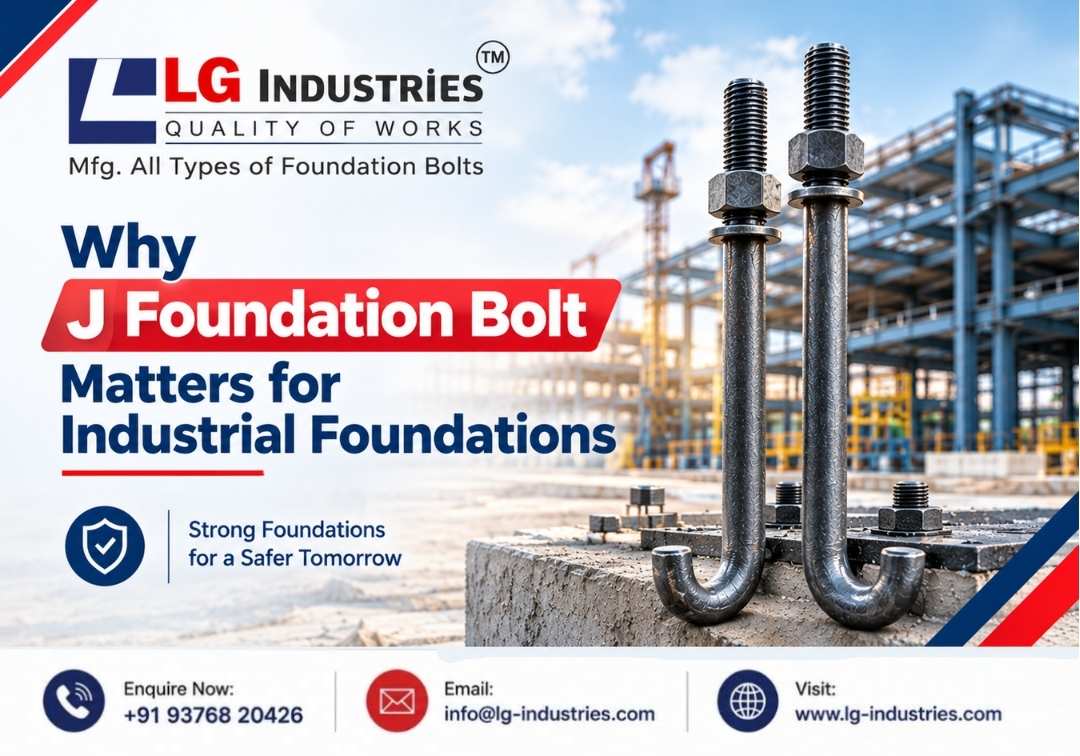
How L Type Foundation Bolts Improve Industrial Safety

L Type Foundation Bolts for Safer Industrial Structures

Why Choose L Type Foundation Bolts? 

A strong structure begins with a strong connection. When steel columns, machinery, structural frames, or heavy equipment need to be firmly anchored to a concrete base, L Type Foundation Bolts provide a practical and dependable fastening solution.

Unlike ordinary fasteners, these bolts are designed to become an integral part of the foundation. Their bent L-shaped profile provides a mechanical anchoring effect inside concrete, helping resist movement, vibration, and pulling forces.

Whether you are sourcing fasteners for a factory project, industrial shed, steel structure, equipment foundation, or infrastructure application, selecting the right Foundation Bolt can directly influence installation quality and long-term stability.

This guide explains how L-type foundation bolts work, where they are used, why MS foundation bolts remain popular, and what buyers should check before placing an order.

Why L Type Foundation Bolts Matter in Industrial Construction

Industrial construction projects require reliable anchoring systems to handle static loads, vibration, wind forces, temperature changes, and operational movement. L-Type Foundation Bolts help create a strong connection between steel structures and concrete foundations, supporting stability, alignment, and long-term performance.

01. Strong Steel-to-Concrete Connection

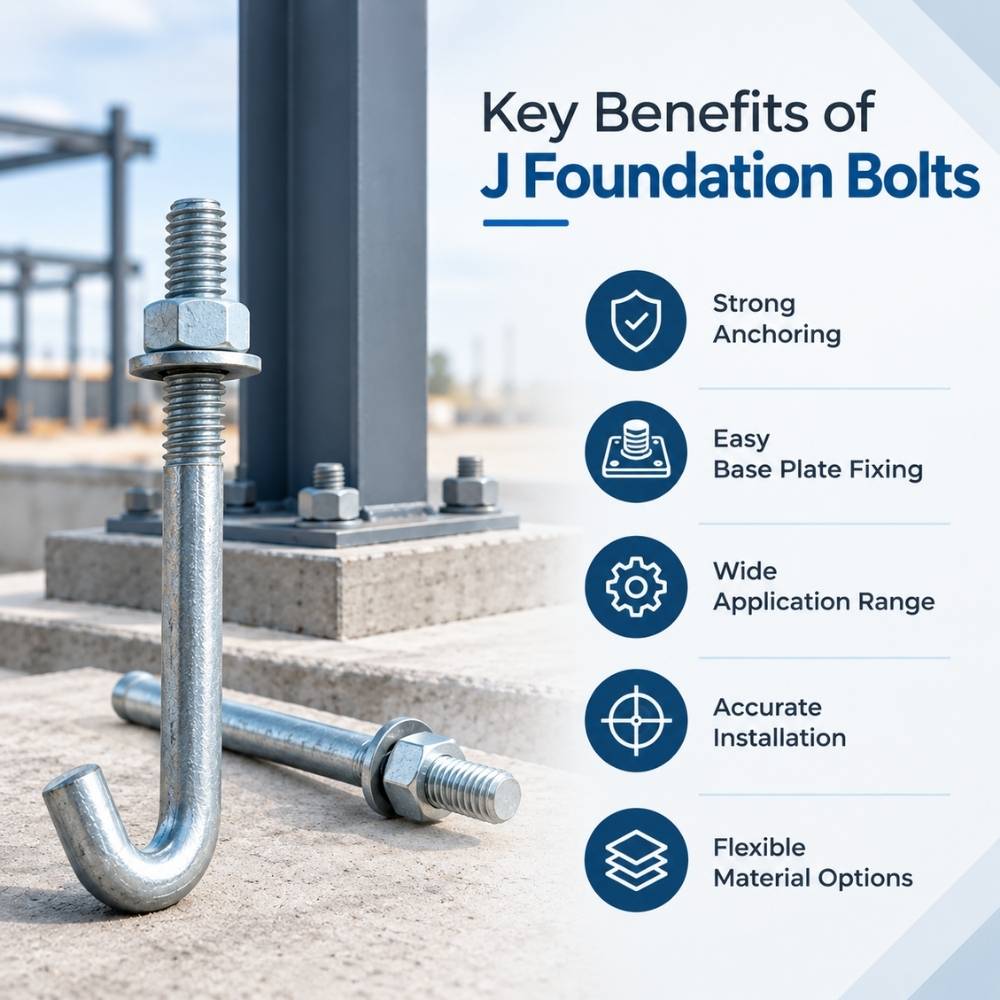
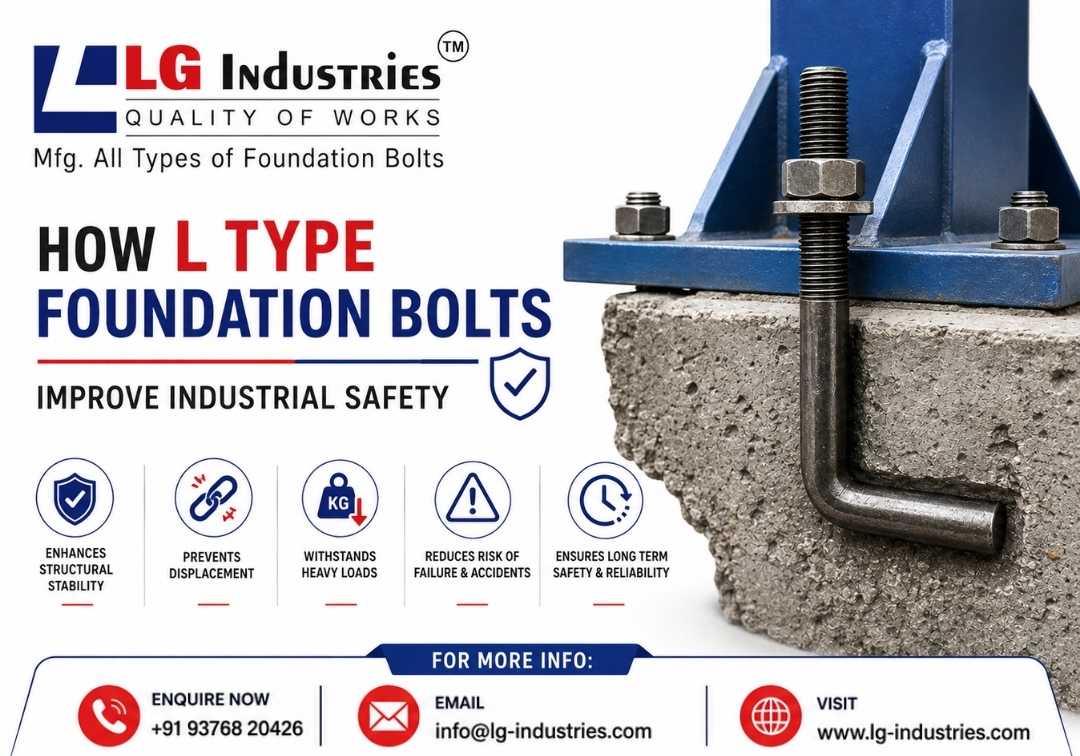
L-shaped foundation bolts provide an embedded section that grips the surrounding concrete and helps resist movement. The threaded upper portion allows base plates and structural components to be securely fastened with suitable nuts and washers.

Key benefits include:

  • Strong connection between steel and concrete
  • Secure positioning of base plates
  • Improved resistance to structural movement
  • Easy fastening with nuts and washers

02. Better Stability Under Heavy Loads

Industrial machinery and structural frames can experience significant loads during operation. A properly installed L Foundation Bolt helps hold the base plate securely in position and reduces unwanted movement.

When selecting the bolt, important factors include:

  • Bolt diameter and length
  • Material and strength grade
  • Required embedment depth
  • Concrete strength
  • Application-specific load requirements

Therefore, choosing the correct Foundation Bolt can improve the stability and reliability of industrial structures.

03. Effective Load Transfer

Foundation bolts transfer forces from the supported structure into the concrete foundation. Depending on the application, these forces may include tension, shear, compression, or a combination of different loads.

Engineers should consider:

  • Load direction and magnitude
  • Bolt spacing
  • Edge distance
  • Embedment length
  • Concrete foundation strength
  • Installation and tightening requirements

Proper consideration of these factors helps ensure that the anchoring system performs effectively under expected operating conditions.

04. Resistance to Vibration and Movement

Industrial equipment such as pumps, compressors, motors, conveyors, and heavy machinery can generate continuous vibration. Over time, repeated movement can affect alignment and connection stability if the anchoring system is not properly designed.

A correctly installed L Type Foundation Bolt can help:

  • Minimize unwanted movement
  • Maintain base plate alignment
  • Improve equipment stability
  • Support reliable long-term operation

Consequently, L Type Foundation Bolts are an important fastening solution for industrial construction where strength, stability, and dependable anchoring are required.

Key Benefits of Foundation Bolts for Industrial Structures

A dependable anchoring system provides several advantages beyond simply holding a structure in place. Foundation Bolts help create secure connections between concrete foundations and steel structures while supporting accurate installation, equipment stability, and long-term structural performance.

01. Secure Anchoring for Heavy Structures

Foundation anchoring creates a direct connection between the concrete base and the supported structure. As a result, steel columns, equipment supports, base frames, and other heavy components can remain securely positioned.

Key advantages include:

  • Secure connection between concrete and steel
  • Better positioning of structural components
  • Improved resistance to unwanted movement
  • Suitable configurations for different load requirements

Therefore, project designers can select appropriate bolt dimensions and configurations according to the structural requirements.

02. Flexible Applications Across Industrial Projects

Industrial construction includes manufacturing plants, warehouses, energy facilities, process plants, infrastructure projects, and equipment foundations. Each application may have different anchoring requirements.

MS Foundation Bolts can be suitable for many general structural applications when their material, dimensions, and configuration meet the engineering requirements.

Common applications include:

  • Steel columns and structural frames
  • Equipment support foundations
  • Base plates and machinery frames
  • Industrial buildings and warehouses

03. Reliable Support for Steel Structures

Steel structures require accurate and stable foundation connections. During construction, contractors position the anchor bolts according to the approved foundation layout. Afterward, the base plate is placed over the projecting threaded sections and secured using compatible nuts and washers.

This installation method can provide:

  • Accurate base plate positioning
  • Stable structural connections
  • Proper alignment during erection
  • Easier adjustment during installation

Consequently, correctly positioned Foundation Bolts can contribute to a strong and dependable steel-to-concrete connection.

04. Stable Foundations for Heavy Machinery

Industrial machinery needs stable foundations to maintain proper alignment during operation. Pumps, compressors, motors, generators, and processing equipment can produce vibration and operational forces.

A suitable MS Foundation Bolt can provide the threaded connection required for securing machinery or support frames.

Important considerations include:

  • Equipment weight and operating loads
  • Vibration levels
  • Bolt diameter and embedment
  • Foundation design
  • Nut and washer compatibility

Proper anchoring can help minimize unwanted movement and support reliable equipment operation.

05. Long-Term Structural Reliability

Industrial structures often operate for many years under demanding environmental and mechanical conditions. Therefore, material selection, thread quality, corrosion protection, and correct installation are important for maintaining long-term performance.

When selecting Foundation Bolts, consider:

  • Moisture and outdoor exposure
  • Chemical or corrosive environments
  • Operating temperature
  • Expected structural loading
  • Required corrosion protection
  • Thread and nut compatibility

For general construction, mild steel can provide a practical balance of performance and cost. However, demanding environments may require corrosion-resistant materials or protective coatings. In addition, clean and properly formed threads should be inspected before installation to ensure compatibility with the selected nuts and washers.

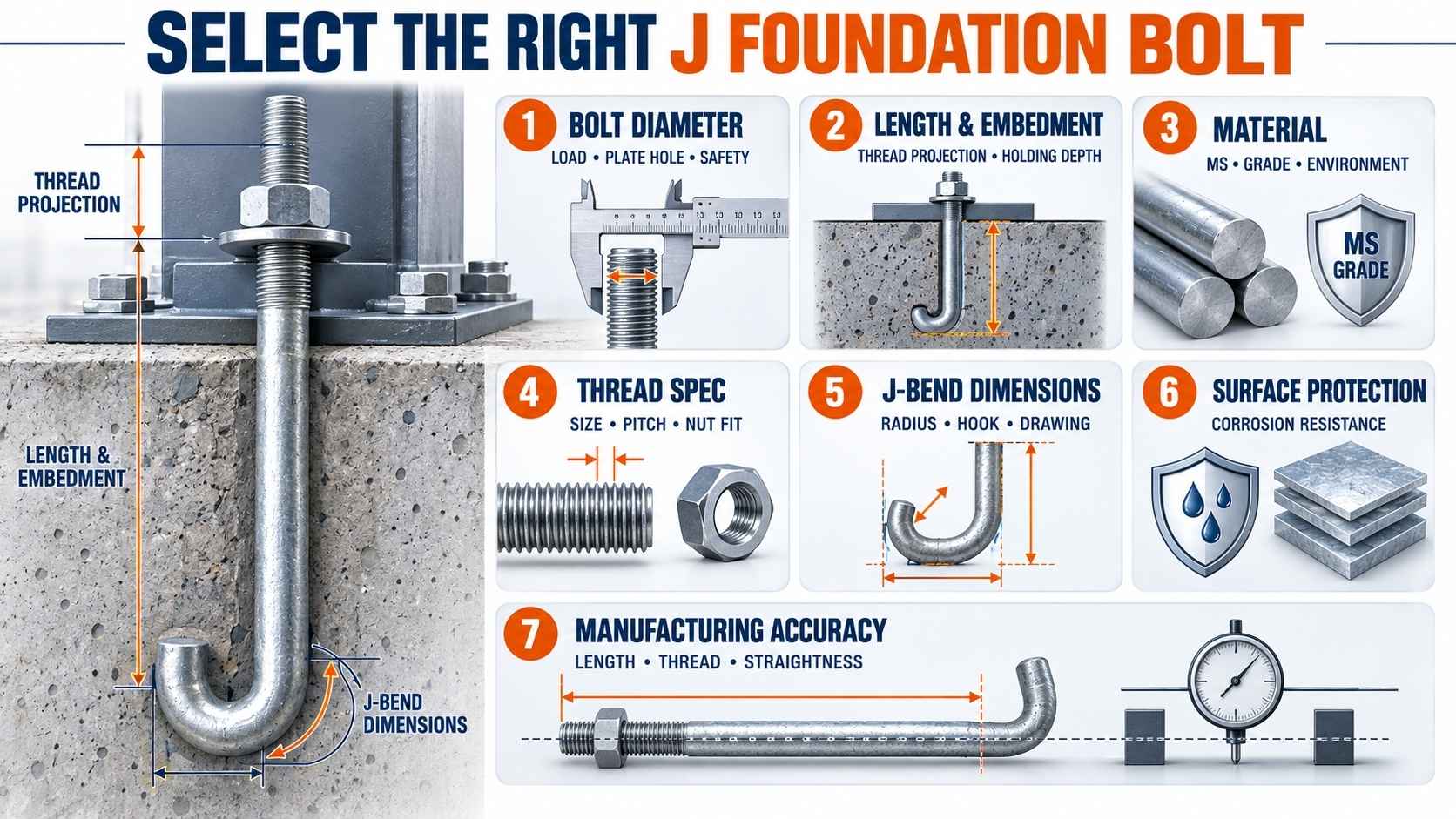
How to Select the Right L Type Foundation Bolts

Choosing the right L-Type Foundation Bolt involves more than selecting the correct diameter. The complete fastening arrangement should match the foundation design, load requirements, installation conditions, and environmental exposure. Consider the following important factors before selecting foundation bolts:

01. Bolt Diameter

The bolt diameter should be selected according to the expected structural loads and project requirements. A suitable diameter helps provide the required strength and supports secure anchoring of the structure.

02. Overall Length

The overall length should provide sufficient embedment inside the concrete foundation while also leaving adequate exposed thread for nut engagement. Proper length ensures secure installation and reliable load transfer.

03. Material Selection

The material should be chosen according to the load conditions and surrounding environment. MS Foundation Bolts are commonly used for many structural applications, while suitable material grades can be selected for demanding or corrosive environments.

04. Thread Specification

Correct thread dimensions are essential for proper nut engagement and smooth installation. Matching the thread specification with the required nuts helps create a secure and dependable fastening connection.

05. Bend Dimensions

The L-shaped bent section should match the required anchoring depth and foundation arrangement. Proper bend dimensions help the bolt achieve effective anchorage within the concrete foundation.

06. Surface Protection

Surface protection should be considered when the bolts are exposed to moisture, chemicals, or other corrosive conditions. Galvanizing or another suitable protective finish can help improve corrosion resistance and extend service life.

07. Manufacturing Accuracy

Accurate manufacturing ensures consistent bolt dimensions, proper bends, and clean threads. This can make installation easier, reduce assembly problems, and support reliable performance across multiple foundation bolt installations.

Comparison of Foundation Bolt Types for Industrial Applications

Foundation Bolt Type Common Industrial Use Main Advantage Important Consideration
L Foundation Bolt Machinery and structural supports Secure structural connection Select suitable diameter and length
MS Foundation Bolt General industrial construction Practical and economical Protect against corrosion where required
MS Foundation Bolts Heavy equipment and steel structures Reliable load support Material grade should match project needs
Foundation Bolts Industrial foundations and equipment Versatile anchoring solution Proper installation is important

Frequently Asked Questions About L Type Foundation Bolts

An L Type Foundation Bolt is primarily used to anchor steel structures, machinery, and fabricated components securely to concrete foundations. Its bent end provides mechanical anchoring within the foundation.

Was this helpful?

The bend provides additional mechanical resistance inside concrete. It helps prevent the embedded bolt from pulling straight out when the connected structure experiences an upward or tensile force.

Was this helpful?

Yes. L Foundation Bolts can be manufactured in different diameters, lengths, thread lengths, and bend dimensions depending on the project requirement and manufacturing capability.

Was this helpful?

MS Foundation Bolts can be used outdoors when their material and protective finish are suitable for the environmental conditions. Corrosive environments may require additional protection or an alternative material.

Was this helpful?

Provide the required diameter, total length, threaded length, bend dimensions, material specification, quantity, surface finish, and drawing if available. These details help reduce ordering errors.

Was this helpful?

They are commonly positioned using templates, fixtures, or other suitable arrangements that maintain the required spacing, alignment, and projection while concrete is placed.

Was this helpful?

Yes, they are commonly used for anchoring machinery and equipment. However, the Foundation Bolt size and material must be selected according to the equipment loads, vibration, foundation design, and engineering requirements.

Was this helpful?

Common causes include incorrect spacing, poor alignment, inadequate projection, damaged threads, inaccurate dimensions, or movement during concrete placement.

Was this helpful?

In many structural applications, washers and nuts are used with the exposed threaded section. The exact arrangement should follow the approved engineering design and fastening specification.

Was this helpful?

Yes. Depending on the application, suitable surface treatments can be considered to improve corrosion resistance and service life. The required finish should be specified before production.

Was this helpful?

Neither type is universally better. The correct design depends on the foundation configuration, load conditions, embedment requirements, installation method, and engineering specification.

Was this helpful?

A specialized manufacturer can provide better control over dimensions, threading, bending, material selection, customization, and production consistency, which is valuable for project-specific requirements.

Was this helpful?

Final Thoughts on L Type Foundation Bolts for Industrial Safety 

A foundation is only as dependable as the connection between the structure and its supporting base. L Type Foundation Bolts offer a straightforward and effective anchoring solution for steel structures, machinery, industrial equipment, and fabricated assemblies.

From standard MS Foundation Bolts to customized L Foundation Bolt requirements, the right product should be selected according to load, dimensions, material, environment, and installation conditions.

If you are looking for dependable Foundation Bolts for an industrial or construction project, work with a manufacturer that understands both the fastening product and the application behind it. The right technical specifications today can help prevent costly installation problems tomorrow.

Need customized L-type foundation bolts? Contact LG Industries for your project requirements, dimensions, quantities, and manufacturing specifications.

    Why Stud Bolts Are Essential for Heavy-Duty Applications - LG Industries

    Why Stud Bolts Are Essential for Heavy-Duty Applications

    Stud Bolt Uses and Benefits

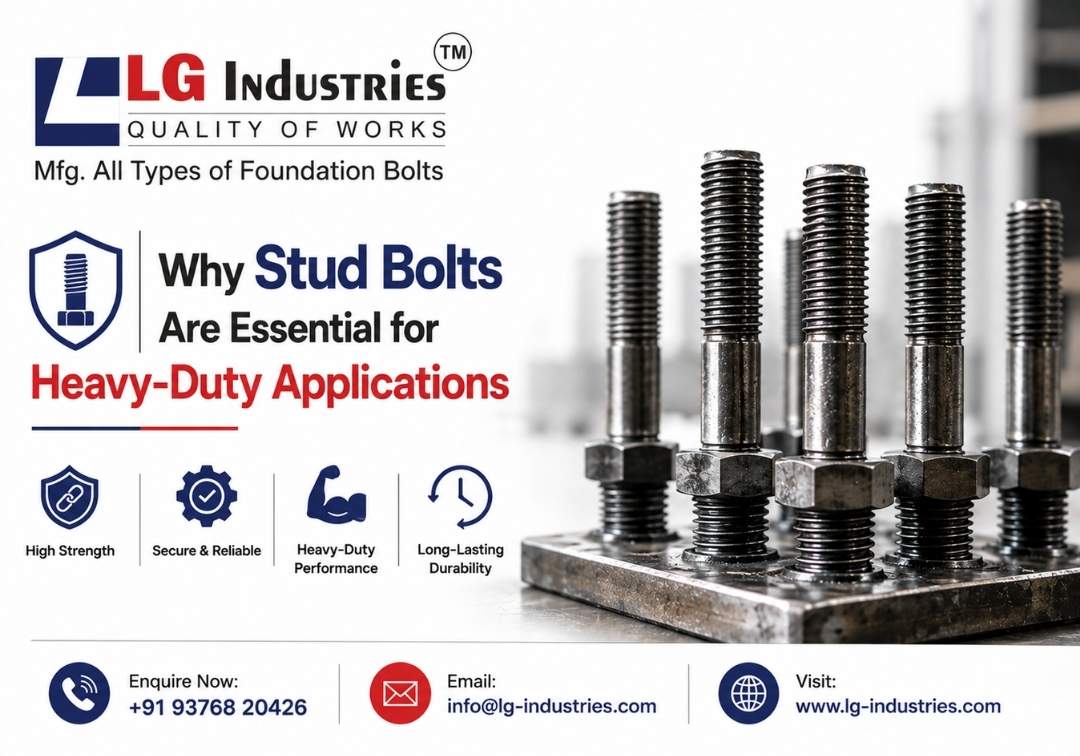
    Industrial projects need fastening components that deliver strength, accuracy, and dependable support. A Stud Bolt plays an important role in machinery assembly, steel structures, pipe flanges, heavy equipment, and foundation work. It creates a firm connection between two or more parts while allowing easy tightening, removal, and maintenance.

    However, selecting the right fastening component requires more than choosing a size. Material grade, thread type, coating, load requirement, installation environment, and dimensional accuracy all affect performance. Therefore, engineers, fabricators, contractors, and procurement teams should understand how these components work before placing an order.

    This guide explains the uses, advantages, selection process, and quality factors of industrial stud bolts. It also covers Full Thread Stud Bolt options, Stud Foundation Bolt applications, and the value of working with an experienced Stud Bolt Manufacturer.

    Common Materials Used for Manufacturing Stud Bolts

    Common Materials Used for Manufacturing Stud Bolts - LG Industries

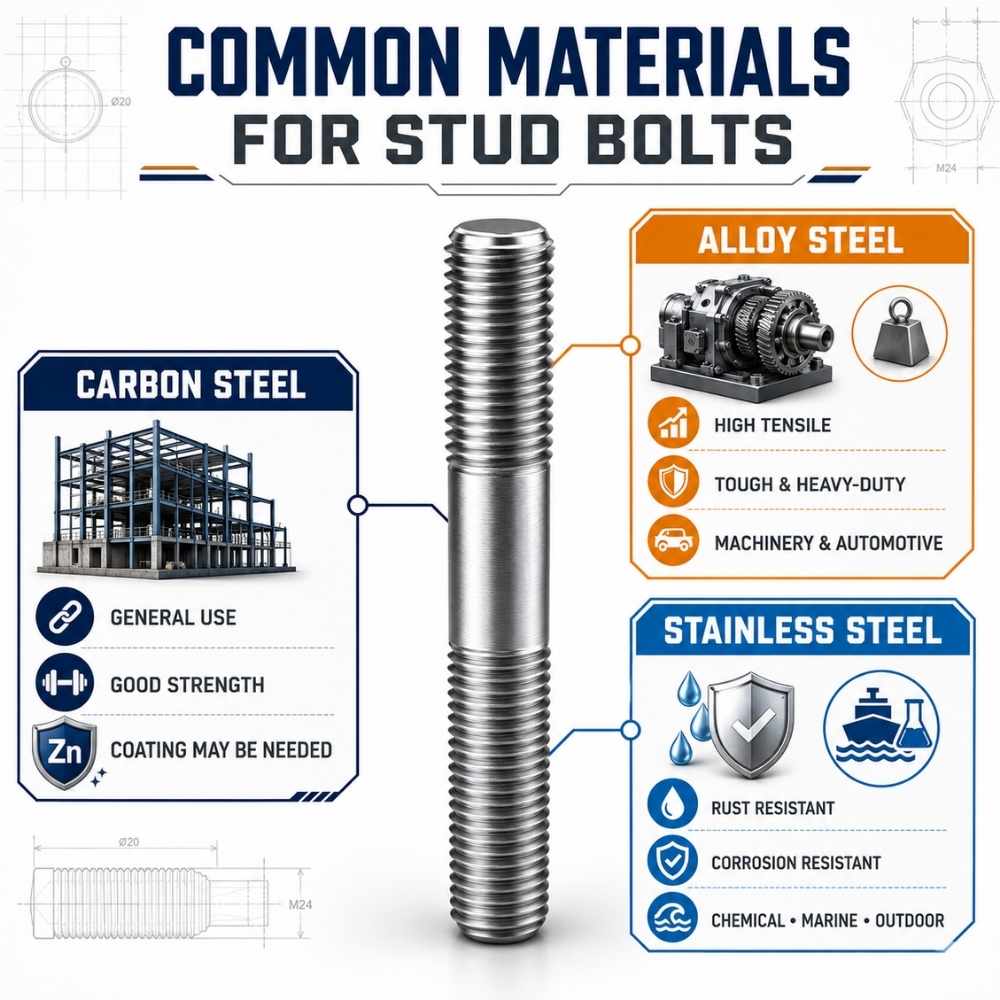
    Material selection directly affects strength, durability, and corrosion resistance. Therefore, buyers should always discuss the operating environment with the supplier before placing a bulk order.

    01. Carbon Steel

    Carbon steel is widely used for general construction, structural support, and standard machinery applications. It offers good strength at a practical price point. However, it may need zinc plating or another protective coating when used in humid environments.

    02. Alloy Steel

    Alloy steel provides enhanced tensile strength and toughness. As a result, it is ideal for heavy machinery, high-load installations, automotive systems, and industrial equipment.

    03. Stainless Steel

    Stainless steel resists rust and corrosion effectively. Thus, it works well in chemical plants, food processing units, marine areas, pharmaceutical facilities, and outdoor installations.

    Key Benefits of Choosing the Right Stud Bolt

    The right fastening product does much more than connect two parts. It improves stability, simplifies maintenance, and supports safety across the installation.

    01. Strong Load-Bearing Capacity

    High-quality studs can handle substantial tensile loads. When paired with suitable nuts and washers, they distribute clamping force effectively. As a result, the joint remains secure during normal operation.

    02. Easy Installation and Removal

    Studs support convenient maintenance because technicians can remove a nut without taking the entire fastener out of the base component. This feature proves especially useful in pumps, valves, engines, and flanged equipment.

    03. Suitable for Custom Sizes

    Industrial projects often require non-standard lengths, diameters, or thread pitches. A reliable Stud Bolt Manufacturer can produce custom sizes according to drawings, samples, or application details.

    04. Better Performance in Harsh Environments

    Stainless steel and coated bolts can resist moisture, chemicals, heat, and outdoor exposure. Therefore, buyers can choose a material and finish that supports a longer service life.

    How to Select the Correct Stud Bolt

    Selecting an industrial fastener only by diameter can lead to failure. Instead, buyers should evaluate the complete application requirement before finalizing the product.

    01. Check the Load Requirement

    First, understand whether the joint will face tension, shear force, vibration, or dynamic loading. Heavy-duty applications may require high-tensile alloy steel. In contrast, general mounting work may use mild steel or stainless steel.

    02. Choose the Right Material Grade

    Material selection depends on the surrounding environment. For example, stainless steel works well in chemical plants and outdoor installations. Carbon steel may offer a practical choice for dry indoor conditions.

    03. Confirm Thread Type and Pitch

    Metric threads and imperial threads are different. Even similar-looking parts may not fit correctly. Therefore, always confirm the thread standard, diameter, pitch, and required thread length.

    04. Select an Appropriate Finish

    Surface finish protects the fastener and improves appearance. Popular choices include:

    • Zinc plated
    • Yellow zinc plated
    • Hot-dip galvanized
    • Black finish
    • PTFE coated
    • Plain self-finish

    For outdoor foundations and exposed steel structures, hot-dip galvanizing often provides stronger corrosion protection.

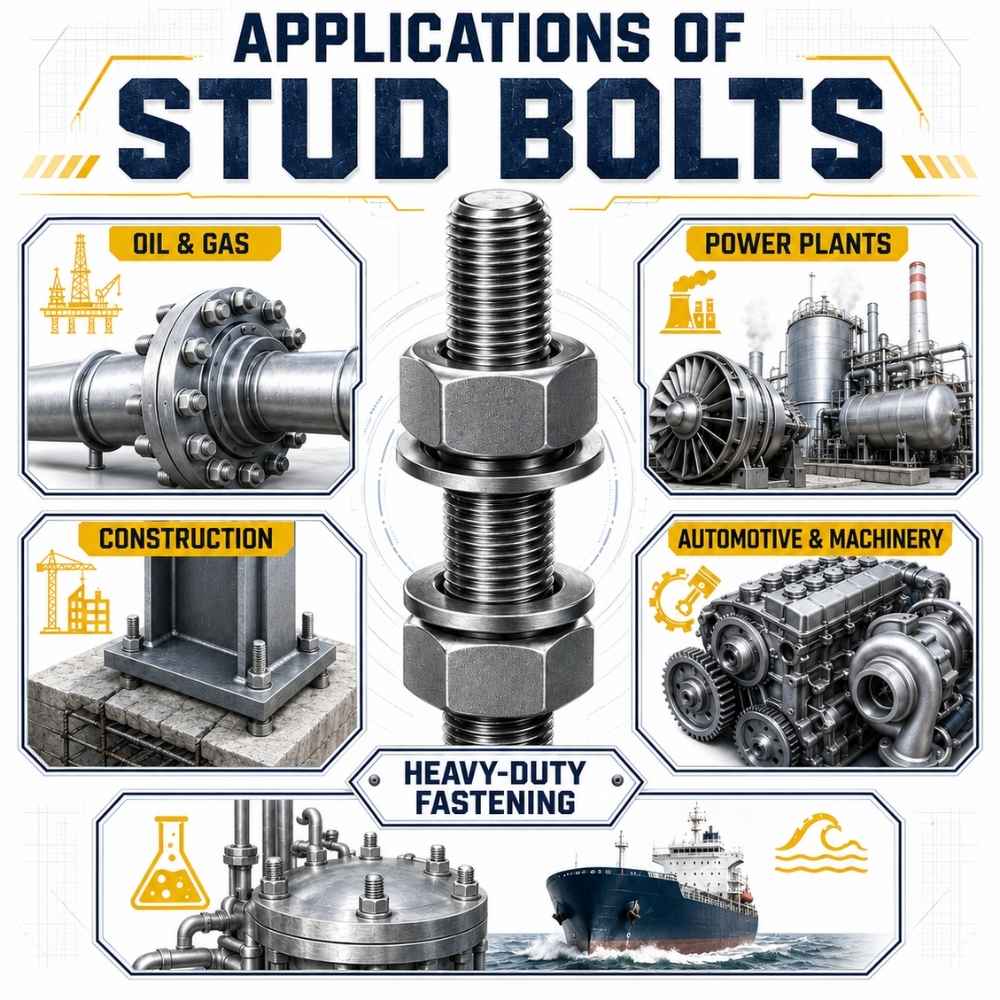
    Applications of Stud Bolts Across Industries

    Applications of Stud Bolts Across Industries - LG Industries

    Stud bolts support countless industrial applications because they offer strong and adaptable fastening. Their use extends from simple brackets to high-pressure equipment.

    01. Oil, Gas, and Pipeline Systems

    Flanges in pipelines require high-strength fastening to prevent leakage under pressure. Stud fasteners are often used with flange nuts and washers to create secure joints. Additionally, corrosion-resistant materials help protect the connection in harsh environments.

    02. Power Plants and Process Industries

    Boilers, turbines, heat exchangers, valves, and pressure vessels rely on dependable fastening systems. Here, correct material grade and thread accuracy become extremely important because high temperatures and vibrations can affect performance.

    03. Construction and Steel Fabrication

    Builders use these bolts to secure beams, columns, brackets, platforms, and base plates. A quality Foundation Bolt helps transfer loads safely from a structure or machine into the concrete base.

    04. Automotive and Engineering Equipment

    Engine assemblies, pumps, compressors, gearboxes, and industrial machines often use stud fasteners because they allow repeated dismantling and reassembly. As a result, maintenance teams can service equipment more conveniently.

    05. Chemical and Marine Environments

    Chemical exposure, saltwater, and high humidity can damage ordinary fasteners. Therefore, stainless steel or specially coated stud products are often selected for chemical plants, coastal facilities, and marine installations.

    How to Select the Right Stud Bolt for Your Project

    Choosing the correct fastener is not only about diameter and length. Instead, buyers should consider the complete application requirement.

    01. Check the Required Material Grade

    First, identify whether the environment requires carbon steel, alloy steel, stainless steel, or another special material. For example, outdoor or chemical applications may require corrosion-resistant grades.

    02. Confirm Thread Type and Pitch

    Thread accuracy ensures that nuts fit properly and tighten smoothly. Coarse threads are commonly used for general applications, whereas fine threads can provide better adjustment and holding power in selected assemblies.

    03. Decide the Correct Length and Diameter

    The required length depends on component thickness, washer thickness, nut height, and installation clearance. Similarly, the diameter must match the expected load and design specification.

    Frequently Asked Questions About Stud Bolts

    It is a threaded metal rod used to securely join industrial components, flanges, machinery, and structural parts.

    Was this helpful?

    A normal bolt has a head on one end. However, this fastener has threads on both ends or across its entire length.

    Was this helpful?

    They are used in machinery installation, steel structures, pipelines, flange connections, construction, and equipment foundations.

    Was this helpful?

    It is an anchoring fastener that secures machines, columns, or base plates firmly to a concrete foundation.

    Was this helpful?

    A full-thread design has threads throughout the rod. Therefore, it allows flexible adjustment of nuts during installation.

    Was this helpful?

    Common material options include carbon steel, alloy steel, stainless steel, and galvanized steel.

    Was this helpful?

    Hot-dip galvanized steel and stainless steel are suitable because they offer better resistance against moisture and corrosion.

    Was this helpful?

    Select the size according to the required load capacity, component thickness, thread type, installation space, and engineering drawing.

    Was this helpful?

    Yes, high-strength grades are widely used in flange joints, pipelines, pressure vessels, and heavy industrial equipment.

    Was this helpful?

    Yes. A manufacturer can supply custom length, diameter, thread pattern, material grade, and surface coating as per project requirements.

    Was this helpful?

    Why Choose a Trusted Stud Bolt Manufacturer?

    A professional manufacturer understands that every project has different specifications. They can provide standard and custom products while maintaining consistent quality checks.

    Look for a supplier that offers:

    • Multiple material grades
    • Custom sizes and threads
    • Accurate dimensional control
    • Quality-tested raw materials
    • Bulk order capability
    • Corrosion-resistant coatings
    • Timely dispatch
    • Technical support for product selection

    Additionally, a dependable supplier can guide you toward the right bolt grade for your exact working environment. This support saves time and helps prevent costly fastening failures.

    Final Thoughts on Stud Bolt 

    A high-quality Stud Bolt creates stronger, safer, and more serviceable industrial connections. Its versatile threaded design makes it suitable for machinery, flanges, steel structures, pipe supports, and foundations. Meanwhile, selecting the correct material, thread type, finish, and grade ensures dependable long-term performance.

    For the best results, choose a manufacturer that understands your project requirements and delivers accurately tested fastening solutions. The right bolt may look like a small component, yet it plays a major role in the strength and stability of your entire installation.

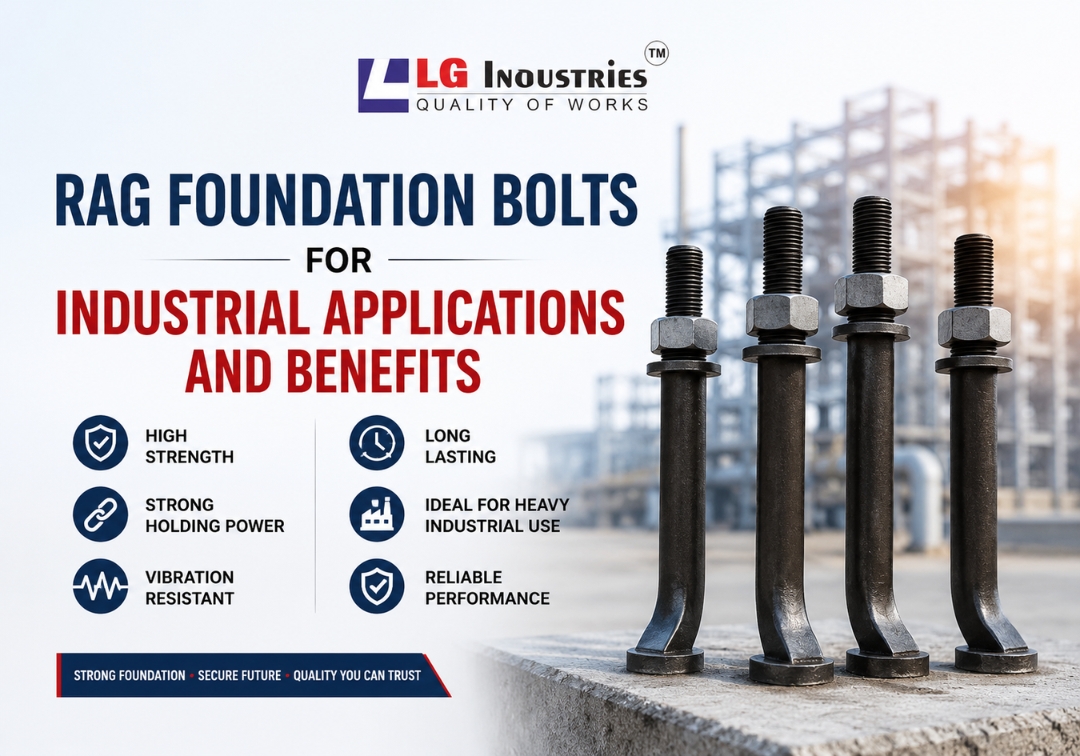
      Rag Foundation Bolt

      Rag Foundation Bolts for Industrial Applications and Benefits

      Why Rag Foundation Bolts Are Essential for Industrial Applications

      Industrial structures demand strong and reliable fastening systems that can withstand heavy loads, continuous vibration, and harsh environmental conditions. Among the most trusted anchoring solutions, Rag Foundation Bolt plays a vital role in securing machinery, steel structures, industrial sheds, transmission towers, and heavy equipment to concrete foundations. Their unique design ensures exceptional grip, outstanding stability, and long-term structural performance.

      Whether you are constructing a manufacturing plant, installing heavy machinery, or developing large-scale infrastructure, selecting the right foundation fastening system directly impacts safety and operational efficiency. High-quality rag foundation bolts provide excellent resistance against movement, reduce maintenance costs, and extend the lifespan of industrial installations.

      This guide explains everything you need to know about rag foundation bolts, including their features, applications, benefits, installation process, material options, maintenance tips, and factors to consider before choosing the right solution for your project.

      What Are Rag Foundation Bolts?

      A rigid foundation bolt is a specially engineered anchor bolt designed to create a secure connection between concrete foundations and structural components. Unlike ordinary bolts, rag bolts feature a forged or ragged end that firmly locks into concrete after installation. This unique shape significantly improves pull-out resistance and ensures excellent load-bearing performance.

      These bolts are commonly used in industries where equipment stability is critical. Their rugged construction allows them to perform efficiently under high compression, vibration, and dynamic loads.

      Because of their exceptional holding capacity, RAG foundation bolts have become one of the preferred anchoring solutions across construction, manufacturing, power generation, mining, petrochemical, and infrastructure sectors.

      Why Rag Foundation Bolts Are Essential for Industrial Applications

      Industrial environments require fastening systems that deliver consistent performance under demanding conditions. Rag foundation bolts provide exactly that.

      Their specialized design helps distribute loads evenly throughout the concrete foundation. As a result, machinery remains stable during operation while minimizing unwanted movement and structural stress.

      Furthermore, these bolts improve workplace safety by reducing the possibility of equipment displacement caused by vibration or heavy operational loads.

      Industries rely on RAG foundation bolts because they offer:

      • Excellent anchoring strength
      • Superior resistance to vibration
      • Long service life
      • High tensile performance
      • Reliable structural stability
      • Reduced maintenance requirements
      • Enhanced operational safety

      Key Features of Rag Foundation Bolts

      Superior Grip Inside Concrete

      The forged rag end creates an exceptionally strong mechanical bond within concrete. This feature prevents bolt loosening even after years of continuous service.

      High Load Carrying Capacity

      These bolts are specifically designed to support heavy industrial equipment, structural columns, and steel frameworks.

      Corrosion Resistance

      Manufacturers produce rag foundation bolts using galvanized steel, stainless steel, or protective coatings to resist corrosion in aggressive industrial environments.

      Long Service Life

      High-quality manufacturing processes ensure durability, even under extreme weather and demanding operating conditions.

      Excellent Dimensional Accuracy

      Precision manufacturing guarantees proper alignment during installation while simplifying equipment positioning.

      Major Benefits of Rag Foundation Bolts

      Superior Structural Stability

      Every industrial project requires a strong connection between machinery and its foundation. Rag foundation bolts prevent unwanted movement while improving overall structural stability.

      This stability reduces operational risks and improves equipment performance.

      High Load Capacity

      Heavy industrial equipment places enormous pressure on concrete foundations.

      A properly manufactured foundation bolt transfers these loads efficiently while preventing structural damage.

      Industries trust these bolts because they support:

      • Heavy machinery
      • Industrial presses
      • Compressors
      • Turbines
      • Generators
      • Storage tanks
      Excellent Vibration Resistance

      Industrial machines continuously generate vibration.

      Without proper anchoring, vibration can loosen fasteners and damage equipment.

      Rag foundation bolts minimize these problems by maintaining secure connections over long periods.

      Long Service Life

      High-quality bolts manufactured from premium steel resist wear and deformation.

      Their durability reduces replacement costs while increasing operational reliability.

      Improved Workplace Safety

      Loose machinery creates serious safety hazards.

      A professionally installed Foundation Bolt helps prevent accidents by keeping equipment securely fixed.

      Types of Rag Foundation Bolts

      Different industrial projects require different bolt designs.

      Standard Rag Foundation Bolt

      Suitable for general industrial construction and equipment installation.

      Heavy-Duty Rag Bolt

      Designed for extremely high load applications.

      Hot Dip Galvanized Rag Bolt

      Offers excellent corrosion resistance for outdoor environments.

      Stainless Steel Rag Bolt

      Ideal for chemical plants, marine applications, and food processing industries.

      Materials Used in Manufacturing

      The quality of raw materials directly affects bolt performance.

      Common materials include:

      • Mild Steel
      • Carbon Steel
      • High-Tensile Steel
      • Stainless Steel 304
      • Stainless Steel 316
      • Alloy Steel

      Protective finishes include:

      • Zinc Plating
      • Hot Dip Galvanizing
      • Black Finish
      • PTFE Coating
      • Electrogalvanizing

      Common Industrial Applications of Rag Foundation Bolts

      Rag foundation bolts are widely used across numerous industries due to their versatility and strength.

      Heavy Machinery Installation

      Industrial machines require stable foundations for precise operation. Rag bolts prevent movement and improve operational accuracy.

      Steel Structure Construction

      Structural steel columns depend on secure anchoring systems to transfer loads safely into concrete foundations.

      Industrial Plants

      Manufacturing facilities use foundation bolts to secure production equipment, conveyor systems, compressors, and processing units.

      Power Generation Facilities

      Power plants rely on strong anchoring systems for turbines, generators, transformers, and support structures.

      Oil and Gas Industry

      Heavy processing equipment and storage systems require dependable fastening solutions capable of handling dynamic loads.

      Cement Plants

      Large rotating machinery produces constant vibration. Rag foundation bolts provide reliable stability throughout continuous operations.

      Warehouses

      Industrial warehouses utilize foundation bolts to secure structural columns and heavy storage systems.

      Infrastructure Projects

      Bridges, metro stations, airports, and transportation facilities depend on heavy-duty anchoring systems for long-term durability.

      How to Select the Right Rag Foundation Bolts

      Choosing the correct foundation bolt involves evaluating several important factors.

      Load Requirements

      Determine static and dynamic loads before selecting bolt dimensions.

      Bolt Diameter

      Larger diameters generally provide greater load capacity.

      Bolt Length

      Proper embedment depth ensures maximum holding strength.

      Environmental Conditions

      Outdoor installations require corrosion-resistant finishes.

      Concrete Grade

      Concrete strength directly influences anchoring performance.

      Industry Standards

      Always select bolts manufactured according to recognized engineering standards.

      Frequently Asked Questions Of Rag Foundation Bolts

      It securely anchors machinery, structural columns, and industrial equipment to concrete foundations while providing excellent load-bearing capacity.

      Rag Foundation Bolts feature a specially forged ragged end that creates a stronger mechanical bond with concrete. This design improves anchoring performance, making them ideal for industrial structures that require long-term stability under heavy loads and continuous vibration.

      Yes. Manufacturers can produce Rag Foundation Bolts in custom lengths, diameters, thread sizes, and finishes to match unique engineering drawings and installation requirements. Custom solutions help ensure accurate fitment and reliable structural performance.

      Heavy machinery generates constant movement and operational stress. Rag Foundation Bolts provide a secure connection between equipment and concrete foundations, helping reduce vibration-related movement while improving overall machine stability and operational efficiency.

      Protective finishes such as hot dip galvanizing, zinc plating, black oxide coating, and PTFE coating help shield bolts from moisture, chemicals, and corrosion. Choosing the right finish extends service life in demanding industrial environments.

      We provide complete business solutions including consultation, planning, design, development, implementation, and support tailored to your project requirements.

      Premium Rag Foundation Bolts offer superior manufacturing accuracy, higher tensile strength, and better corrosion resistance. Investing in quality fastening solutions improves structural safety, enhances equipment reliability, and delivers dependable performance for years.

      Correct positioning is essential because even minor alignment errors can affect equipment installation and structural accuracy. Properly installed Rag Foundation Bolts ensure smooth assembly, balanced load transfer, and dependable long-term performance.

      Absolutely. Rag Foundation Bolts are widely used to secure wind turbine bases, solar mounting structures, and other renewable energy installations where reliable anchoring and structural stability are essential for long-term performance.

      The load-bearing performance depends on several factors, including bolt diameter, embedment depth, steel grade, thread quality, and concrete strength. Choosing the correct combination ensures safe and efficient support for industrial applications.

      Rag Foundation Bolts for Heavy-Duty Industrial Construction

      Selecting the right Rag Foundation bolts is essential for achieving safe, durable, and stable industrial foundations. From heavy machinery and steel structures to infrastructure and manufacturing facilities, these bolts deliver the strength, reliability, and long-term performance that modern engineering projects demand.

      By choosing high-quality materials, following proper installation practices, and performing regular inspections, businesses can reduce maintenance costs, improve operational safety, and extend the lifespan of their equipment and structures. Whether your project involves new construction or industrial expansion, investing in premium rag foundation bolts ensures dependable performance and structural integrity for years to come.

      For the best results, consult experienced engineers or trusted Foundation Bolt manufacturers like LG Industries to choose the right Rag Foundation Bolts for your industrial application.

      Looking for reliable Rag Foundation Bolts for industrial applications? Partner with a trusted manufacturer offering high strength foundation bolts, precision engineering, and customized solutions. Ensure maximum safety, durability, and long lasting performance for every construction and heavy machinery installation project.

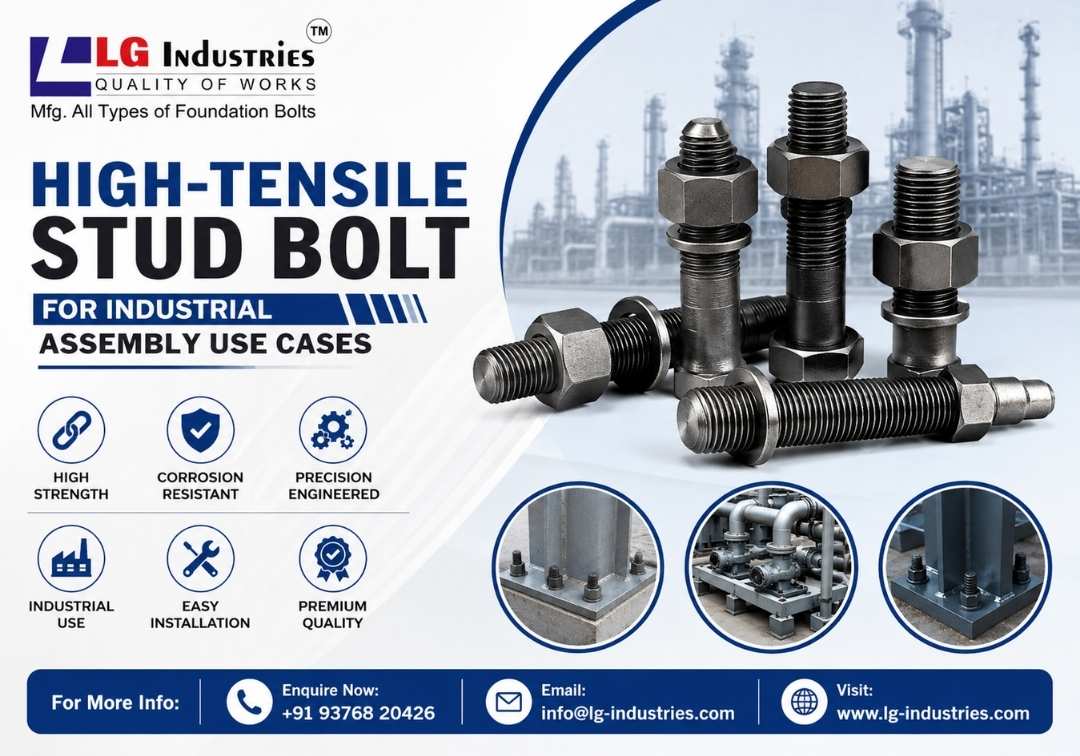
        High-Tensile Stud Bolt for Industrial Assembly Use Cases - LG Industries

        High-Tensile Stud Bolt for Industrial Assembly Use Cases

        Stud Bolt for Heavy Engineering 

        Stud Bolt for Heavy Engineering - LG Industries

        In modern engineering and construction industries, strong and reliable fastening systems play a crucial role in ensuring safety, durability, and structural stability. Among these essential components, the Stud Bolt stands out as one of the most trusted and widely used fastening solutions.

        From heavy machinery assembly to steel structure installation and foundation anchoring, a Threaded Stud Rod delivers exceptional performance under extreme pressure, vibration, and load conditions. Moreover, industries prefer it because it provides superior grip strength and long-term reliability compared to conventional bolts.

        In this comprehensive guide, we will explore everything about Stud Bolts, including their types, applications, advantages, installation processes, and why they are widely used in modern industrial projects.

        What is a Stud Bolt, and why is it Widely Used in Engineering?

        A Stud Bolt is a threaded fastener that does not have a head like a standard bolt. Instead, it is a straight rod with threads on both ends or throughout its length. It is typically used with two nuts on either side to secure heavy-duty connections.

        Because of its unique design, an Industrial Fastener distributes load evenly, ensuring strong clamping force and stability. As a result, it is widely used in industries where safety and strength are critical.

        Key Characteristics of Stud Bolt

        A Stud Bolt is designed with precision to handle industrial-grade applications. Some of its core features include:

        • High tensile strength for heavy loads
        • Full thread or double-end threading options
        • Excellent resistance to vibration and loosening
        • Suitable for high-pressure and high-temperature environments
        • Long service life with minimal maintenance

        Furthermore, its design allows easy installation in confined spaces where traditional bolts cannot be used effectively.

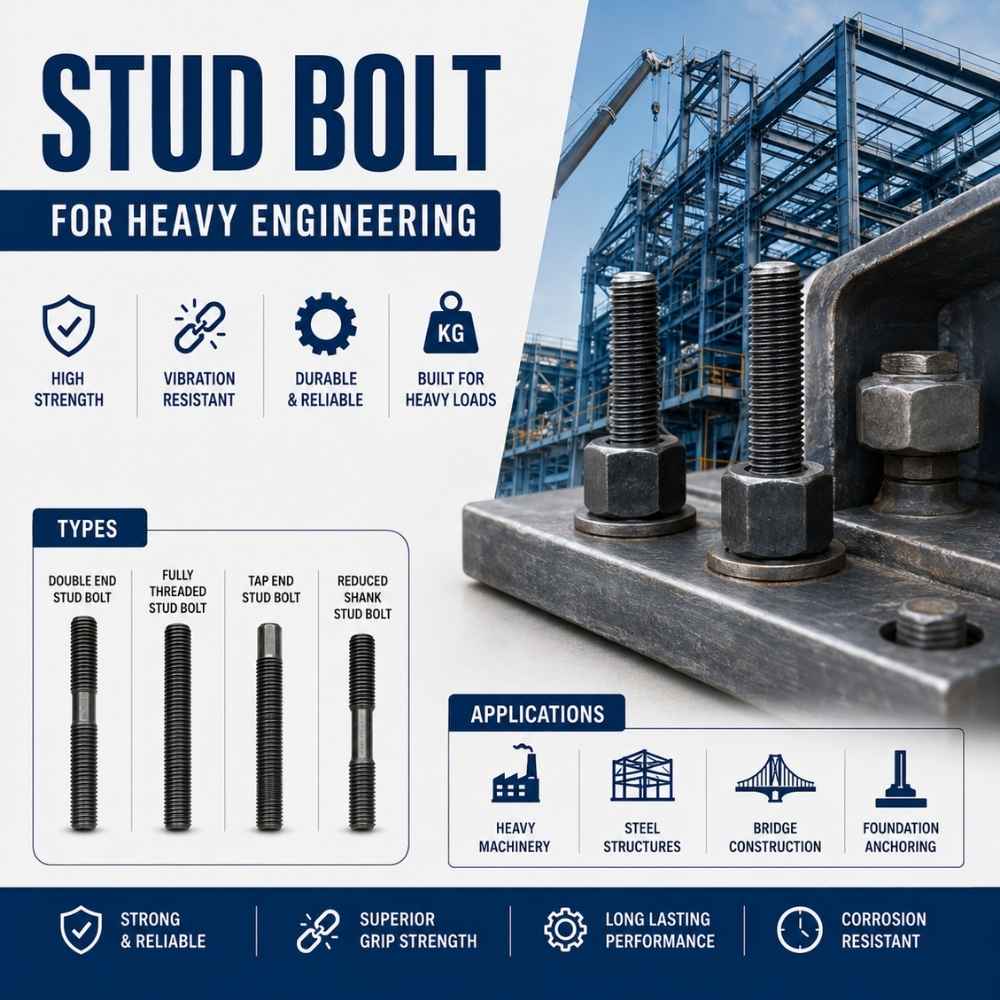
        Types of Stud Bolt Used in Industrial Applications

        Types of Stud Bolt Used in Industrial Applications - LG Industries

        Different industries require different fastening solutions. Therefore, several variations of Stud Bolt are manufactured to meet specific engineering needs.

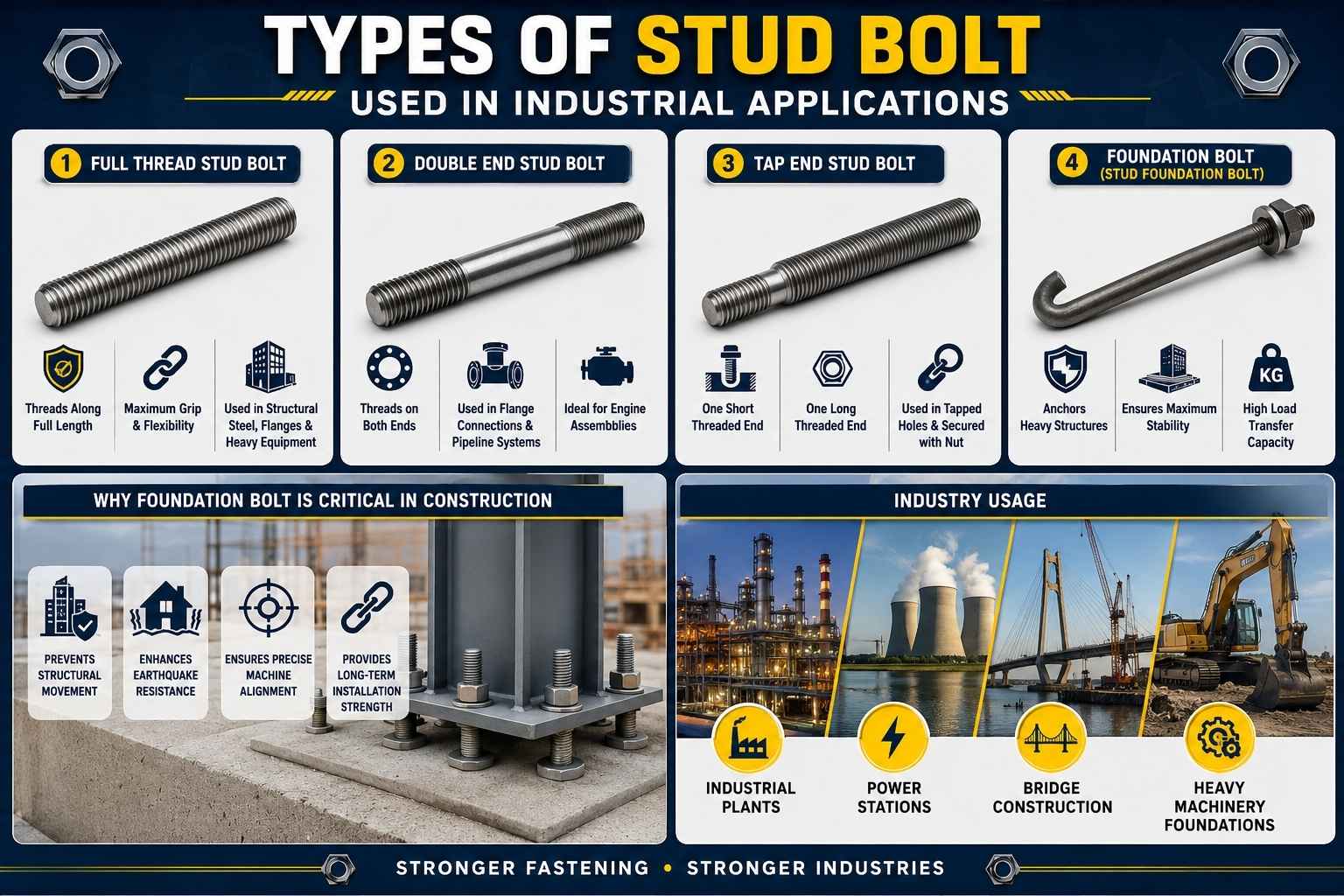
        01. Full Thread Stud Bolt

        A Full Thread Stud Bolt is threaded along its entire length, offering maximum grip and flexibility in load distribution. It is commonly used in structural steel joints, flanges, and heavy equipment assembly.

        02. Double-End Stud Bolt

        This type of Stud Bolt has threads on both ends with an unthreaded middle section. It is widely used in flange connections, pipeline systems, and engine assemblies.

        03. Tap End Stud Bolt

        A Tap End Threaded Stud Rod has one short threaded end and one long threaded end. It is often used where one side is permanently fixed into a tapped hole, while the other side is secured with a nut.

        04. Foundation Bolt (Stud Foundation Bolt)

        A Stud Foundation Bolt is specifically designed for anchoring heavy structures to concrete foundations. It ensures maximum stability and load transfer between machinery and base structures.

        I. Why Foundation Bolt is Critical in Construction

        • Prevents structural movement
        • Enhances earthquake resistance
        • Ensures precise machine alignment
        • Provides long-term installation strength
        II. Industry Usage

        Foundation bolts are widely used in:

        • Industrial plants
        • Power stations
        • Bridge construction
        • Heavy machinery foundations

        Applications of Stud Bolts in Different Industries

        Applications of Stud Bolt in Different Industries - LG Industries

        The Stud Bolt is a versatile fastener used across multiple industries due to its strength and reliability. Its applications extend far beyond basic construction work.

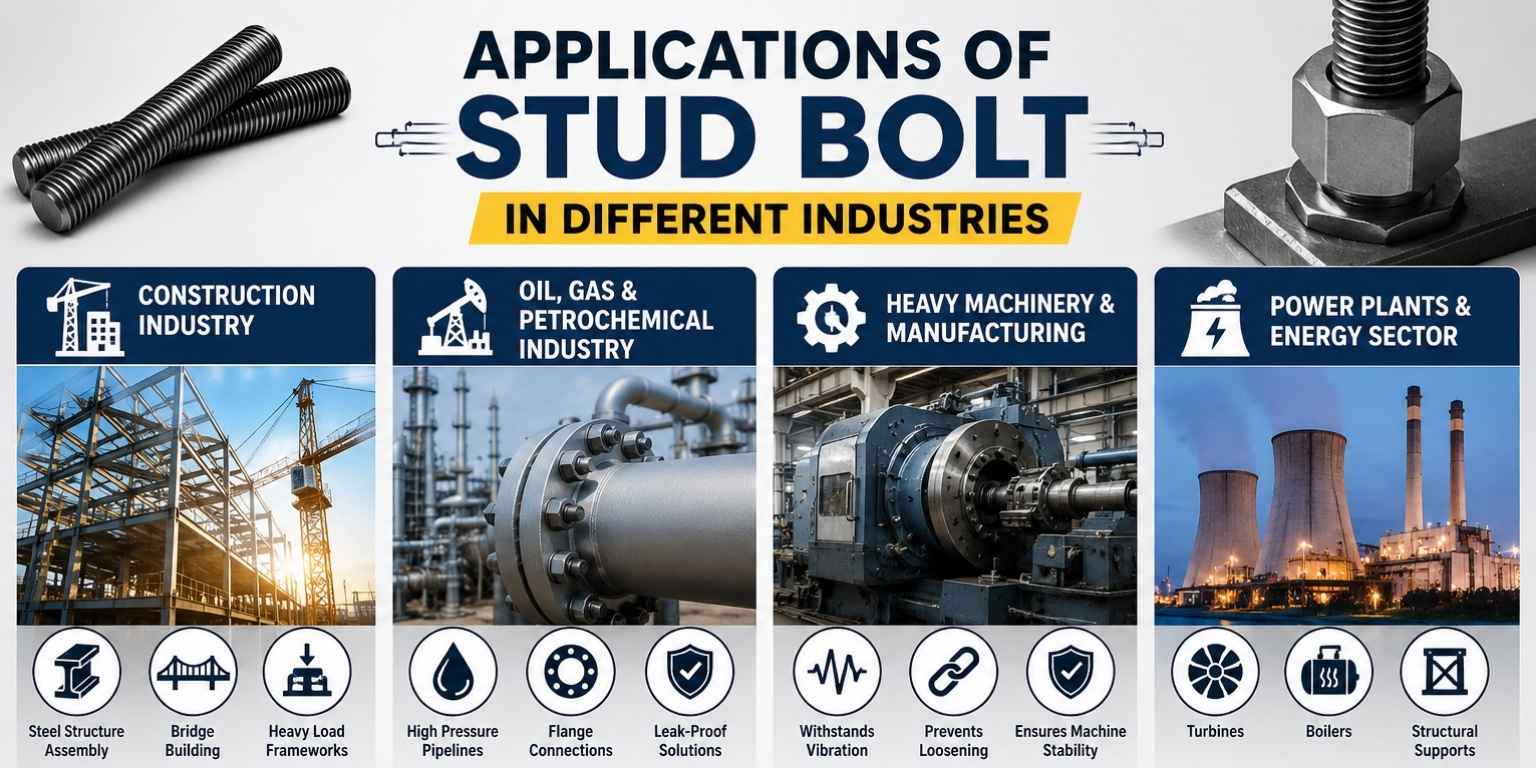
        01. Construction Industry

        In construction projects, Foundation Bolts are used for steel structure assembly, bridge building, and heavy load-bearing frameworks. Their ability to withstand safe stress makes them essential for infrastructure development.

        02. Oil, Gas & Petrochemical Industry

        In high-pressure environments like pipelines and refineries, Stud Bolts ensure leak-proof flange connections. Because safety is critical in this sector, only high-quality bolts are used.

        03. Heavy Machinery & Manufacturing

        Machines that operate under vibration and continuous load require strong fastening systems. Threaded stud rods prevent loosening and ensure machine stability during operation.

        04. Power Plants & Energy Sector

        Power plants use industrial fasteners in turbines, boilers, and structural supports. Since these systems operate under extreme conditions, reliability becomes essential.

        Advantages of Using Stud Bolts in Industrial Projects

        Choosing the right fastening solution directly impacts the performance and safety of any structure. The Stud Bolt offers several advantages that make it a preferred choice.

        01. Superior Load Distribution

        Unlike conventional bolts, Foundation Bolts distribute stress evenly across the joint, reducing the risk of failure.

        02. High Strength & Durability

        Threaded Stud Rods are manufactured using high-grade materials such as carbon steel, alloy steel, and stainless steel, ensuring long-lasting performance.

        03. Easy Installation and Maintenance

        Because Foundation Bolts do not have a head, they can be installed in tight spaces. Additionally, maintenance becomes easier since only nuts need replacement.

        04. Resistance to Corrosion and Temperature

        In harsh environments, Stud Bolts maintain their structural integrity, especially when coated or made from stainless steel.

        Stud Bolt Installation Process – Step-by-Step Guide

        Stud Bolt Installation Process – Step-by-Step Guide - LG Industries

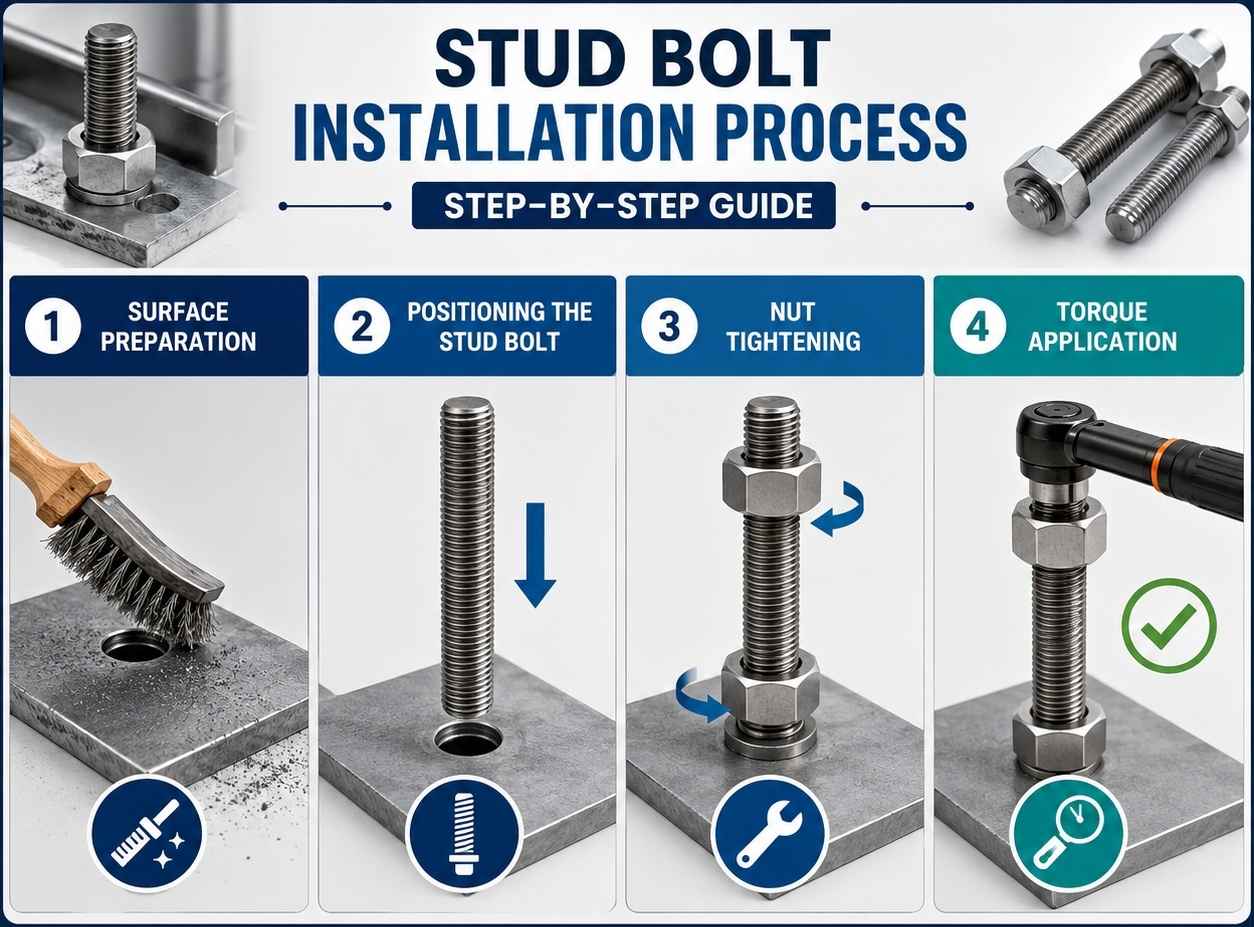
        Proper installation ensures maximum performance and safety. The Stud Bolt installation process must be carried out carefully to avoid structural issues.

        Step 1 – Surface Preparation

        Before installation, ensure that all surfaces are clean, aligned, and free from dust or rust.

        Step 2 – Positioning the Stud Bolt

        Insert the Foundation Bolt into the designated hole or structure carefully without damaging the threads.

        Step 3 – Nut Tightening

        Place nuts on both ends and tighten them evenly to ensure balanced load distribution.

        Step 4 – Torque Application

        Apply the correct torque value using industrial tools to achieve proper fastening strength.

        Important Installation Tips
        • Always use calibrated tools
        • Avoid over-tightening
        • Inspect threads before installation
        • Follow manufacturer guidelines

        Stud Foundation Bolt in Heavy Structural Applications

        A Stud Foundation Bolt plays a critical role in securing heavy equipment and structures to concrete foundations. It ensures that machines remain stable even under high vibration and dynamic loads.

        01. Importance in Industrial Stability

        Without proper foundation bolts, machinery alignment can shift over time, leading to performance issues and safety risks.

        02. Where Stud Foundation Bolts Are Used

        • Wind turbine installations
        • Industrial machinery foundations
        • Steel column anchoring
        • Bridge support systems

        03. Material Selection for Foundation Bolts

        Different materials are selected based on load requirements:

        • Mild steel for general construction
        • Alloy steel for heavy-duty applications
        • Stainless steel for corrosion resistance

        FAQs About Stud Bolt

        What is a Stud Bolt?

        A Stud Bolt is a headless threaded fastener with threads on both ends or along its full length, used with nuts to create strong and secure joints in industrial and construction applications.

        Where is Stud Bolt commonly used?

        Stud Bolts are widely used in construction, oil & gas pipelines, petrochemical plants, power plants, heavy machinery, and structural steel work due to their high strength and durability.

        What is the difference between a Stud Bolt and a normal bolt?

        A normal bolt has a head on one side, while a Stud Bolt has no head and is fully or partially threaded. Stud Bolts provide better load distribution and are preferred for heavy-duty applications.

        What is a Full Thread Stud Bolt?

        A Full Thread Stud Bolt is threaded throughout its entire length, allowing flexible fastening and better grip in high-load applications such as flanges and structural joints.

        What is a Stud Foundation Bolt used for?

        A Stud Foundation Bolt is used to anchor heavy machinery and structures to concrete foundations, ensuring stability, alignment, and resistance to vibration and movement.

        Which material is used for Stud Bolt manufacturing?

        Stud Bolts are commonly made from carbon steel, alloy steel, stainless steel, and high-tensile steel, depending on the application and environmental conditions.

        How does Stud Bolt improve safety in structures?

        Stud Bolts distribute load evenly, reduce joint failure risk, resist vibration loosening, and ensure long-term structural stability, making them ideal for critical industrial applications.

        Can Stud Bolts be reused?

        Yes, in some cases, Stud Bolts can be reused if the threads are not damaged and the bolt has not been overstressed. However, in critical applications, replacement is recommended for safety.

        What sizes are available in Stud Bolts?

        Stud Bolts are available in a wide range of sizes, from small diameters for machinery to large heavy-duty sizes for industrial and structural applications, depending on project requirements.

        Why choose Stud Bolts over other fasteners?

        Stud Bolts are preferred because they offer higher strength, better load distribution, corrosion resistance (if coated), and reliable performance in extreme conditions.

        How Stud Bolts Improve Structural Safety and Performance

        Structural safety is one of the top priorities in engineering. The Stud Bolt significantly contributes to improving safety standards.

        Firstly, it minimizes joint failure risks by providing uniform tension. Secondly, it enhances vibration resistance, which is essential for rotating machinery. Finally, it ensures long-term reliability, reducing maintenance costs.

        Moreover, in critical industries such as oil refineries and power plants, Stud Bolts are often mandatory due to their proven safety performance.

        Why Choose a High-Quality Stud Bolt for Your Project?

        Selecting the right Stud Bolt is not just a technical decision—it is a long-term investment in safety and performance.

        High-quality Stud Bolts:

        • Reduce maintenance downtime
        • Improve operational efficiency
        • Increase structural lifespan
        • Ensure compliance with engineering standards

        In addition, certified manufacturing ensures that each Threaded Stud Rod meets international quality requirements, making it suitable for both domestic and export use.

        Conclusion – Stud Bolt as a Backbone of Modern Engineering

        In conclusion, the Stud Bolt is an essential component in modern engineering and construction industries. Its strength, durability, and versatility make it a preferred fastening solution across multiple sectors.

        Whether it is a Full Thread Stud Bolt, a Stud Foundation Bolt, or a standard industrial fastening application, each type plays a crucial role in ensuring safety and performance.

        As industries continue to evolve, the demand for reliable fastening systems like Industrial Fastener will continue to grow. Therefore, choosing the right quality and specification becomes extremely important for long-term success.

        Get in Touch with LG Industries Today

          ×

          Buy MS Foundation Bolt at Best Prices Across India