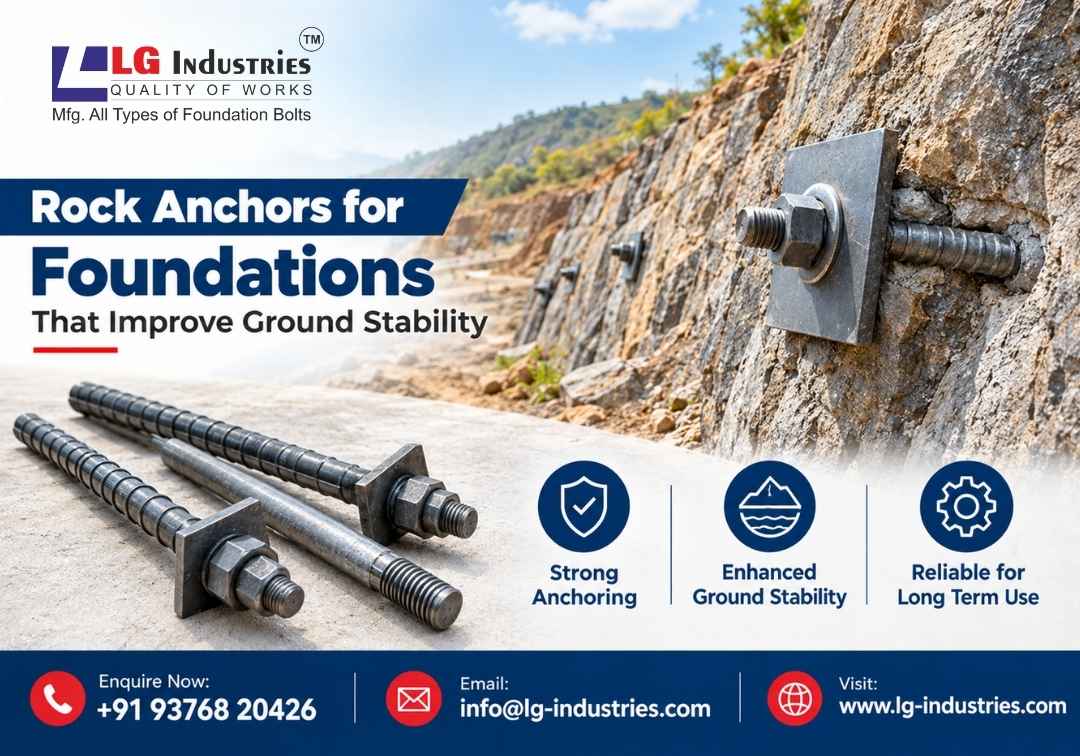
Rock Anchors For Foundations for Better Stability
Strong foundations determine the safety, durability, and performance of industrial structures. But not every site offers ground suitable for conventional foundations. Rocky terrain, steep slopes, and fractured rock often call for specialized anchoring to achieve dependable support.
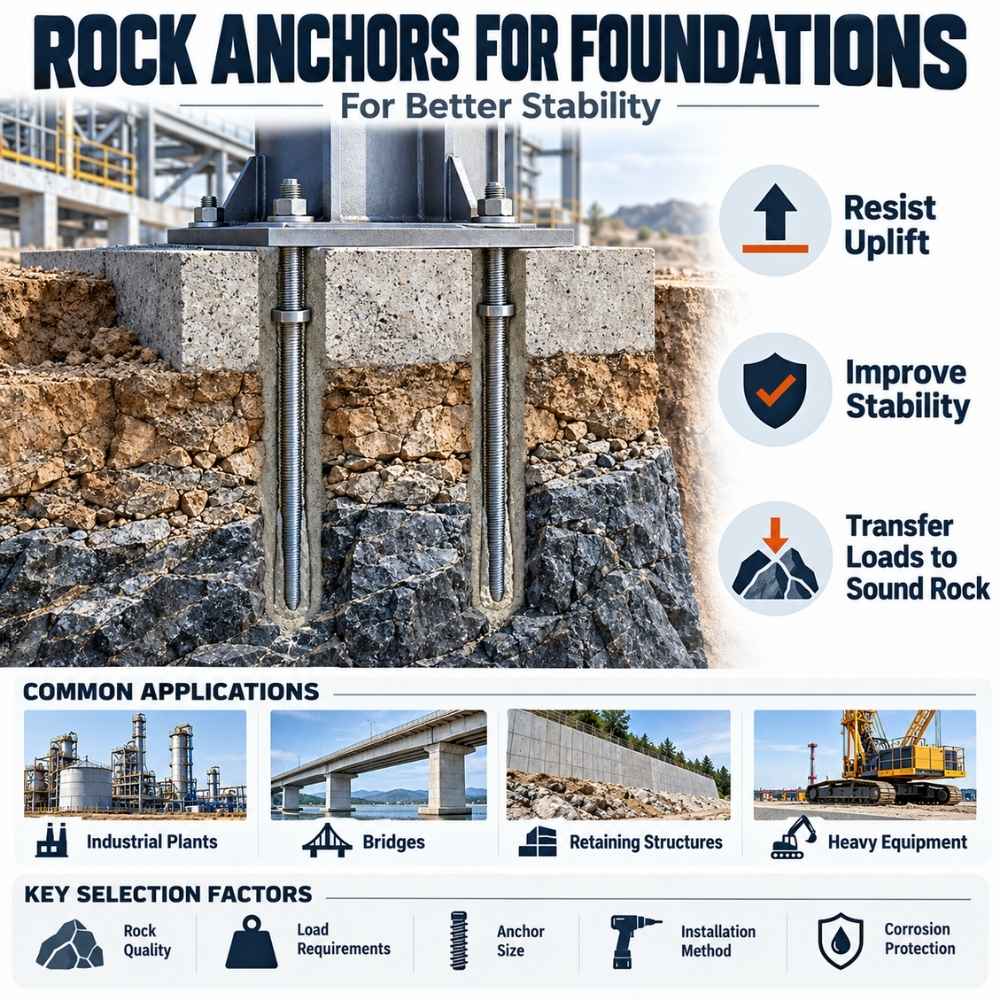
Rock anchors for foundations solve this by connecting a structure to competent rock. They resist uplift, improve stability, and transfer loads into sound rock layers. Engineers use them in industrial plants, bridges, retaining structures, and heavy equipment installations.
Choosing the right system means weighing rock quality, load requirements, anchor dimensions, installation method, and corrosion protection. Suitable foundation bolts and MS foundation bolts also help create secure connections between base plates and the structure above.
This guide explains how rock anchoring works, where it is used, and what buyers should check before selecting products.
What Are Rock Anchors for Foundations, and How Do They Work?
Rock anchors are specialized structural fastening systems that connect a foundation or structure to a stable rock formation. Depending on the design, they use steel rods, high-strength bars, strands, grout, and anchoring components to transfer loads safely into the surrounding rock.
Unlike ordinary fastening arrangements, these systems can resist significant tensile and uplift forces. Moreover, engineers select their configuration according to the geological conditions and the structural requirements of each project.
A typical rock anchoring arrangement includes the following:
01. Steel Anchor Bar
The steel anchor bar provides the primary tensile strength required for load resistance. It carries the force from the structure down into the rock.
02. Drilled Borehole and Grout
Workers drill a borehole to create space for the anchoring assembly. Grout then bonds the anchor with the surrounding rock and transfers the load.
03. Bearing Plate, Nuts, and Accessories
The bearing plate distributes forces around the anchor connection. Nuts and other accessories secure the exposed threaded portion where the design requires them.
04. Protective Coating
A protective coating helps reduce corrosion and improve the service life of the anchor, especially in moist or chemically exposed conditions.
During installation, workers drill a hole into the selected rock formation. Next, they position the anchor assembly and introduce suitable grout where the design specifies a bonded installation. After the grout develops the required strength, the system can transfer loads through the anchorage.
Why Rock Anchors For Foundations Improve Ground Stability
Ground stability directly affects the performance of industrial buildings, machinery foundations, and infrastructure projects. Weak or fractured ground can create movement, settlement, sliding, or uplift problems.
A properly engineered rock anchoring system helps address these challenges by connecting the structure to a suitable rock mass.
Here are some important benefits:
01. Improved Uplift Resistance
Certain structures experience upward forces because of wind pressure, water pressure, or operating conditions. Properly designed anchors resist these forces and help maintain structural stability.
02. Better Structural Support
Anchoring systems transfer tensile loads into suitable rock formations. As a result, engineers can improve the stability of structures installed on challenging sites.
03. Support for Sloping Ground
Construction on steep or uneven terrain requires additional attention to sliding and movement. Rock anchors can help stabilize retaining structures and other engineered arrangements.
04. Reduced Foundation Movement
When engineers select suitable anchoring points and installation methods, the system can help control unwanted structural movement.
05. Flexible Engineering Applications
Different anchor configurations support different load conditions. Therefore, engineers can select passive or prestressed arrangements according to the project design.
Common Types of Rock Anchors for Foundations
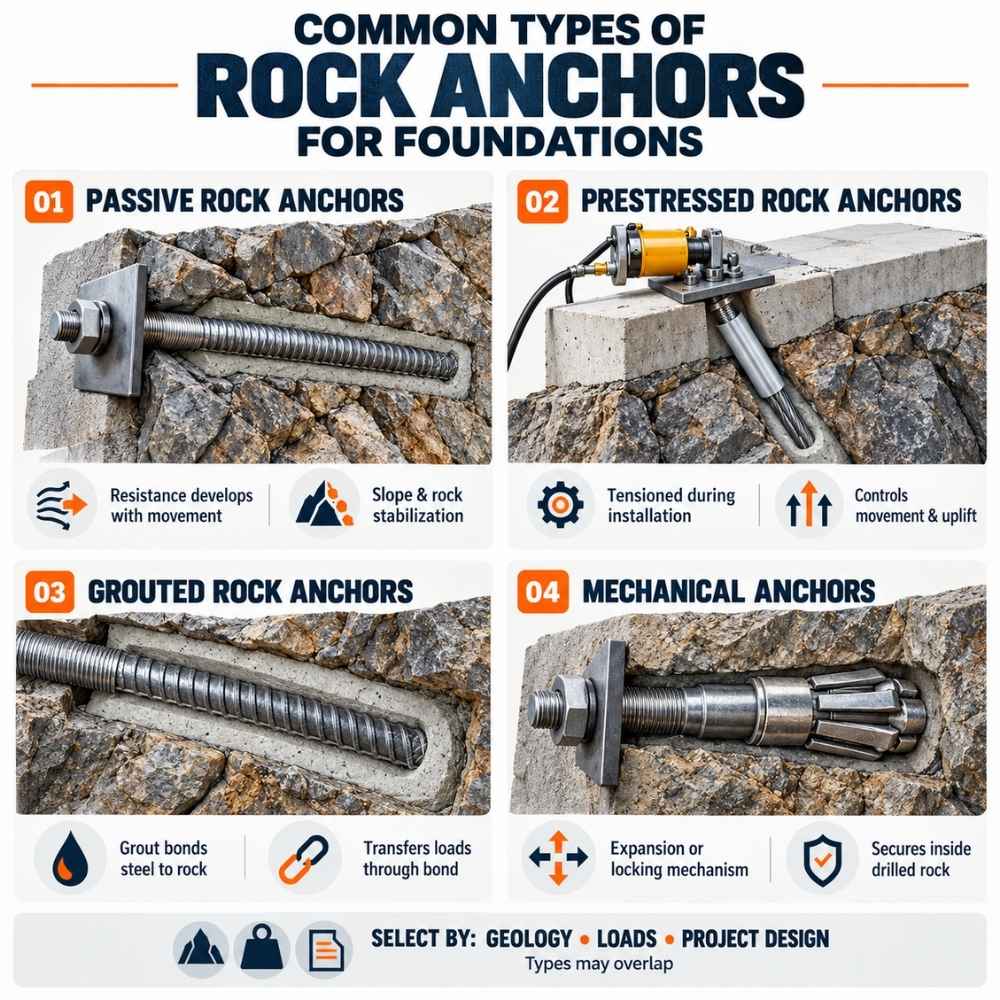
Engineers select the anchoring method only after evaluating the site and expected loads. Each type works differently, so the right choice depends on geology, load conditions, and the project design.
The most common types include the following:
01. Passive Rock Anchors
Passive rock anchors develop resistance as the surrounding ground or structure begins to move, relying on the bond between the anchor and the rock. They are common in rock stabilization, slope protection, and retaining applications.
02. Prestressed Rock Anchors
Prestressed rock anchors are tensioned during installation, creating active resistance before full service loads arrive. They suit applications that need controlled resistance to movement or uplift.
03. Grouted Rock Anchors
Grouted rock anchors use cementitious or other specified grout to transfer load between the steel and the rock. Design depends on grout strength, bond length, borehole diameter, and rock quality.
04. Mechanical Anchors
Mechanical anchors use expansion or another locking mechanism inside a drilled hole. Selection depends on the substrate, loads, installation conditions, and approved product specifications.
Rock Anchors for Foundations Used in Industry and Construction
Rock anchoring solutions support several construction and engineering sectors. Their ability to transfer forces into suitable rock formations makes them useful in challenging ground conditions.
Common applications include the following:
01. Industrial Foundations
Rock anchors support structures that require resistance against uplift and movement.
02. Bridge Construction
They help secure selected structural components and foundation arrangements.
03. Retaining Walls
Anchors improve stability in engineered retaining systems.
04. Slope Stabilization
They control movement in suitable rock slopes and cuttings.
05. Hydropower Projects
Anchors support selected structures exposed to water pressure and uplift forces.
06. Mining Operations
They secure rock surfaces and underground support systems.
07. Heavy Machinery Installations
Anchors provide secure anchoring arrangements for equipment foundations.
08. Infrastructure Projects
They support engineered structures in rocky and uneven locations.
However, every application requires an appropriate engineering assessment. Rock strength, discontinuities, groundwater conditions, and expected loading can significantly influence anchor performance.
Key Factors When Selecting Rock Anchors for Foundations
Choosing a suitable anchoring arrangement involves more than selecting a steel bar or matching a diameter. Project engineers and buyers should evaluate the following factors before finalizing specifications.
01. Rock Quality and Geology
Sound, continuous rock behaves very differently from fractured or weathered rock. A geological investigation helps set drilling depth, bond length, and anchor locations.
02. Load Requirements
Calculate tensile, shear, and uplift forces, plus additional loads from wind, vibration, water pressure, and equipment operation. The anchor must meet the applicable design and safety requirements.
03. Material Selection
Steel grade affects strength and durability. Check mechanical properties and request material certificates where required.
04. Dimensions and Threads
Diameter, total length, bonded length, free length, and thread details all influence installation and performance. Make sure nuts, bearing plates, and accessories match the thread specification.
05. Corrosion Protection
Moisture, chemicals, and soil conditions attack steel. Depending on the design, engineers may specify galvanizing, coatings, or sheathing.
06. Installation and Quality Control
Drilling, hole cleaning, grouting, curing, and stressing all affect results. Follow approved procedures and complete the required inspection and testing.
Choosing a Reliable Supplier of Rock Anchors for Foundations
Selecting the right supplier is an important step in maintaining product quality and project consistency. Industrial buyers should evaluate more than price when comparing anchoring products.
Consider the following points:
01. Product Range
Choose a supplier that can provide suitable foundation bolt configurations and the required specifications.
02. Material Information
Check material grades, dimensional details, and available inspection documentation.
03. Custom Manufacturing
Projects may require specific lengths, diameters, thread sizes, and bending configurations.
04. Quality Inspection
Review dimensional accuracy, thread quality, surface finish, and relevant testing records.
05. Technical Communication
Clear product specifications help buyers coordinate with engineers, contractors, and installation teams.
06. Delivery Planning
Confirm manufacturing lead times and supply arrangements before placing bulk orders.
How Rock Anchors for Foundations Differ from Foundation Bolts
Although both products help secure structures, rock anchors and foundation bolts perform different functions. Understanding this difference helps buyers choose suitable products for their applications.
Frequently Asked Questions About Rock Anchors for Foundations
Rock anchors for foundations are structural fastening systems that connect a foundation or structure to competent rock. They use steel bars or strands, grout, and accessories to transfer loads into the rock.
Engineers use them in industrial foundations, bridges, retaining walls, slope stabilization, hydropower projects, mining, and heavy machinery installations.
They tie the structure to a stable rock mass, which helps resist uplift, sliding, settlement, and unwanted foundation movement.
Passive anchors develop resistance only after the ground or structure starts to move. Prestressed anchors are tensioned during installation, so they resist load immediately.
Most use high-strength steel bars or strands, with cement-based or other specified grout. Engineers may specify carbon steel or other approved materials, depending on the design and environment.
Crews drill a borehole into the rock, insert the anchor assembly, and place grout where the design needs a bonded anchor. After the grout gains strength, the anchor is tested or stressed as the design requires.
No FAQ found.
Key factors are rock quality, expected loads, steel grade, anchor dimensions and threads, corrosion protection, and installation and quality control procedures.
Depending on the design, protection may include galvanizing, protective coatings, sheathing, or grout encapsulation. Moisture, chemicals, and soil conditions determine which method is suitable.
Rock anchors transfer loads into rock, while foundation bolts connect machinery, columns, and steel structures to concrete foundations. Many projects use both.
MS (mild steel) foundation bolts secure base plates, columns, and equipment to concrete foundations. They are common in industrial buildings, plants, and machinery installations.
Use them for modification or strengthening work on existing concrete, such as fixing new equipment or steel members. Engineers should first approve the substrate and anchoring design.
Check the product range, material grades and test certificates, custom manufacturing ability, quality inspection records, technical support, and delivery lead times.
No FAQ found.
Final Thoughts on Rock Anchors for Foundations
Reliable structural performance starts with sound foundation design and the right fastening components. Rock anchors for foundations help engineers connect structures to competent rock, resist uplift, and improve stability in challenging ground. Success depends on rock quality, anchor dimensions, material strength, corrosion protection, and correct installation.
Foundation bolts and MS foundation bolts then connect machinery, columns, and steel structures to the concrete above, and retrofit foundation anchor bolts support strengthening projects once the substrate and design are approved. By choosing reliable suppliers, checking specifications, and following approved engineering practice, construction teams can build secure, durable connections.