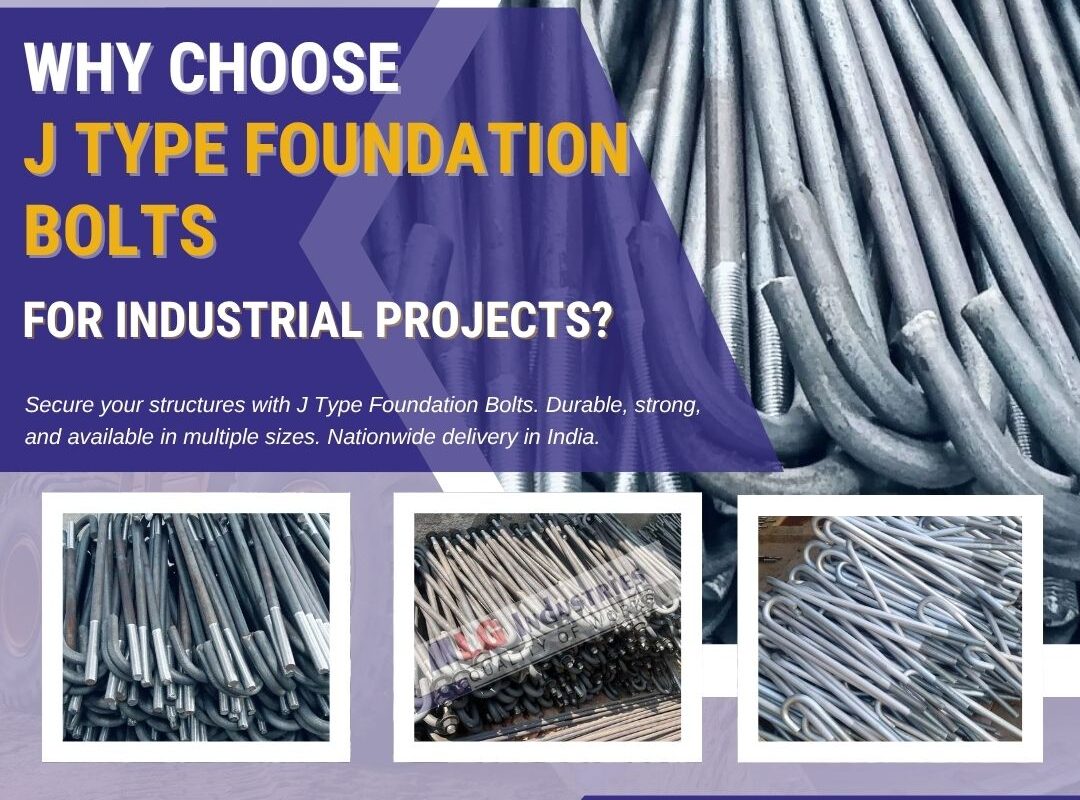
J Foundation Bolt Uses, Benefits, and Applications
Industrial structures depend on strong connections between concrete foundations and steel components. Therefore, choosing the right anchoring hardware can directly influence stability, alignment, and long-term structural performance. Among the available anchoring options, the J Foundation Bolt offers a practical solution for projects that require secure embedding and dependable fastening.
A properly selected Foundation Bolt helps connect base plates, steel columns, machinery supports, and structural frames to concrete foundations. Moreover, the J-shaped configuration provides an effective anchoring profile within the concrete, while the threaded section allows engineers and fabricators to secure the supported component with nuts and washers.
However, selecting an anchor should involve more than simply choosing a diameter. Project loads, embedment depth, material, thread dimensions, corrosion conditions, installation requirements, and structural design all matter. This guide explains the role of a J Foundation Bolt, its benefits, applications, selection factors, and practical installation considerations.
Why Choose a J Foundation Bolt for Industrial Projects?
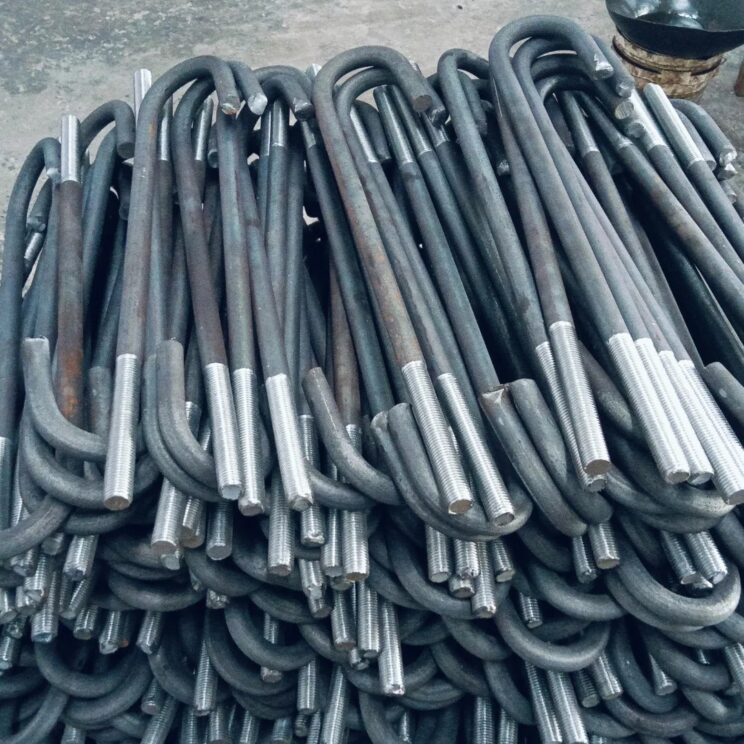
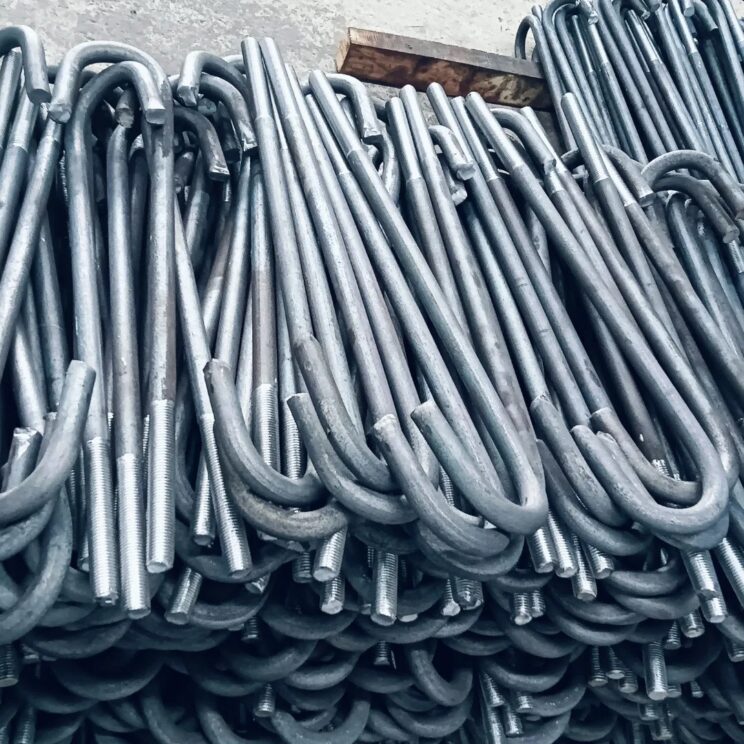
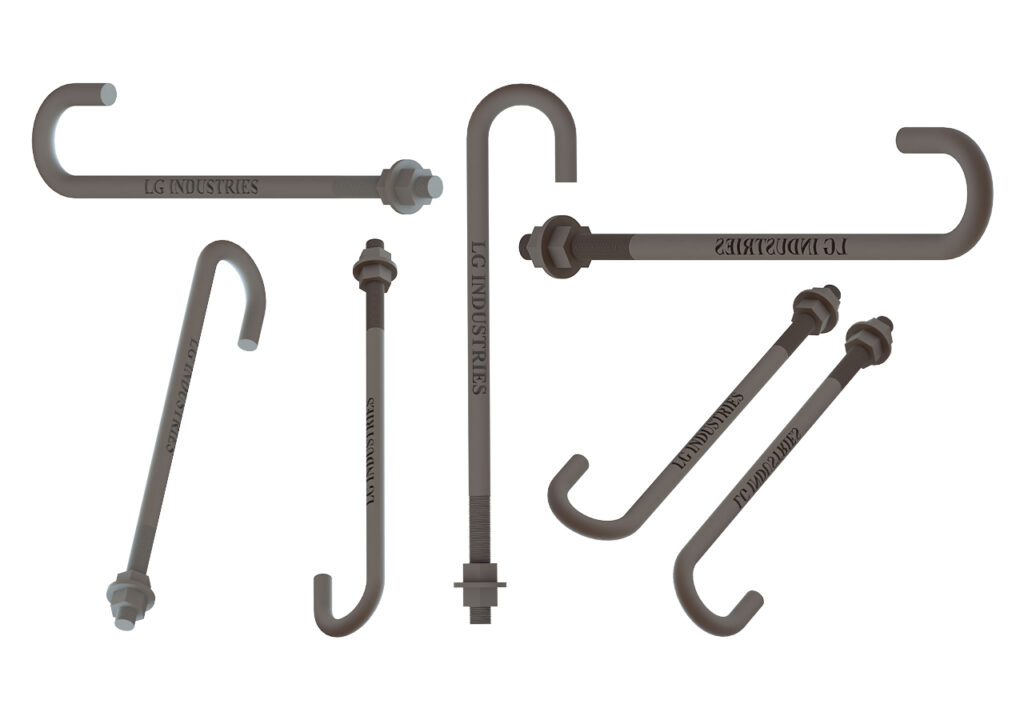
A J Foundation Bolt uses a curved, hook-like lower section that sits inside the concrete foundation. Meanwhile, the upper threaded portion remains accessible for connecting a base plate or structural component.
This design creates a mechanical anchoring arrangement within the concrete. As a result, the bolt can help resist unwanted movement when the supported structure experiences operational or environmental forces.
Industrial projects often encounter several types of loads, including:
- Static structural loads
- Equipment vibration
- Wind forces
- Operational movement
- Temperature-related expansion and contraction
- Impact and dynamic loads
Consequently, engineers need an anchoring arrangement that suits the project’s actual loading conditions rather than relying only on standard dimensions.
01. Strong Connection Between Concrete and Steel
The primary purpose of a foundation anchor is to establish a dependable connection between the concrete base and the supported steel component.
The hooked end of the J-Type Foundation Bolt provides an embedded anchoring profile. At the same time, the exposed threaded section enables secure fastening through a nut and washer arrangement.
This connection can support applications such as
- Steel columns
- Structural base plates
- Machinery foundations
- Industrial equipment
- Storage and process structures
- Fabricated steel frames
- Support brackets
Furthermore, accurate positioning during foundation preparation helps ensure that the bolt aligns correctly with the holes in the base plate.
02. Improved Stability for Heavy-Duty Structures
Heavy equipment and structural frames can generate significant forces during operation. For example, rotating machinery can create vibration, while industrial structures can experience wind or operational loads.
Therefore, the anchoring system must work together with the concrete foundation and steel structure to maintain stability.
A correctly designed Foundation Bolt can help:
- Maintain the position of the supported structure.
- Transfer applicable forces through the connection.
- Reduce unwanted movement.
- Support accurate base-plate installation.
- Improve the reliability of the overall foundation connection.
Nevertheless, the bolt should always match the project’s engineering requirements. No single bolt design suits every foundation.
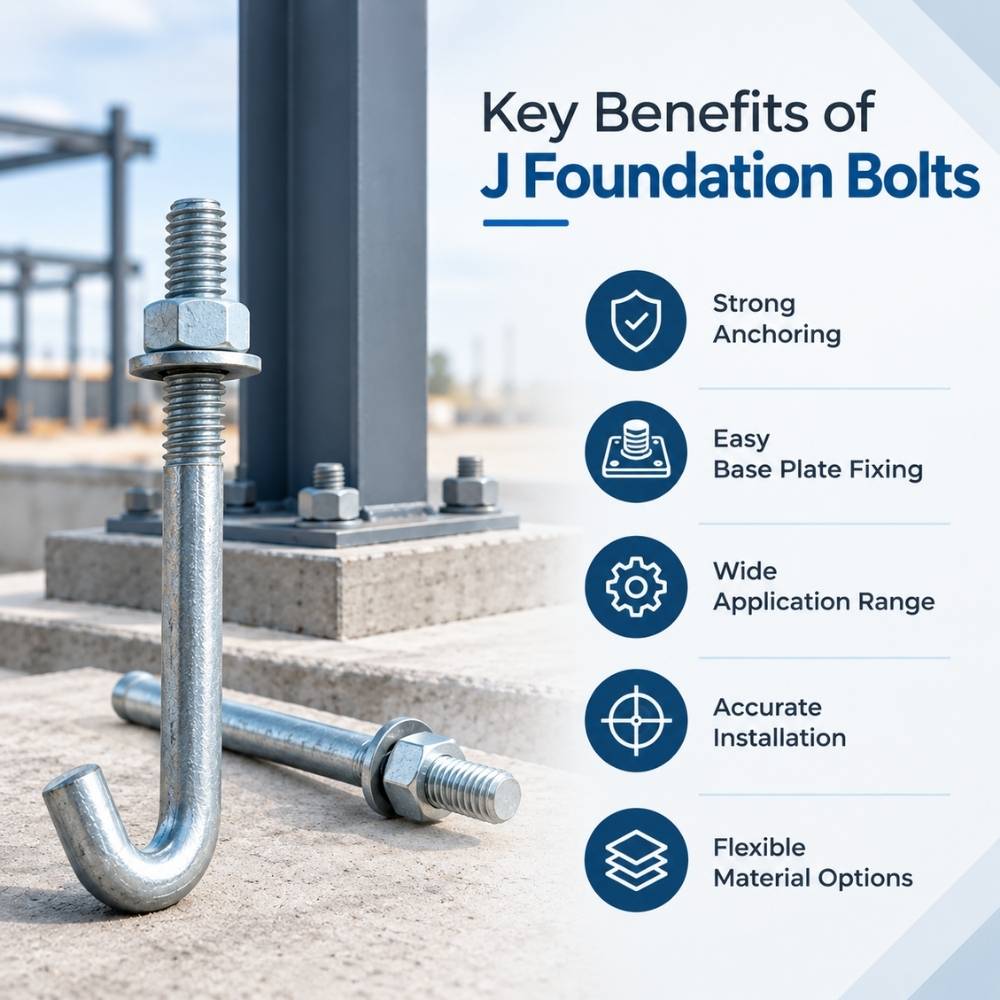
Key Benefits of J Foundation Bolts
A well-selected J Foundation Bolt can provide several practical advantages in industrial construction. More importantly, its simple geometry can make it suitable for many cast-in-place anchoring applications.
01. Secure Embedded Anchoring
The curved lower portion sits within the concrete and provides mechanical resistance. Therefore, the bolt can create a dependable connection after the concrete achieves the required strength.
02. Practical Base Plate Connection
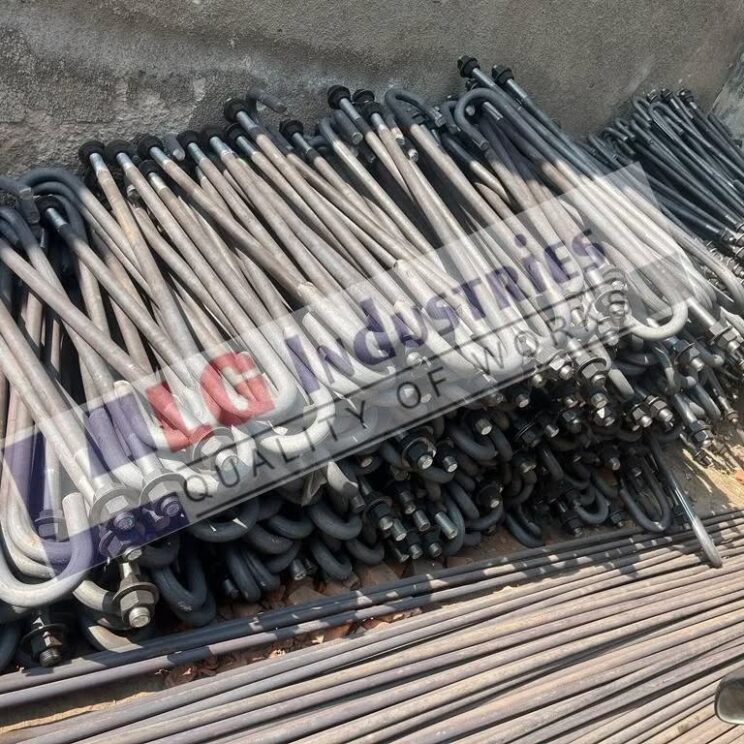
The threaded upper section provides a convenient fastening point. Fabricators can position the base plate over the projecting bolts and secure it with suitable nuts and washers.
03. Suitable for Industrial Applications
Manufacturers can produce J-type anchors in different diameters, lengths, thread specifications, and material options. Consequently, buyers can select dimensions according to project requirements.
04. Supports Accurate Structural Installation
Properly positioned anchor bolts help contractors install steel members and base plates accurately. As a result, the installation process can become more predictable and efficient.
05. Flexible Material Options
An MS Foundation Bolt can provide a practical option for many general industrial applications. However, projects exposed to moisture, chemicals, or corrosive environments may require suitable surface protection or a different material specification.
J Foundation Bolt Applications Across Industries
The application of a J Foundation Bolt extends across several industrial and infrastructure projects. Its usefulness comes from its ability to create a cast-in-place threaded connection between concrete and steel components.
01. Steel Structure Installation
Steel columns commonly connect to concrete foundations through base plates. In this arrangement, contractors position the anchor bolts according to the approved foundation layout.
After the concrete cures, workers place the steel base plate over the projecting threads. They then install washers and nuts to secure the assembly.
02. Machinery and Equipment Foundations
Industrial machinery requires stable positioning because vibration and movement can affect both equipment performance and surrounding structures.
For this reason, suitable Foundation Bolts can form an important part of machinery foundation systems. Engineers should determine bolt dimensions according to equipment loads, foundation design, and manufacturer requirements.
03. Manufacturing Facilities
Factories often contain steel frames, equipment supports, platforms, and process machinery. Each application can require a different anchoring arrangement.
Therefore, manufacturers and contractors should select bolt dimensions according to the specific connection rather than treating all applications identically.
04. Warehouses and Industrial Buildings
Warehouses use structural steel columns and support frames that require reliable foundation connections. A properly specified anchor can help secure these components to their concrete bases.
05. Energy and Process Facilities
Power, energy, and process facilities can experience demanding operating environments. In addition to structural loads, some areas may face heat, moisture, chemicals, or vibration.
As a result, material selection and surface protection become especially important when specifying MS Foundation Bolts or other anchor materials.
How to Select the Right J Foundation Bolt
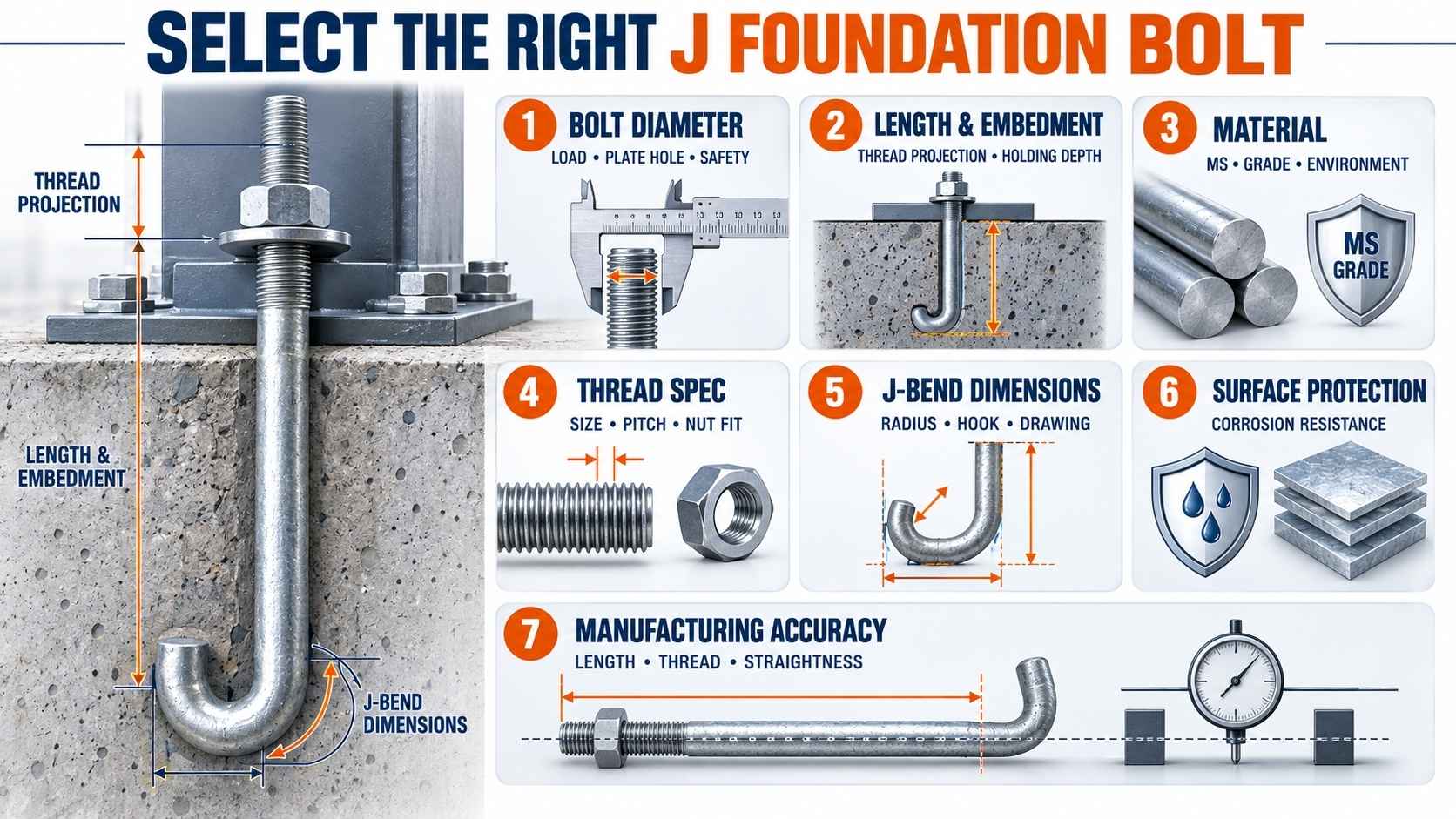
Selecting the right anchor requires attention to several technical factors. Therefore, buyers should review project drawings and engineering specifications before placing an order.
01. Bolt Diameter
Diameter affects the bolt’s capacity and connection compatibility. However, a larger diameter does not automatically make an anchoring system suitable.
Instead, select the diameter according to:
- Design loads
- Base plate hole size
- Structural calculations
- Concrete design
- Required safety factors
02. Overall Length and Embedment
The overall bolt length must provide enough threaded projection above the concrete while maintaining the required embedded length.
An incorrect length can create installation problems. For example, excessive projection may interfere with the nut arrangement, while insufficient projection may prevent proper fastening.
03. Material Selection
Material choice should reflect the application environment.
An MS Foundation Bolt can suit many general-purpose industrial projects. Meanwhile, demanding environments may require additional corrosion protection or a different material grade.
04. Thread Specification
Thread size and pitch must match the nuts and connection requirements. Consistent threading also supports smoother installation and proper nut engagement.
05. J Bend Dimensions
The curved portion should match the required anchoring arrangement and foundation geometry. Therefore, the bend radius, hook length, and overall dimensions should follow the approved drawing.
06. Surface Protection
Corrosion protection can improve service life in environments where moisture or aggressive conditions exist. Depending on the application, buyers may consider suitable protective treatments.
07. Manufacturing Accuracy
Dimensional accuracy matters because anchor bolts must align with the base plate and foundation layout.
A quality-focused manufacturer should maintain consistency in:
- Diameter
- Overall length
- Thread length
- Bend dimensions
- Straightness
- Surface finish
J Foundation Bolt Installation Guide and Key Considerations
Correct installation can influence the performance of the complete anchoring system. Therefore, contractors should follow the approved engineering drawings and installation procedure.
01. Positioning Before Concrete Pouring
Workers should accurately position the bolts before pouring concrete. A suitable template can help maintain spacing, alignment, and projection.
02. Protecting the Threads
The exposed threads should remain clean during concrete placement. Protective covers can help prevent concrete or debris from damaging the threaded section.
03. Checking Alignment
Before the concrete sets, installers should verify bolt location against the foundation drawing. Small positioning errors can create significant problems when workers install the steel base plate.
04. Final Connection
After the concrete reaches the specified strength, workers can install the supported component. They should use suitable washers and nuts and follow the specified tightening procedure.
Importantly, installation requirements vary by project. Therefore, the structural engineer’s drawings and specifications should take priority over generic recommendations.
J-Foundation Bolt vs Other Types of Foundation Bolts
Different projects may require different anchor geometries. Therefore, understanding the basic differences can help buyers choose the most suitable option for their structural and industrial requirements.
This comparison highlights why buyers should evaluate application, load requirements, material, dimensions, and installation conditions instead of selecting a foundation bolt only by its type.
Frequently Asked Questions About J Foundation Bolt
A J Foundation Bolt is a foundation anchoring fastener with a J-shaped or hooked lower section and a threaded upper portion. It is commonly embedded into concrete foundations to connect steel structures, base plates, machinery supports, and other components securely.
A J Foundation Bolt is used to create a strong connection between concrete foundations and structural or industrial components. Common applications include steel columns, base plates, machinery foundations, equipment supports, industrial frames, and fabricated structures.
The main benefits include secure concrete anchoring, reliable structural connections, practical installation, dimensional flexibility, and suitability for different industrial applications. Properly specified bolts can also help maintain the alignment and stability of supported components.
The main difference is the shape of the embedded section. A J Foundation Bolt has a hooked J-shaped profile, while an L Type Foundation Bolt uses an L-shaped bend. The appropriate option depends on the foundation design, load requirements, embedment arrangement, and project specifications.
J Foundation Bolts can be manufactured from materials such as mild steel and other grades specified according to project requirements. MS Foundation Bolt options are commonly considered for general industrial applications, while material selection should also account for environmental and corrosion conditions.
Yes, they can be suitable for heavy industrial applications when engineers specify the correct diameter, length, material, embedment, and thread dimensions. The complete anchoring system should match the structural loads and foundation design.
No FAQ found.
Choose the size according to the engineering requirements of the project. Important factors include bolt diameter, overall length, embedment depth, thread length, base plate hole size, material grade, expected loads, and environmental conditions.
Proper embedment helps the anchor develop the required connection within the concrete foundation. Insufficient or incorrect embedment can affect anchoring performance. Therefore, installers should follow the approved structural drawings and specified installation requirements.
Yes. Manufacturers can produce customized Foundation Bolts according to project drawings and specifications. Depending on the manufacturer, customization may include diameter, overall length, threaded length, bend dimensions, material, and surface protection.
MS Foundation Bolts are commonly used in industrial structures, steel frames, machinery supports, equipment foundations, base plates, warehouses, and general construction applications. The selected material grade and surface protection should suit the project environment.
Before ordering, check the required diameter, overall length, thread specification, thread length, bend dimensions, material grade, quantity, surface protection, and applicable drawings or technical specifications. Accurate information helps the manufacturer supply bolts that fit the intended application.
A reliable manufacturer can provide consistent dimensions, accurate threading, controlled bend geometry, suitable materials, and customized specifications. Quality manufacturing also helps reduce installation issues and supports consistent performance across large industrial projects.
No FAQ found.
Final Thoughts on J Foundation Bolt Selection
A J Foundation Bolt provides a practical anchoring option for industrial structures, machinery supports, steel columns, base plates, and other concrete-to-steel connections. Its hooked embedded section and threaded upper portion create a straightforward fastening arrangement for cast-in-place foundations.
However, the best result comes from correct engineering, accurate manufacturing, and careful installation. Therefore, buyers should consider diameter, length, embedment, material, thread specification, bend dimensions, environmental exposure, and installation requirements before choosing a product.
Whether a project requires a J-Type Foundation Bolt, MS Foundation Bolt, or another form of Foundation Bolts, the selection should always reflect the actual structural and environmental requirements.
For industrial projects where dependable anchoring matters, choosing the right specification from the beginning can help support safer installation, better alignment, and long-term connection performance.