U Bolt Guide for Strong and Reliable Foundation Fixing Work - LG Industries

U Bolt Guide for Strong and Reliable Foundation Fixing Work

U Bolt Manufacturer and Supplier in Ahmedabad
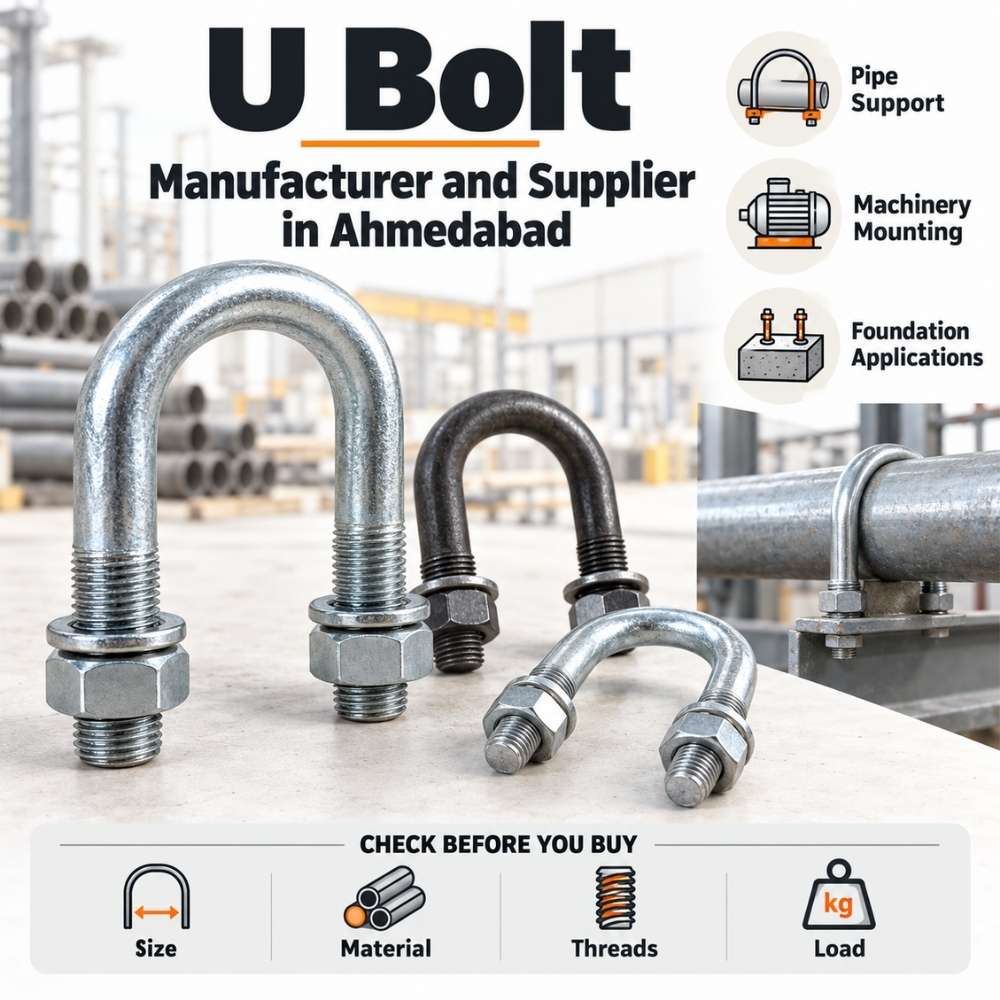
U Bolt Manufacturer and Supplier in Ahmedabad - LG Industries

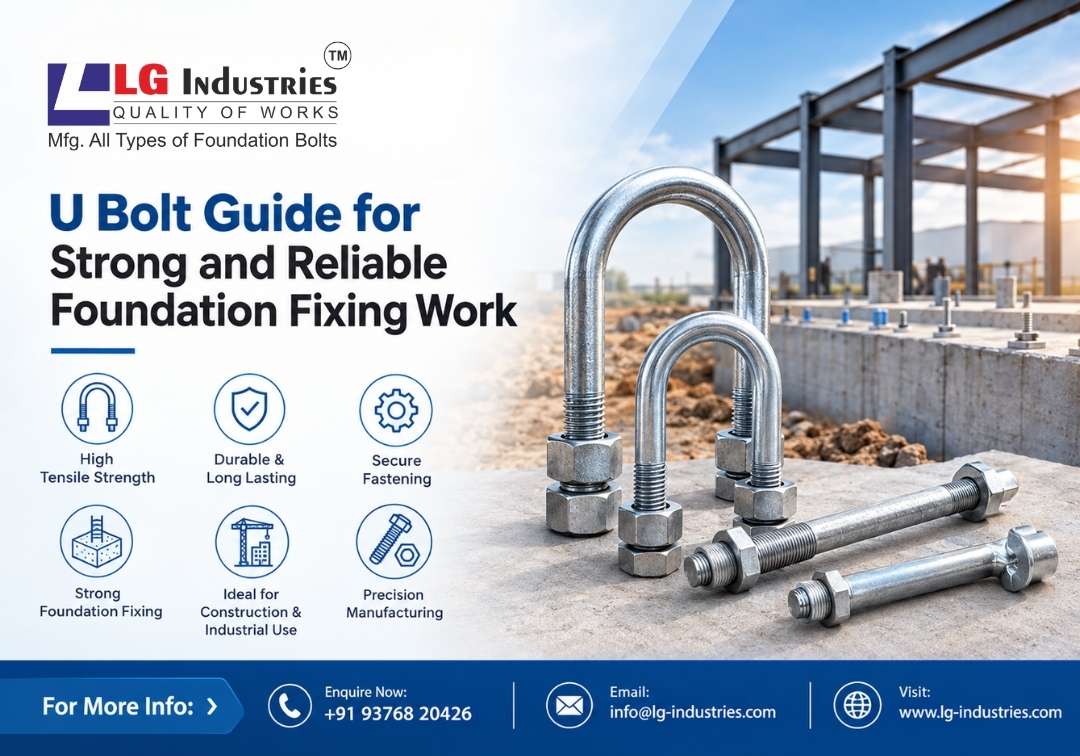
Choosing the right U Bolt can make a significant difference in how securely pipes, cables, machinery components, structural members, and other parts are held in position. Although the design looks simple, the correct bolt must match the application, load, dimensions, material, thread requirements, and installation conditions.

For industrial projects, construction work, infrastructure, and foundation-related applications, buyers often compare different types of Foundation Bolts, including specially designed U-shaped fastening solutions. Understanding these differences helps engineers, contractors, fabricators, and procurement teams make better purchasing decisions.

This guide explains how a U-Bolt works, where it is used, which specifications matter, and how to select a suitable solution for industrial requirements. It also covers important considerations for U Foundation Bolt, MS Foundation Bolt, and related foundation fastening applications.

What Is a U Bolt and How Does It Work?

A U-bolt is a curved fastening component designed to secure pipes, tubes, rods, cables, and other round or cylindrical components to a supporting structure. Its threaded ends work with nuts and washers to create a firm connection. Because of its simple construction, a U-bolt can provide practical support while allowing relatively easy installation and maintenance.

01. U-Shaped Body

The U-shaped body surrounds the supported component and helps keep it securely positioned against the mounting surface. Its curved design allows the fastener to hold round components without requiring complicated installation methods.

  • Provides stable component support
  • Helps distribute clamping pressure
  • Suitable for pipes, tubes, rods, and similar components
  • Supports secure positioning during operation

02. Threaded Ends

The threaded ends provide the fastening points for nuts and washers. During installation, the nuts are tightened to create the required clamping force. Therefore, correct thread size and sufficient thread length are important for a reliable connection.

  • Provides secure tightening
  • Allows easy installation and removal
  • Supports different thread specifications
  • Helps maintain consistent fastening pressure

03. Inside Width

Inside width refers to the distance between the inner sides of the U-shaped body. This dimension should match the outside diameter or overall dimensions of the supported component. A proper fit helps prevent excessive movement and uneven pressure.

  • Should match the component dimensions
  • Helps achieve accurate fitting
  • Reduces unwanted movement
  • Supports proper load distribution

04. Overall Length

Overall length determines how much of the threaded section remains available after the U-bolt passes around the component and through the mounting plate. Therefore, selection should consider the component size, mounting thickness, washer thickness, and nut engagement.

  • Consider the supported component thickness
  • Allow sufficient space for washers and nuts
  • Check the required thread engagement
  • Select the length according to the installation arrangement

How to Select the Right U Bolt

Choosing the correct product involves more than selecting a diameter. Instead, buyers should evaluate the complete application.

01. Measure the Supported Component

Start by measuring the outside diameter or relevant dimensions of the component. Then determine the required internal width of the U-shaped body.

This simple step helps reduce fitting problems during installation.

02. Select the Appropriate Material

Material selection should reflect the working environment and mechanical requirements.

MS Foundation Bolt and other mild-steel fastening solutions can provide a practical option for many general industrial applications. However, demanding environments may require protective finishes, coatings, or alternative materials.

03. Check Thread Specifications

Thread pitch, thread diameter, and threaded length should match the required nut and washer arrangement. Moreover, consistent threading can make installation smoother and reduce assembly difficulties.

04. Evaluate Surface Protection

Moisture, chemicals, outdoor exposure, and industrial contaminants can accelerate corrosion. Therefore, buyers should consider an appropriate surface treatment when the operating environment demands additional protection.

05. Consider Quantity and Custom Requirements

Large industrial projects often require multiple sizes or customized dimensions. A manufacturer that can understand drawings and project specifications can help simplify procurement.

U Bolt Applications Across Different Industries
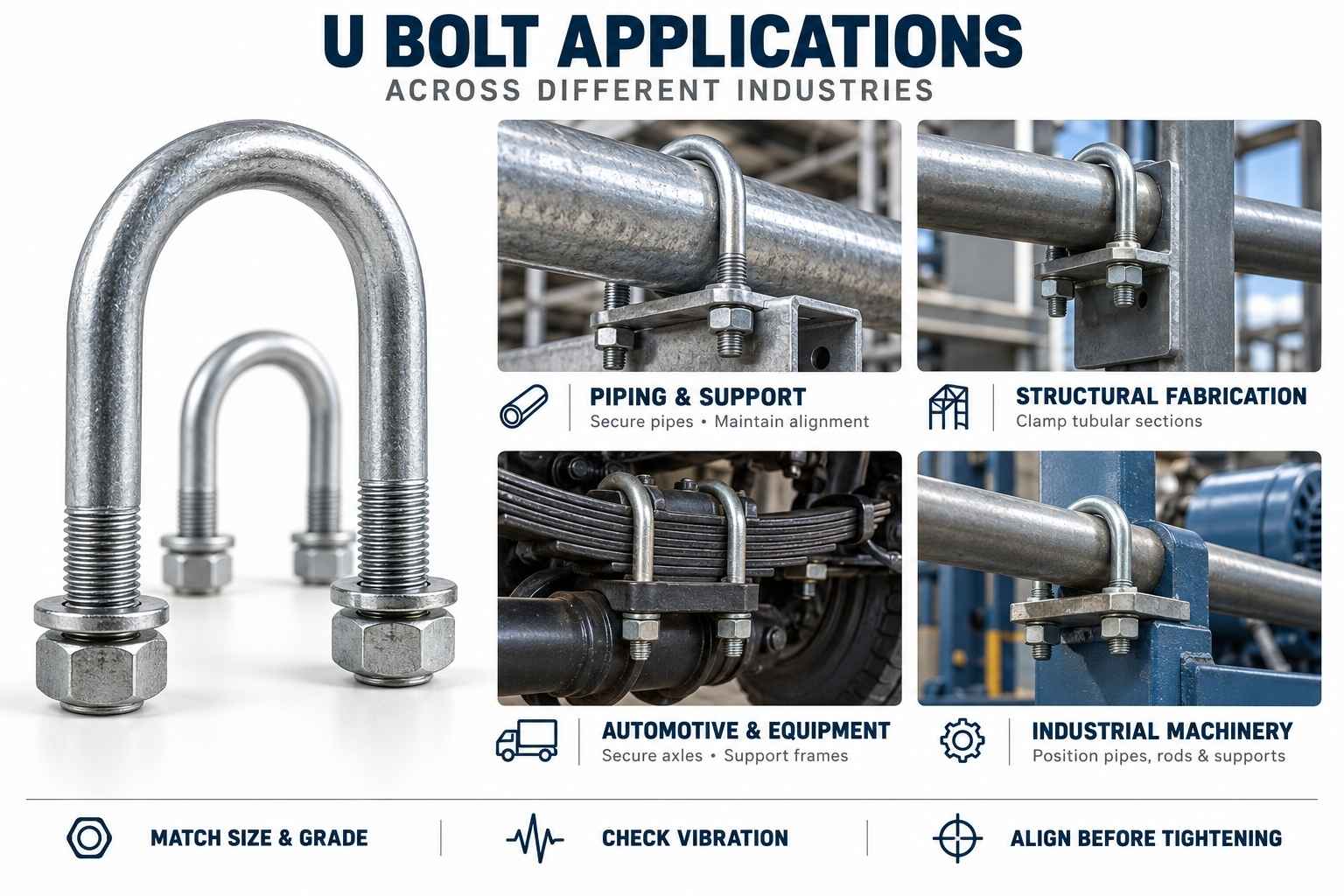
U Bolt Applications Across Different Industries - LG Industries

The versatility of the U Bolt in Ahmedabad makes it a practical fastening solution across several engineering sectors. However, each application requires the right dimensions, material, and specifications. 

01. Piping and Pipe Support

Industrial piping systems often require secure support to control movement and maintain alignment. A correctly sized fastener can clamp a pipe against a support channel or structural bracket.

Furthermore, proper spacing between supports can reduce unnecessary movement and help maintain the intended piping arrangement.

02. Structural Fabrication

Fabricators can use U-shaped fastening products to connect or hold tubular sections and other structural components. This application is particularly useful when the geometry of the assembly makes surrounding the component easier than drilling through it.

03. Automotive and Equipment Applications

Vehicles, trailers, agricultural equipment, and industrial machinery may require specialized fastening arrangements. Depending on the design, U-shaped fasteners can secure axles, frames, suspension-related components, pipes, or other tubular members.

04. Industrial Machinery

Machines often contain pipes, rods, frames, and support assemblies that need controlled positioning. A suitable fastening component can help maintain alignment while allowing future maintenance.

05. Vibration Considerations

Machines may generate continuous vibration. Therefore, engineers should select appropriate grades, dimensions, washers, nuts, and tightening practices for the specific operating environment.

06. Alignment Requirements

Correct alignment can improve assembly quality and reduce unwanted stress. Consequently, installers should position the fastener correctly before tightening the nuts.

Key Benefits of Using a U Bolt

The right fastening solution can simplify assembly while improving the stability of supported components. A properly specified product also helps maintenance teams remove and replace components more efficiently.

01. Secure Component Clamping

The curved body surrounds the supported pipe or tubular member. Consequently, tightening the nuts can create a firm mechanical connection between the component and its mounting surface.

02. Simple Installation

The design does not normally require complicated assembly procedures. Workers can position the fastener around the component, insert the threaded ends through the mounting arrangement, and tighten the nuts.

Therefore, the product can provide a practical solution for fabrication shops, maintenance work, equipment installation, and industrial construction.

03. Flexible Industrial Applications

Different sizes and materials allow the product to serve a broad range of applications. For instance, manufacturers can produce configurations for piping supports, structural frames, machinery assemblies, agricultural equipment, automotive components, and fabrication projects.

04. Convenient Maintenance

A bolted connection allows maintenance personnel to loosen and remove the fastening hardware when required. As a result, technicians can inspect or replace supported components without permanently cutting the connection.

U Bolt Selection Guide

Specification What to Check Why It Matters
Bolt Diameter Match the required pipe or component size Provides proper fit and clamping
Inside Width Measure the outside diameter of the supported component Prevents fitting and alignment issues
Overall Length Consider component and mounting plate thickness Ensures sufficient threaded projection
Thread Length Check required nut and washer clearance Supports secure tightening
Material MS, carbon steel, or other specified material Helps meet strength and environmental requirements
Surface Finish Select suitable coating or protection Helps improve corrosion resistance
Bend Radius Match the component shape and application Helps maintain proper contact
Load Requirement Consider tension, shear, vibration, and operating loads Supports appropriate product selection
Application Piping, machinery, fabrication, structural support, etc. Determines the suitable configuration
Quantity & Custom Size Confirm project quantity and special dimensions Helps simplify bulk procurement and production

Frequently Asked Questions About U Bolt

A U-bolt is used to secure pipes, tubes, rods, cables, frames, and other round components. Its U-shaped body surrounds the component and holds it firmly against a support.

Was this helpful?

A U-bolt surrounds the supported component while its threaded ends pass through a mounting plate or bracket. Nuts and washers then tighten the connection and keep the component securely in position.

Was this helpful?

Choose the size according to the component diameter, inside width, bolt diameter, overall length, thread length, and mounting thickness. The expected load should also be considered.

Was this helpful?

U Bolts are commonly manufactured from mild steel, carbon steel, stainless steel, and other specified materials. Material selection depends on strength, application, and environmental conditions.

Was this helpful?

A U Foundation Bolt is a U-shaped anchoring component used for foundation and structural applications. Its size, length, bend, material, and embedment should match the project requirements.

Was this helpful?

MS Foundation Bolts are used for various industrial, construction, machinery, structural, and foundation applications where mild steel meets the required engineering specifications.

Was this helpful?

U-bolts are commonly used in piping systems, machinery, structural fabrication, automotive equipment, agricultural equipment, trailers, and industrial support assemblies.

Was this helpful?

Yes, U Bolts can be manufactured in customized dimensions depending on production capabilities. Customers can specify diameter, length, thread, material, bend dimensions, and quantity.

Was this helpful?

Consider the bolt diameter, overall length, embedment depth, thread length, material grade, bend dimensions, load requirements, base plate thickness, and environmental conditions.

Was this helpful?

Look for a supplier that offers suitable materials, accurate dimensions, consistent manufacturing, customization options, and technical support according to your application and project requirements.

Was this helpful?

The required surface finish depends on the application and environment. Outdoor, humid, or corrosive conditions may require suitable protective coatings to improve corrosion resistance.

Was this helpful?

A U-Bolt provides secure clamping, simple installation, reliable component support, easy maintenance, and flexibility for different industrial and engineering applications.

Was this helpful?

Conclusion on U-Bolt Selection for Industrial Applications 

A well-selected U-Bolt can provide a practical and dependable fastening solution for pipes, tubular components, structural assemblies, machinery, and industrial support systems. Its simple U-shaped design makes installation straightforward while providing effective clamping around supported components.

At the same time, foundation-related applications require additional attention to engineering design, embedment, material selection, dimensions, and environmental conditions. Therefore, buyers should select U Foundation Bolt, Foundation Bolt, or MS Foundation Bolt products according to the actual project requirements rather than relying only on product names.

For industrial buyers searching for reliable fastening solutions, LG Industries offers manufacturing and supply support for different engineering requirements. Whether the requirement involves standard dimensions, project quantities, or application-specific specifications, discussing the technical details before ordering can help achieve a better-fitting and more dependable solution.
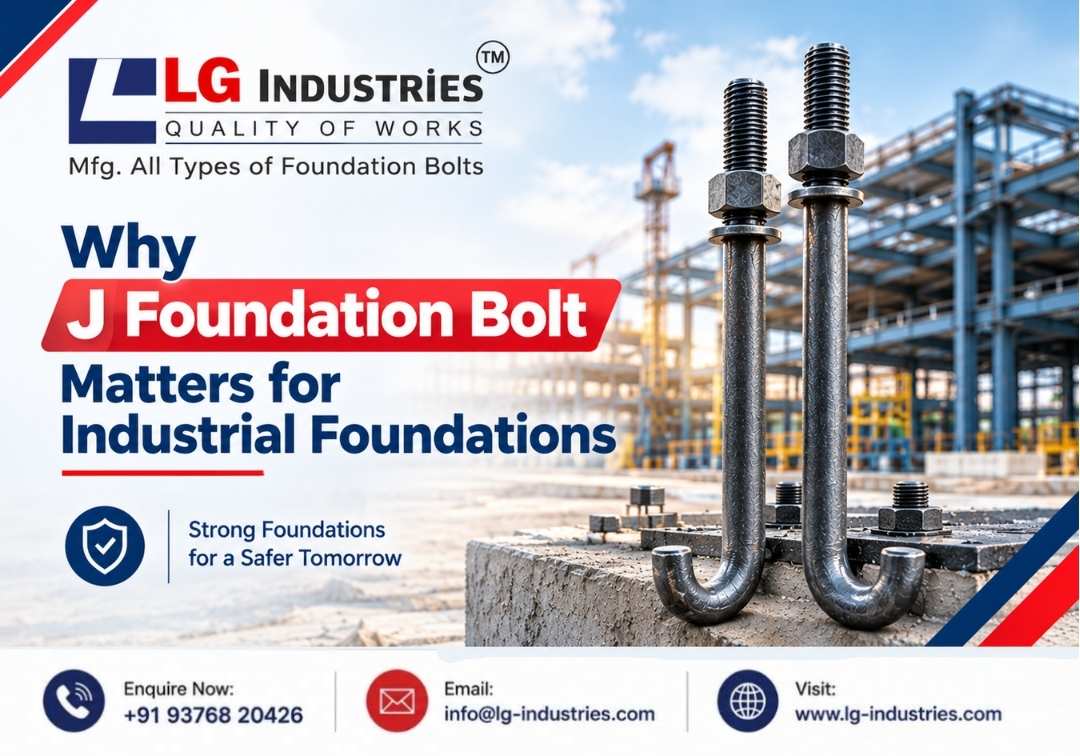
    Why J Foundation Bolt Matters for Industrial Foundations - LG Industries

    Why J Foundation Bolt Matters for Industrial Foundations

    J Foundation Bolt Uses, Benefits, and Applications

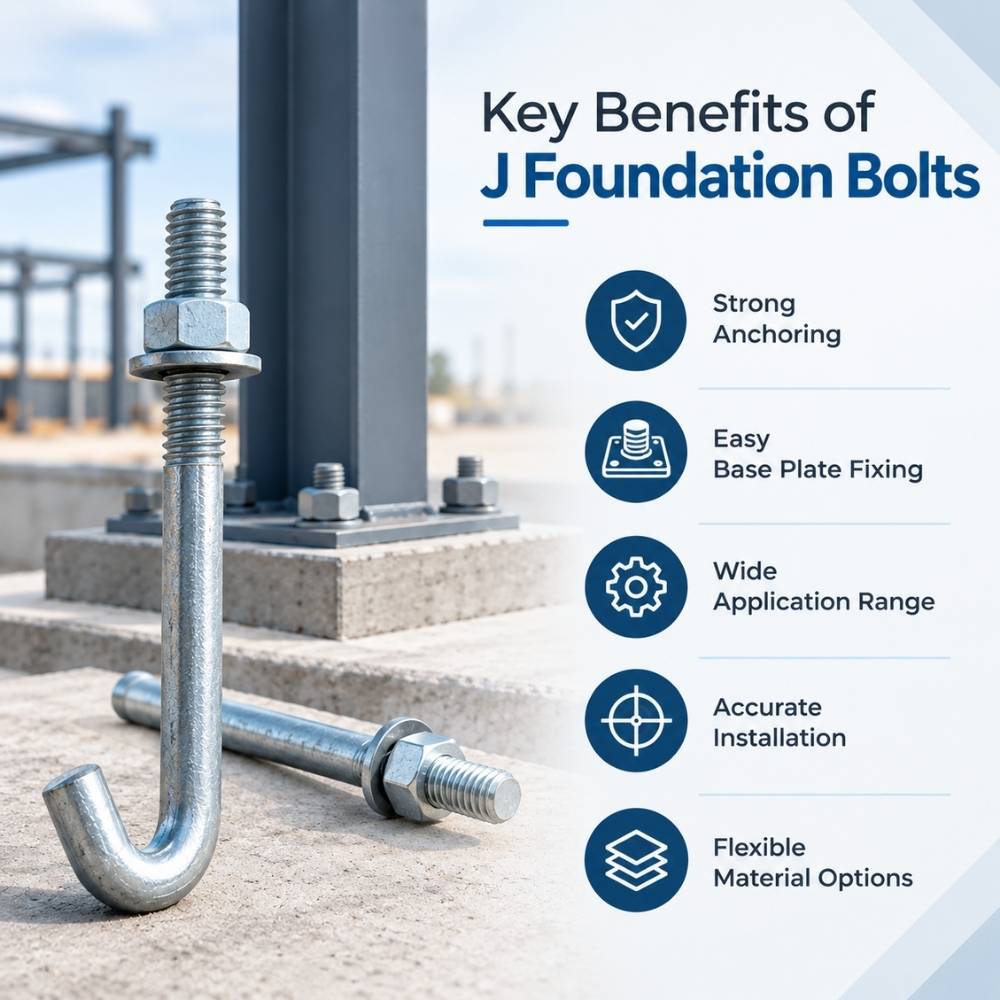
    Key Benefits of J Foundation Bolts - LG Industries

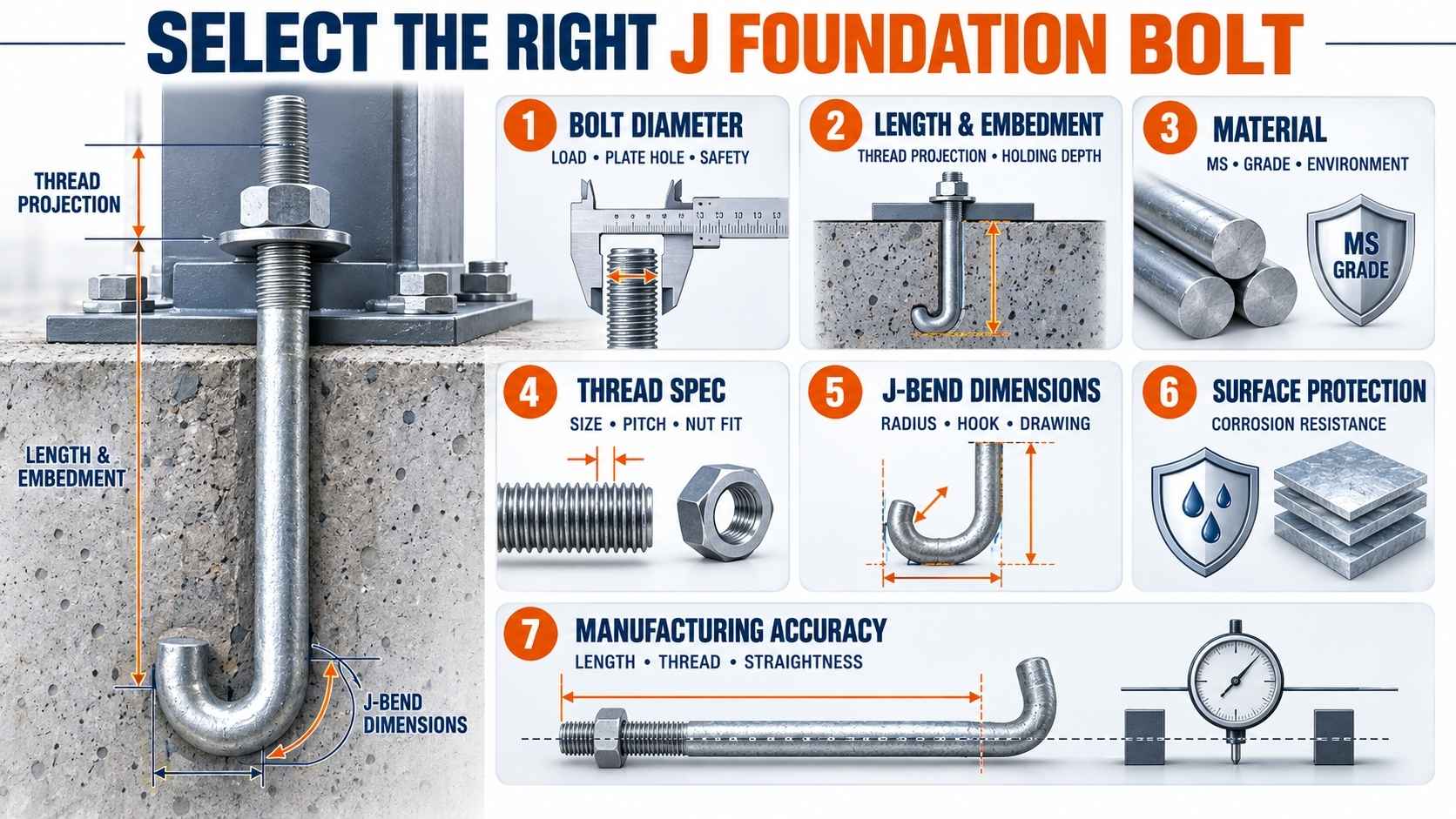
    Industrial structures depend on strong connections between concrete foundations and steel components. Therefore, choosing the right anchoring hardware can directly influence stability, alignment, and long-term structural performance. Among the available anchoring options, the J Foundation Bolt offers a practical solution for projects that require secure embedding and dependable fastening.

    A properly selected Foundation Bolt helps connect base plates, steel columns, machinery supports, and structural frames to concrete foundations. Moreover, the J-shaped configuration provides an effective anchoring profile within the concrete, while the threaded section allows engineers and fabricators to secure the supported component with nuts and washers.

    However, selecting an anchor should involve more than simply choosing a diameter. Project loads, embedment depth, material, thread dimensions, corrosion conditions, installation requirements, and structural design all matter. This guide explains the role of a J Foundation Bolt, its benefits, applications, selection factors, and practical installation considerations.

    Why Choose a J Foundation Bolt for Industrial Projects?

    A J Foundation Bolt uses a curved, hook-like lower section that sits inside the concrete foundation. Meanwhile, the upper threaded portion remains accessible for connecting a base plate or structural component.

    This design creates a mechanical anchoring arrangement within the concrete. As a result, the bolt can help resist unwanted movement when the supported structure experiences operational or environmental forces.

    Industrial projects often encounter several types of loads, including:

    • Static structural loads
    • Equipment vibration
    • Wind forces
    • Operational movement
    • Temperature-related expansion and contraction
    • Impact and dynamic loads

    Consequently, engineers need an anchoring arrangement that suits the project’s actual loading conditions rather than relying only on standard dimensions.

    01. Strong Connection Between Concrete and Steel

    The primary purpose of a foundation anchor is to establish a dependable connection between the concrete base and the supported steel component.

    The hooked end of the J-Type Foundation Bolt provides an embedded anchoring profile. At the same time, the exposed threaded section enables secure fastening through a nut and washer arrangement.

    This connection can support applications such as

    • Steel columns
    • Structural base plates
    • Machinery foundations
    • Industrial equipment
    • Storage and process structures
    • Fabricated steel frames
    • Support brackets

    Furthermore, accurate positioning during foundation preparation helps ensure that the bolt aligns correctly with the holes in the base plate.

    02. Improved Stability for Heavy-Duty Structures

    Heavy equipment and structural frames can generate significant forces during operation. For example, rotating machinery can create vibration, while industrial structures can experience wind or operational loads.

    Therefore, the anchoring system must work together with the concrete foundation and steel structure to maintain stability.

    A correctly designed Foundation Bolt can help:

    • Maintain the position of the supported structure.
    • Transfer applicable forces through the connection.
    • Reduce unwanted movement.
    • Support accurate base-plate installation.
    • Improve the reliability of the overall foundation connection.

    Nevertheless, the bolt should always match the project’s engineering requirements. No single bolt design suits every foundation.

    Key Benefits of J Foundation Bolts

    Key Benefits of J Foundation Bolts - LG Industries

    A well-selected J Foundation Bolt can provide several practical advantages in industrial construction. More importantly, its simple geometry can make it suitable for many cast-in-place anchoring applications.

    01. Secure Embedded Anchoring

    The curved lower portion sits within the concrete and provides mechanical resistance. Therefore, the bolt can create a dependable connection after the concrete achieves the required strength.

    02. Practical Base Plate Connection

    The threaded upper section provides a convenient fastening point. Fabricators can position the base plate over the projecting bolts and secure it with suitable nuts and washers.

    03. Suitable for Industrial Applications

    Manufacturers can produce J-type anchors in different diameters, lengths, thread specifications, and material options. Consequently, buyers can select dimensions according to project requirements.

    04. Supports Accurate Structural Installation

    Properly positioned anchor bolts help contractors install steel members and base plates accurately. As a result, the installation process can become more predictable and efficient.

    05. Flexible Material Options

    An MS Foundation Bolt can provide a practical option for many general industrial applications. However, projects exposed to moisture, chemicals, or corrosive environments may require suitable surface protection or a different material specification.

    J Foundation Bolt Applications Across Industries

    The application of a J Foundation Bolt extends across several industrial and infrastructure projects. Its usefulness comes from its ability to create a cast-in-place threaded connection between concrete and steel components.

    01. Steel Structure Installation

    Steel columns commonly connect to concrete foundations through base plates. In this arrangement, contractors position the anchor bolts according to the approved foundation layout.

    After the concrete cures, workers place the steel base plate over the projecting threads. They then install washers and nuts to secure the assembly.

    02. Machinery and Equipment Foundations

    Industrial machinery requires stable positioning because vibration and movement can affect both equipment performance and surrounding structures.

    For this reason, suitable Foundation Bolts can form an important part of machinery foundation systems. Engineers should determine bolt dimensions according to equipment loads, foundation design, and manufacturer requirements.

    03. Manufacturing Facilities

    Factories often contain steel frames, equipment supports, platforms, and process machinery. Each application can require a different anchoring arrangement.

    Therefore, manufacturers and contractors should select bolt dimensions according to the specific connection rather than treating all applications identically.

    04. Warehouses and Industrial Buildings

    Warehouses use structural steel columns and support frames that require reliable foundation connections. A properly specified anchor can help secure these components to their concrete bases.

    05. Energy and Process Facilities

    Power, energy, and process facilities can experience demanding operating environments. In addition to structural loads, some areas may face heat, moisture, chemicals, or vibration.

    As a result, material selection and surface protection become especially important when specifying MS Foundation Bolts or other anchor materials.

    How to Select the Right J Foundation Bolt

    How to Select the Right J Foundation Bolt - LG Industries

    Selecting the right anchor requires attention to several technical factors. Therefore, buyers should review project drawings and engineering specifications before placing an order.

    01. Bolt Diameter

    Diameter affects the bolt’s capacity and connection compatibility. However, a larger diameter does not automatically make an anchoring system suitable.

    Instead, select the diameter according to:

    • Design loads
    • Base plate hole size
    • Structural calculations
    • Concrete design
    • Required safety factors

    02. Overall Length and Embedment

    The overall bolt length must provide enough threaded projection above the concrete while maintaining the required embedded length.

    An incorrect length can create installation problems. For example, excessive projection may interfere with the nut arrangement, while insufficient projection may prevent proper fastening.

    03. Material Selection

    Material choice should reflect the application environment.

    An MS Foundation Bolt can suit many general-purpose industrial projects. Meanwhile, demanding environments may require additional corrosion protection or a different material grade.

    04. Thread Specification

    Thread size and pitch must match the nuts and connection requirements. Consistent threading also supports smoother installation and proper nut engagement.

    05. J Bend Dimensions

    The curved portion should match the required anchoring arrangement and foundation geometry. Therefore, the bend radius, hook length, and overall dimensions should follow the approved drawing.

    06. Surface Protection

    Corrosion protection can improve service life in environments where moisture or aggressive conditions exist. Depending on the application, buyers may consider suitable protective treatments.

    07. Manufacturing Accuracy

    Dimensional accuracy matters because anchor bolts must align with the base plate and foundation layout.

    A quality-focused manufacturer should maintain consistency in:

    • Diameter
    • Overall length
    • Thread length
    • Bend dimensions
    • Straightness
    • Surface finish

    J Foundation Bolt Installation Guide and Key Considerations 

    Correct installation can influence the performance of the complete anchoring system. Therefore, contractors should follow the approved engineering drawings and installation procedure.

    01. Positioning Before Concrete Pouring

    Workers should accurately position the bolts before pouring concrete. A suitable template can help maintain spacing, alignment, and projection.

    02. Protecting the Threads

    The exposed threads should remain clean during concrete placement. Protective covers can help prevent concrete or debris from damaging the threaded section.

    03. Checking Alignment

    Before the concrete sets, installers should verify bolt location against the foundation drawing. Small positioning errors can create significant problems when workers install the steel base plate.

    04. Final Connection

    After the concrete reaches the specified strength, workers can install the supported component. They should use suitable washers and nuts and follow the specified tightening procedure.

    Importantly, installation requirements vary by project. Therefore, the structural engineer’s drawings and specifications should take priority over generic recommendations.

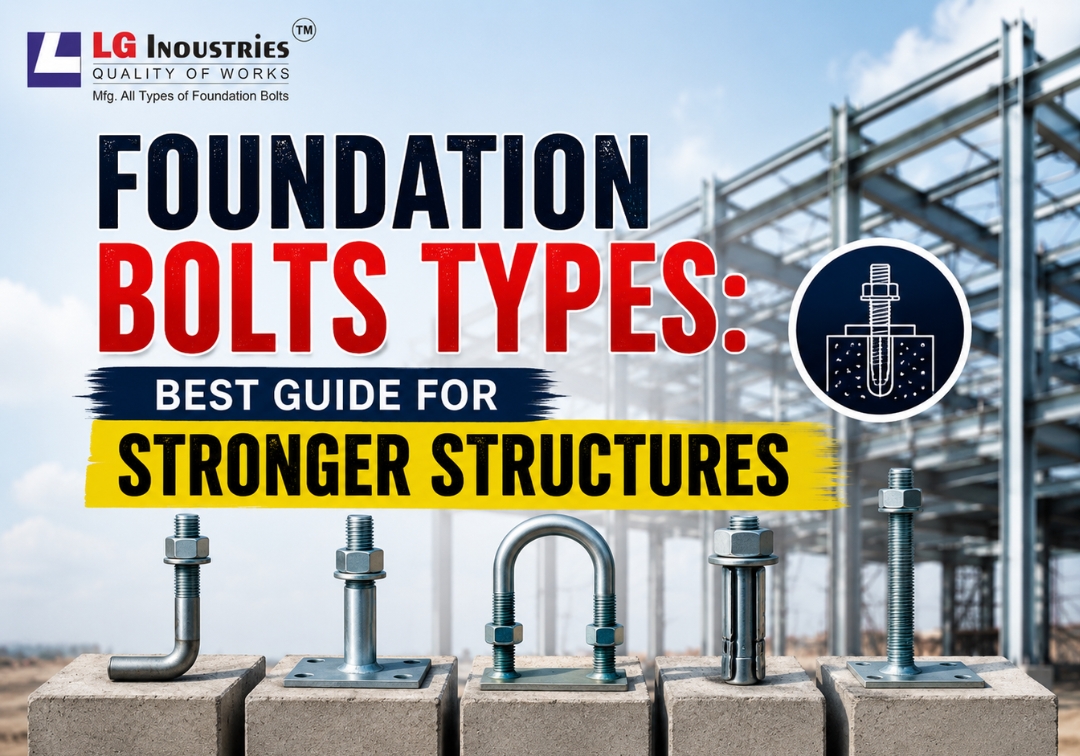
    J-Foundation Bolt vs Other Types of Foundation Bolts 

    Different projects may require different anchor geometries. Therefore, understanding the basic differences can help buyers choose the most suitable option for their structural and industrial requirements.

    Foundation Bolt Type Typical Application Key Advantage Main Consideration
    J Foundation Bolt Industrial foundations and structural supports Strong hooked anchoring inside concrete Correct embedment depth and alignment
    L Type Foundation Bolt Steel columns, base plates, and support frames Reliable bent anchoring profile Accurate bend and embedment dimensions
    Foundation Bolt General structural and equipment anchoring Versatile solution for multiple applications Specification should match project loads
    MS Foundation Bolt General industrial and construction projects Practical and economical material option Suitable corrosion protection may be required
    MS Foundation Bolts Heavy equipment and fabricated steel structures Available in customized sizes and specifications Material grade and dimensions must suit the application

    This comparison highlights why buyers should evaluate application, load requirements, material, dimensions, and installation conditions instead of selecting a foundation bolt only by its type.

    Frequently Asked Questions About J Foundation Bolt

    A J Foundation Bolt is a foundation anchoring fastener with a J-shaped or hooked lower section and a threaded upper portion. It is commonly embedded into concrete foundations to connect steel structures, base plates, machinery supports, and other components securely.

    Was this helpful?

    A J Foundation Bolt is used to create a strong connection between concrete foundations and structural or industrial components. Common applications include steel columns, base plates, machinery foundations, equipment supports, industrial frames, and fabricated structures.

    Was this helpful?

    The main benefits include secure concrete anchoring, reliable structural connections, practical installation, dimensional flexibility, and suitability for different industrial applications. Properly specified bolts can also help maintain the alignment and stability of supported components.

    Was this helpful?

    The main difference is the shape of the embedded section. A J Foundation Bolt has a hooked J-shaped profile, while an L Type Foundation Bolt uses an L-shaped bend. The appropriate option depends on the foundation design, load requirements, embedment arrangement, and project specifications.

    Was this helpful?

    J Foundation Bolts can be manufactured from materials such as mild steel and other grades specified according to project requirements. MS Foundation Bolt options are commonly considered for general industrial applications, while material selection should also account for environmental and corrosion conditions.

    Was this helpful?

    Yes, they can be suitable for heavy industrial applications when engineers specify the correct diameter, length, material, embedment, and thread dimensions. The complete anchoring system should match the structural loads and foundation design.

    Was this helpful?

    Choose the size according to the engineering requirements of the project. Important factors include bolt diameter, overall length, embedment depth, thread length, base plate hole size, material grade, expected loads, and environmental conditions.

    Was this helpful?

    Proper embedment helps the anchor develop the required connection within the concrete foundation. Insufficient or incorrect embedment can affect anchoring performance. Therefore, installers should follow the approved structural drawings and specified installation requirements.

    Was this helpful?

    Yes. Manufacturers can produce customized Foundation Bolts according to project drawings and specifications. Depending on the manufacturer, customization may include diameter, overall length, threaded length, bend dimensions, material, and surface protection.

    Was this helpful?

    MS Foundation Bolts are commonly used in industrial structures, steel frames, machinery supports, equipment foundations, base plates, warehouses, and general construction applications. The selected material grade and surface protection should suit the project environment.

    Was this helpful?

    Before ordering, check the required diameter, overall length, thread specification, thread length, bend dimensions, material grade, quantity, surface protection, and applicable drawings or technical specifications. Accurate information helps the manufacturer supply bolts that fit the intended application.

    Was this helpful?

    A reliable manufacturer can provide consistent dimensions, accurate threading, controlled bend geometry, suitable materials, and customized specifications. Quality manufacturing also helps reduce installation issues and supports consistent performance across large industrial projects.

    Was this helpful?

    Final Thoughts on J Foundation Bolt Selection

    A J Foundation Bolt provides a practical anchoring option for industrial structures, machinery supports, steel columns, base plates, and other concrete-to-steel connections. Its hooked embedded section and threaded upper portion create a straightforward fastening arrangement for cast-in-place foundations.

    However, the best result comes from correct engineering, accurate manufacturing, and careful installation. Therefore, buyers should consider diameter, length, embedment, material, thread specification, bend dimensions, environmental exposure, and installation requirements before choosing a product.

    Whether a project requires a J-Type Foundation Bolt, MS Foundation Bolt, or another form of Foundation Bolts, the selection should always reflect the actual structural and environmental requirements.

    For industrial projects where dependable anchoring matters, choosing the right specification from the beginning can help support safer installation, better alignment, and long-term connection performance.

      How L Type Foundation Bolts Improve Industrial Safety

      L Type Foundation Bolts for Safer Industrial Structures

      Why Choose L Type Foundation Bolts? 

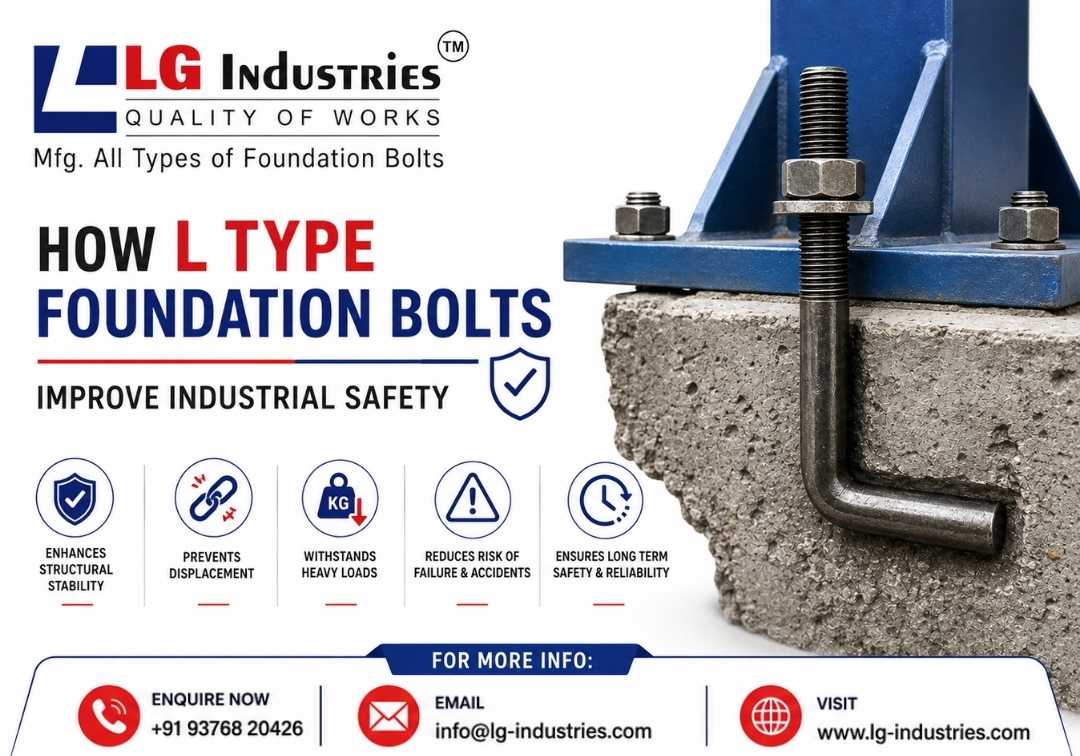
      A strong structure begins with a strong connection. When steel columns, machinery, structural frames, or heavy equipment need to be firmly anchored to a concrete base, L Type Foundation Bolts provide a practical and dependable fastening solution.

      Unlike ordinary fasteners, these bolts are designed to become an integral part of the foundation. Their bent L-shaped profile provides a mechanical anchoring effect inside concrete, helping resist movement, vibration, and pulling forces.

      Whether you are sourcing fasteners for a factory project, industrial shed, steel structure, equipment foundation, or infrastructure application, selecting the right Foundation Bolt can directly influence installation quality and long-term stability.

      This guide explains how L-type foundation bolts work, where they are used, why MS foundation bolts remain popular, and what buyers should check before placing an order.

      Why L Type Foundation Bolts Matter in Industrial Construction

      Industrial construction projects require reliable anchoring systems to handle static loads, vibration, wind forces, temperature changes, and operational movement. L-Type Foundation Bolts help create a strong connection between steel structures and concrete foundations, supporting stability, alignment, and long-term performance.

      01. Strong Steel-to-Concrete Connection

      L-shaped foundation bolts provide an embedded section that grips the surrounding concrete and helps resist movement. The threaded upper portion allows base plates and structural components to be securely fastened with suitable nuts and washers.

      Key benefits include:

      • Strong connection between steel and concrete
      • Secure positioning of base plates
      • Improved resistance to structural movement
      • Easy fastening with nuts and washers

      02. Better Stability Under Heavy Loads

      Industrial machinery and structural frames can experience significant loads during operation. A properly installed L Foundation Bolt helps hold the base plate securely in position and reduces unwanted movement.

      When selecting the bolt, important factors include:

      • Bolt diameter and length
      • Material and strength grade
      • Required embedment depth
      • Concrete strength
      • Application-specific load requirements

      Therefore, choosing the correct Foundation Bolt can improve the stability and reliability of industrial structures.

      03. Effective Load Transfer

      Foundation bolts transfer forces from the supported structure into the concrete foundation. Depending on the application, these forces may include tension, shear, compression, or a combination of different loads.

      Engineers should consider:

      • Load direction and magnitude
      • Bolt spacing
      • Edge distance
      • Embedment length
      • Concrete foundation strength
      • Installation and tightening requirements

      Proper consideration of these factors helps ensure that the anchoring system performs effectively under expected operating conditions.

      04. Resistance to Vibration and Movement

      Industrial equipment such as pumps, compressors, motors, conveyors, and heavy machinery can generate continuous vibration. Over time, repeated movement can affect alignment and connection stability if the anchoring system is not properly designed.

      A correctly installed L Type Foundation Bolt can help:

      • Minimize unwanted movement
      • Maintain base plate alignment
      • Improve equipment stability
      • Support reliable long-term operation

      Consequently, L Type Foundation Bolts are an important fastening solution for industrial construction where strength, stability, and dependable anchoring are required.

      Key Benefits of Foundation Bolts for Industrial Structures

      A dependable anchoring system provides several advantages beyond simply holding a structure in place. Foundation Bolts help create secure connections between concrete foundations and steel structures while supporting accurate installation, equipment stability, and long-term structural performance.

      01. Secure Anchoring for Heavy Structures

      Foundation anchoring creates a direct connection between the concrete base and the supported structure. As a result, steel columns, equipment supports, base frames, and other heavy components can remain securely positioned.

      Key advantages include:

      • Secure connection between concrete and steel
      • Better positioning of structural components
      • Improved resistance to unwanted movement
      • Suitable configurations for different load requirements

      Therefore, project designers can select appropriate bolt dimensions and configurations according to the structural requirements.

      02. Flexible Applications Across Industrial Projects

      Industrial construction includes manufacturing plants, warehouses, energy facilities, process plants, infrastructure projects, and equipment foundations. Each application may have different anchoring requirements.

      MS Foundation Bolts can be suitable for many general structural applications when their material, dimensions, and configuration meet the engineering requirements.

      Common applications include:

      • Steel columns and structural frames
      • Equipment support foundations
      • Base plates and machinery frames
      • Industrial buildings and warehouses

      03. Reliable Support for Steel Structures

      Steel structures require accurate and stable foundation connections. During construction, contractors position the anchor bolts according to the approved foundation layout. Afterward, the base plate is placed over the projecting threaded sections and secured using compatible nuts and washers.

      This installation method can provide:

      • Accurate base plate positioning
      • Stable structural connections
      • Proper alignment during erection
      • Easier adjustment during installation

      Consequently, correctly positioned Foundation Bolts can contribute to a strong and dependable steel-to-concrete connection.

      04. Stable Foundations for Heavy Machinery

      Industrial machinery needs stable foundations to maintain proper alignment during operation. Pumps, compressors, motors, generators, and processing equipment can produce vibration and operational forces.

      A suitable MS Foundation Bolt can provide the threaded connection required for securing machinery or support frames.

      Important considerations include:

      • Equipment weight and operating loads
      • Vibration levels
      • Bolt diameter and embedment
      • Foundation design
      • Nut and washer compatibility

      Proper anchoring can help minimize unwanted movement and support reliable equipment operation.

      05. Long-Term Structural Reliability

      Industrial structures often operate for many years under demanding environmental and mechanical conditions. Therefore, material selection, thread quality, corrosion protection, and correct installation are important for maintaining long-term performance.

      When selecting Foundation Bolts, consider:

      • Moisture and outdoor exposure
      • Chemical or corrosive environments
      • Operating temperature
      • Expected structural loading
      • Required corrosion protection
      • Thread and nut compatibility

      For general construction, mild steel can provide a practical balance of performance and cost. However, demanding environments may require corrosion-resistant materials or protective coatings. In addition, clean and properly formed threads should be inspected before installation to ensure compatibility with the selected nuts and washers.

      How to Select the Right L Type Foundation Bolts

      Choosing the right L-Type Foundation Bolt involves more than selecting the correct diameter. The complete fastening arrangement should match the foundation design, load requirements, installation conditions, and environmental exposure. Consider the following important factors before selecting foundation bolts:

      01. Bolt Diameter

      The bolt diameter should be selected according to the expected structural loads and project requirements. A suitable diameter helps provide the required strength and supports secure anchoring of the structure.

      02. Overall Length

      The overall length should provide sufficient embedment inside the concrete foundation while also leaving adequate exposed thread for nut engagement. Proper length ensures secure installation and reliable load transfer.

      03. Material Selection

      The material should be chosen according to the load conditions and surrounding environment. MS Foundation Bolts are commonly used for many structural applications, while suitable material grades can be selected for demanding or corrosive environments.

      04. Thread Specification

      Correct thread dimensions are essential for proper nut engagement and smooth installation. Matching the thread specification with the required nuts helps create a secure and dependable fastening connection.

      05. Bend Dimensions

      The L-shaped bent section should match the required anchoring depth and foundation arrangement. Proper bend dimensions help the bolt achieve effective anchorage within the concrete foundation.

      06. Surface Protection

      Surface protection should be considered when the bolts are exposed to moisture, chemicals, or other corrosive conditions. Galvanizing or another suitable protective finish can help improve corrosion resistance and extend service life.

      07. Manufacturing Accuracy

      Accurate manufacturing ensures consistent bolt dimensions, proper bends, and clean threads. This can make installation easier, reduce assembly problems, and support reliable performance across multiple foundation bolt installations.

      Comparison of Foundation Bolt Types for Industrial Applications

      Foundation Bolt Type Common Industrial Use Main Advantage Important Consideration
      L Foundation Bolt Machinery and structural supports Secure structural connection Select suitable diameter and length
      MS Foundation Bolt General industrial construction Practical and economical Protect against corrosion where required
      MS Foundation Bolts Heavy equipment and steel structures Reliable load support Material grade should match project needs
      Foundation Bolts Industrial foundations and equipment Versatile anchoring solution Proper installation is important

      Frequently Asked Questions About L Type Foundation Bolts

      An L Type Foundation Bolt is primarily used to anchor steel structures, machinery, and fabricated components securely to concrete foundations. Its bent end provides mechanical anchoring within the foundation.

      Was this helpful?

      The bend provides additional mechanical resistance inside concrete. It helps prevent the embedded bolt from pulling straight out when the connected structure experiences an upward or tensile force.

      Was this helpful?

      Yes. L Foundation Bolts can be manufactured in different diameters, lengths, thread lengths, and bend dimensions depending on the project requirement and manufacturing capability.

      Was this helpful?

      MS Foundation Bolts can be used outdoors when their material and protective finish are suitable for the environmental conditions. Corrosive environments may require additional protection or an alternative material.

      Was this helpful?

      Provide the required diameter, total length, threaded length, bend dimensions, material specification, quantity, surface finish, and drawing if available. These details help reduce ordering errors.

      Was this helpful?

      They are commonly positioned using templates, fixtures, or other suitable arrangements that maintain the required spacing, alignment, and projection while concrete is placed.

      Was this helpful?

      Yes, they are commonly used for anchoring machinery and equipment. However, the Foundation Bolt size and material must be selected according to the equipment loads, vibration, foundation design, and engineering requirements.

      Was this helpful?

      Common causes include incorrect spacing, poor alignment, inadequate projection, damaged threads, inaccurate dimensions, or movement during concrete placement.

      Was this helpful?

      In many structural applications, washers and nuts are used with the exposed threaded section. The exact arrangement should follow the approved engineering design and fastening specification.

      Was this helpful?

      Yes. Depending on the application, suitable surface treatments can be considered to improve corrosion resistance and service life. The required finish should be specified before production.

      Was this helpful?

      Neither type is universally better. The correct design depends on the foundation configuration, load conditions, embedment requirements, installation method, and engineering specification.

      Was this helpful?

      A specialized manufacturer can provide better control over dimensions, threading, bending, material selection, customization, and production consistency, which is valuable for project-specific requirements.

      Was this helpful?

      Final Thoughts on L Type Foundation Bolts for Industrial Safety 

      A foundation is only as dependable as the connection between the structure and its supporting base. L Type Foundation Bolts offer a straightforward and effective anchoring solution for steel structures, machinery, industrial equipment, and fabricated assemblies.

      From standard MS Foundation Bolts to customized L Foundation Bolt requirements, the right product should be selected according to load, dimensions, material, environment, and installation conditions.

      If you are looking for dependable Foundation Bolts for an industrial or construction project, work with a manufacturer that understands both the fastening product and the application behind it. The right technical specifications today can help prevent costly installation problems tomorrow.

      Need customized L-type foundation bolts? Contact LG Industries for your project requirements, dimensions, quantities, and manufacturing specifications.

        Why Stud Bolts Are Essential for Heavy-Duty Applications - LG Industries

        Why Stud Bolts Are Essential for Heavy-Duty Applications

        Stud Bolt Uses and Benefits

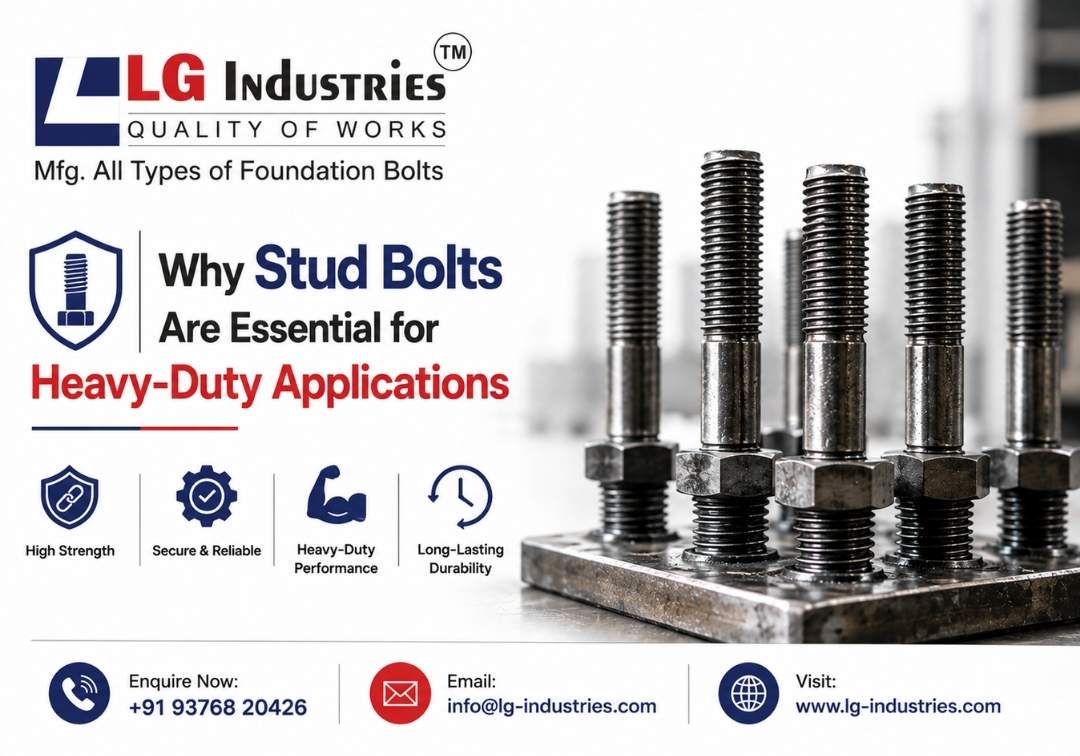
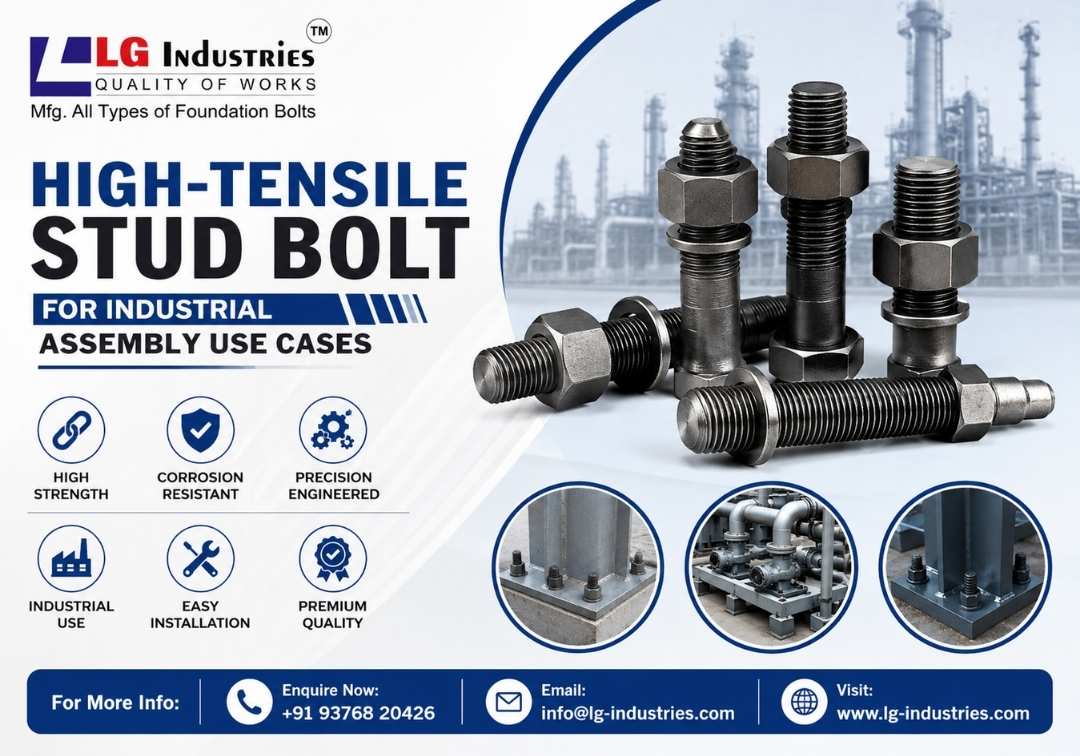
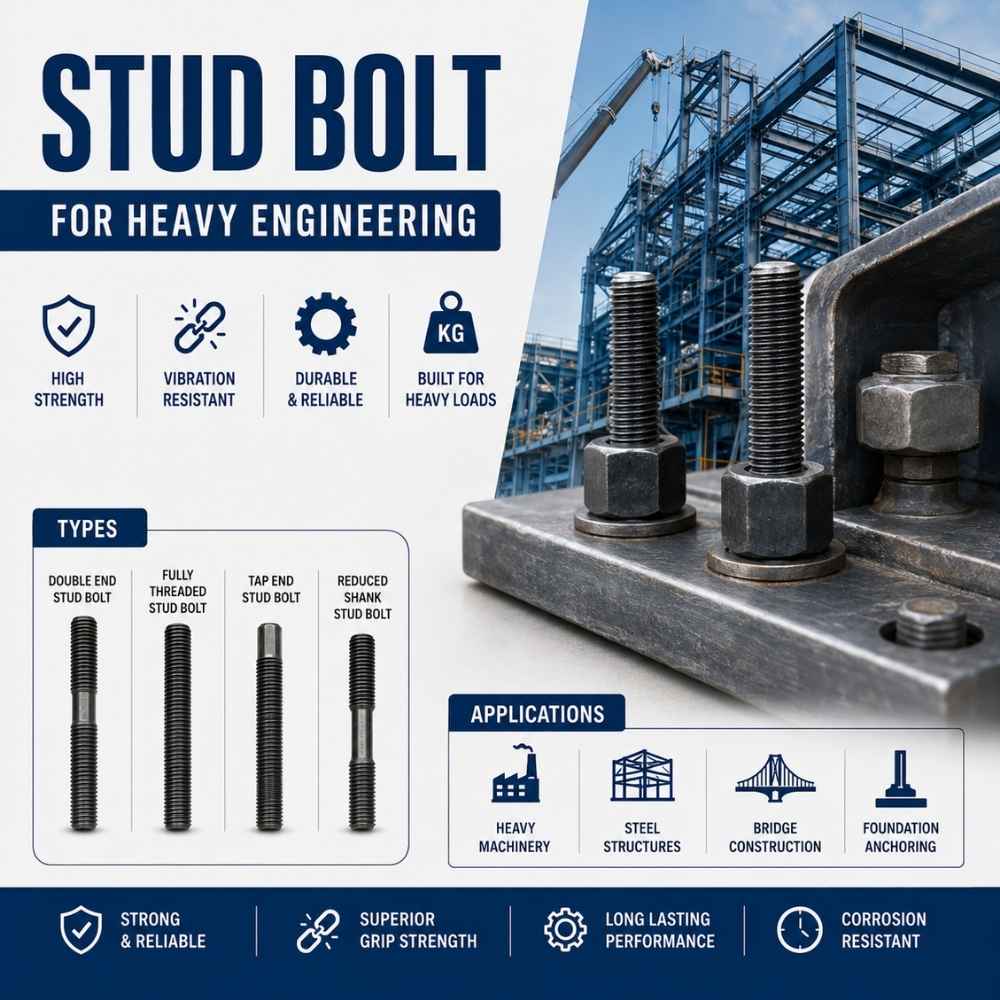
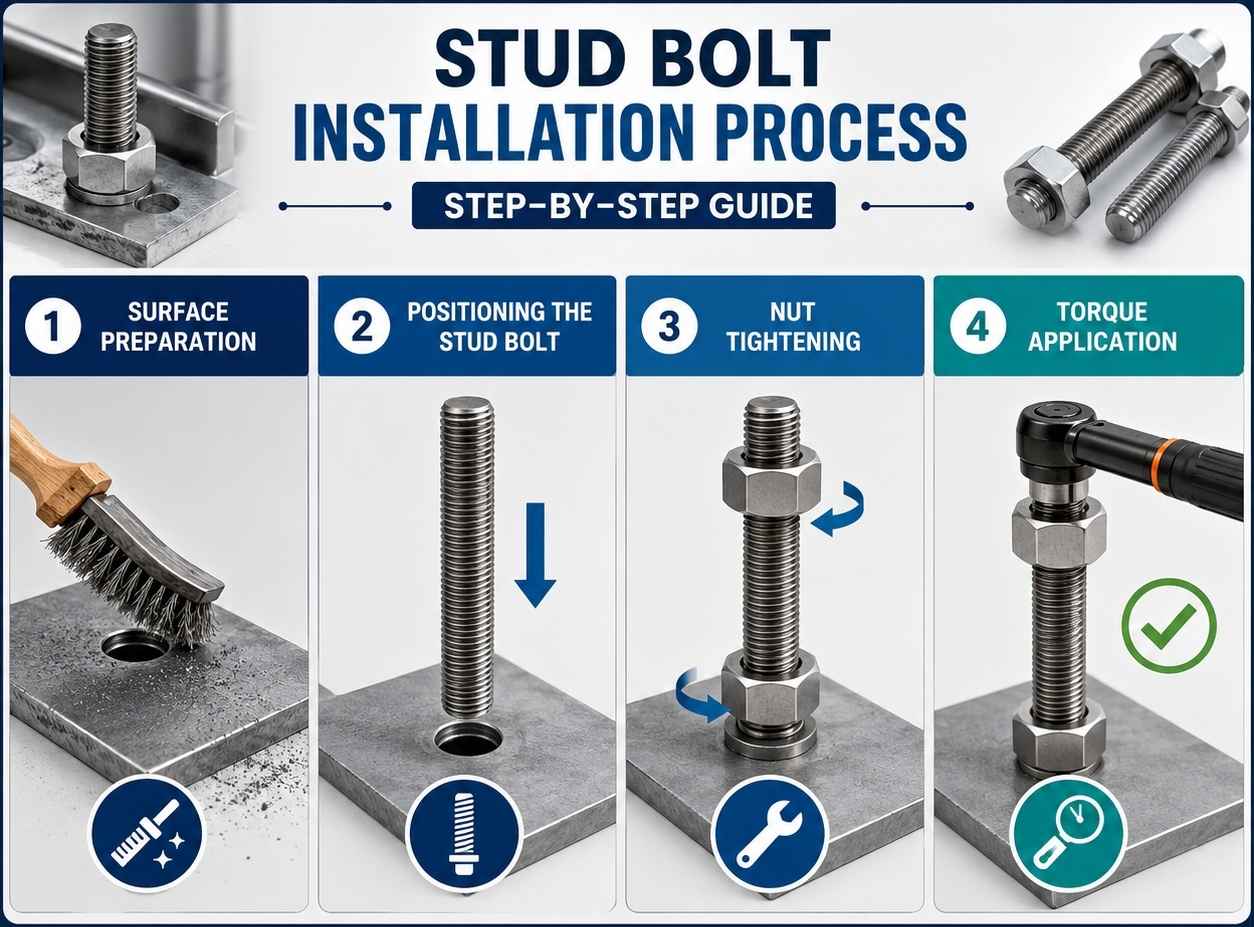
        Industrial projects need fastening components that deliver strength, accuracy, and dependable support. A Stud Bolt plays an important role in machinery assembly, steel structures, pipe flanges, heavy equipment, and foundation work. It creates a firm connection between two or more parts while allowing easy tightening, removal, and maintenance.

        However, selecting the right fastening component requires more than choosing a size. Material grade, thread type, coating, load requirement, installation environment, and dimensional accuracy all affect performance. Therefore, engineers, fabricators, contractors, and procurement teams should understand how these components work before placing an order.

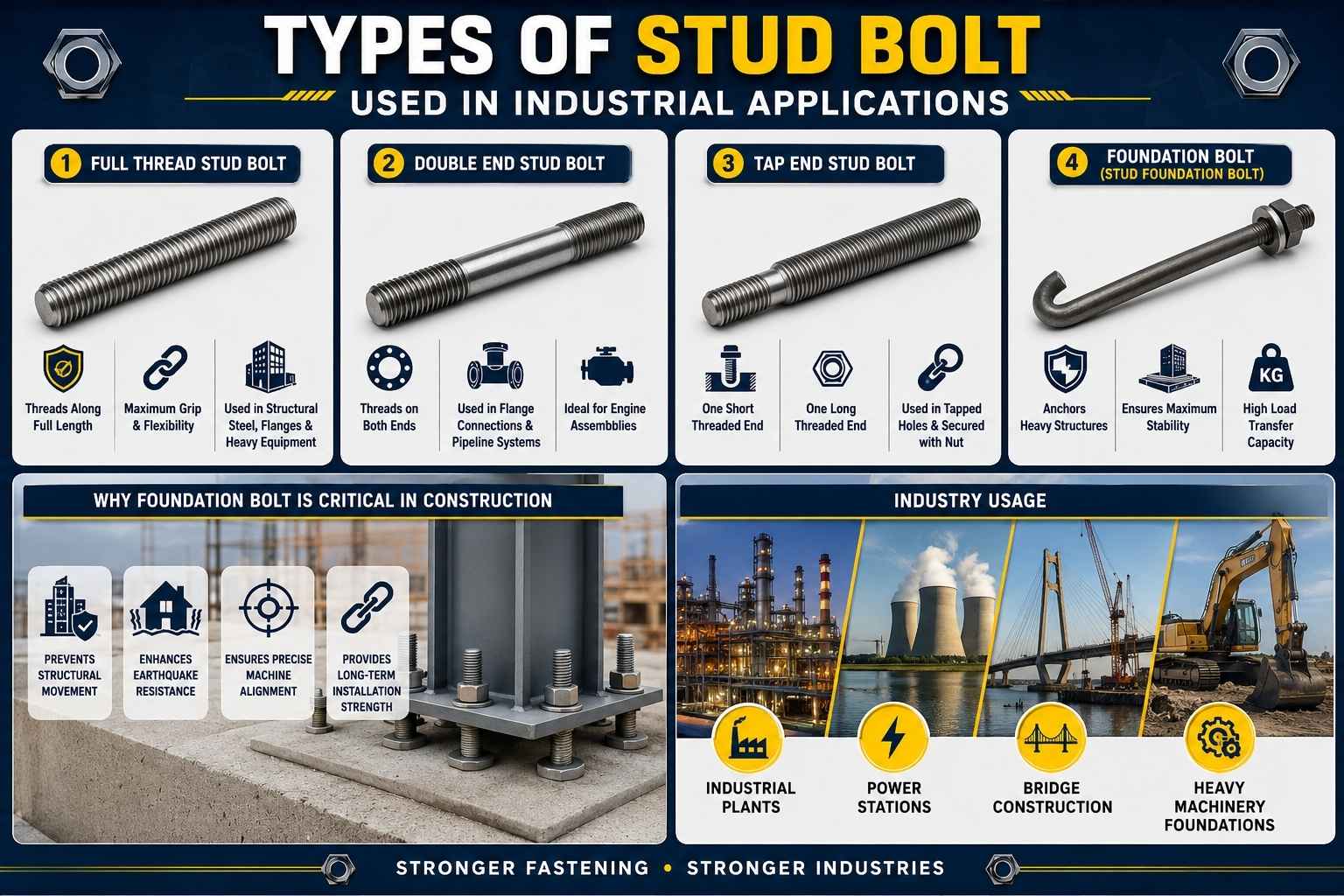
        This guide explains the uses, advantages, selection process, and quality factors of industrial stud bolts. It also covers Full Thread Stud Bolt options, Stud Foundation Bolt applications, and the value of working with an experienced Stud Bolt Manufacturer.

        Common Materials Used for Manufacturing Stud Bolts

        Common Materials Used for Manufacturing Stud Bolts - LG Industries

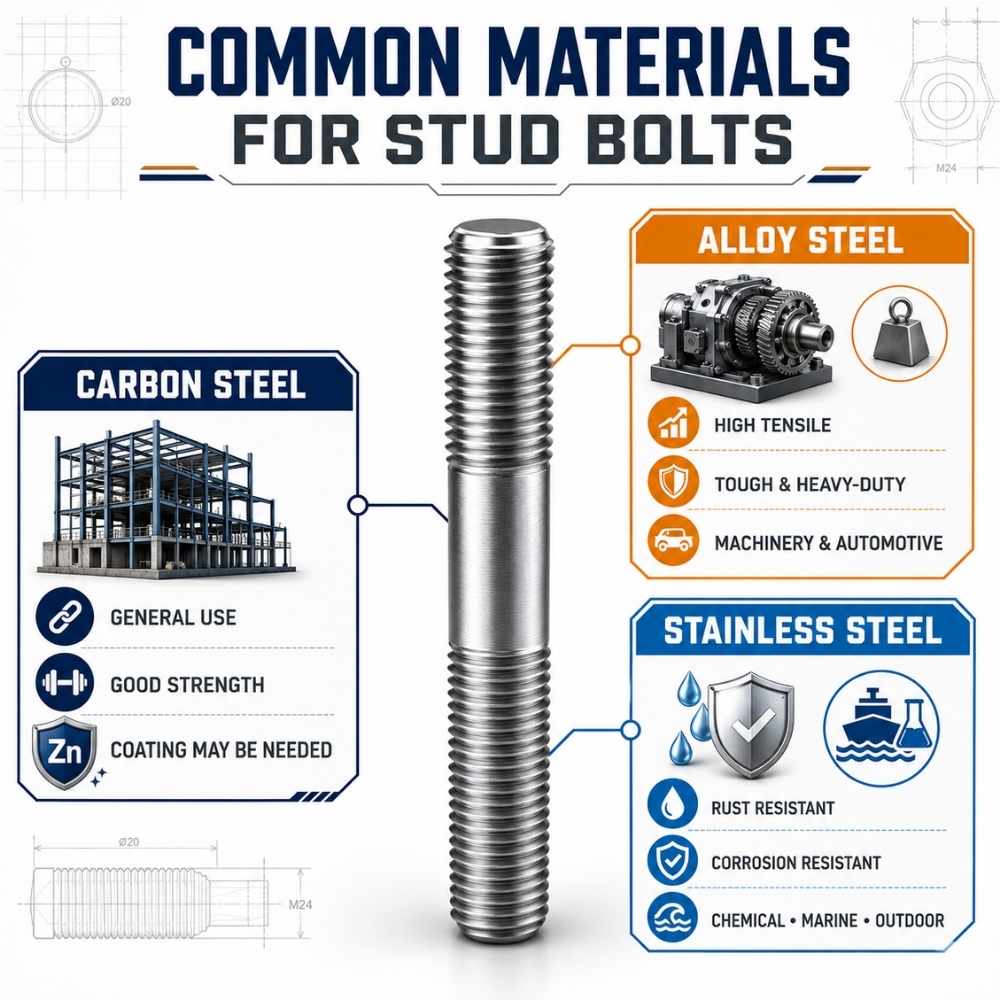
        Material selection directly affects strength, durability, and corrosion resistance. Therefore, buyers should always discuss the operating environment with the supplier before placing a bulk order.

        01. Carbon Steel

        Carbon steel is widely used for general construction, structural support, and standard machinery applications. It offers good strength at a practical price point. However, it may need zinc plating or another protective coating when used in humid environments.

        02. Alloy Steel

        Alloy steel provides enhanced tensile strength and toughness. As a result, it is ideal for heavy machinery, high-load installations, automotive systems, and industrial equipment.

        03. Stainless Steel

        Stainless steel resists rust and corrosion effectively. Thus, it works well in chemical plants, food processing units, marine areas, pharmaceutical facilities, and outdoor installations.

        Key Benefits of Choosing the Right Stud Bolt

        The right fastening product does much more than connect two parts. It improves stability, simplifies maintenance, and supports safety across the installation.

        01. Strong Load-Bearing Capacity

        High-quality studs can handle substantial tensile loads. When paired with suitable nuts and washers, they distribute clamping force effectively. As a result, the joint remains secure during normal operation.

        02. Easy Installation and Removal

        Studs support convenient maintenance because technicians can remove a nut without taking the entire fastener out of the base component. This feature proves especially useful in pumps, valves, engines, and flanged equipment.

        03. Suitable for Custom Sizes

        Industrial projects often require non-standard lengths, diameters, or thread pitches. A reliable Stud Bolt Manufacturer can produce custom sizes according to drawings, samples, or application details.

        04. Better Performance in Harsh Environments

        Stainless steel and coated bolts can resist moisture, chemicals, heat, and outdoor exposure. Therefore, buyers can choose a material and finish that supports a longer service life.

        How to Select the Correct Stud Bolt

        Selecting an industrial fastener only by diameter can lead to failure. Instead, buyers should evaluate the complete application requirement before finalizing the product.

        01. Check the Load Requirement

        First, understand whether the joint will face tension, shear force, vibration, or dynamic loading. Heavy-duty applications may require high-tensile alloy steel. In contrast, general mounting work may use mild steel or stainless steel.

        02. Choose the Right Material Grade

        Material selection depends on the surrounding environment. For example, stainless steel works well in chemical plants and outdoor installations. Carbon steel may offer a practical choice for dry indoor conditions.

        03. Confirm Thread Type and Pitch

        Metric threads and imperial threads are different. Even similar-looking parts may not fit correctly. Therefore, always confirm the thread standard, diameter, pitch, and required thread length.

        04. Select an Appropriate Finish

        Surface finish protects the fastener and improves appearance. Popular choices include:

        • Zinc plated
        • Yellow zinc plated
        • Hot-dip galvanized
        • Black finish
        • PTFE coated
        • Plain self-finish

        For outdoor foundations and exposed steel structures, hot-dip galvanizing often provides stronger corrosion protection.

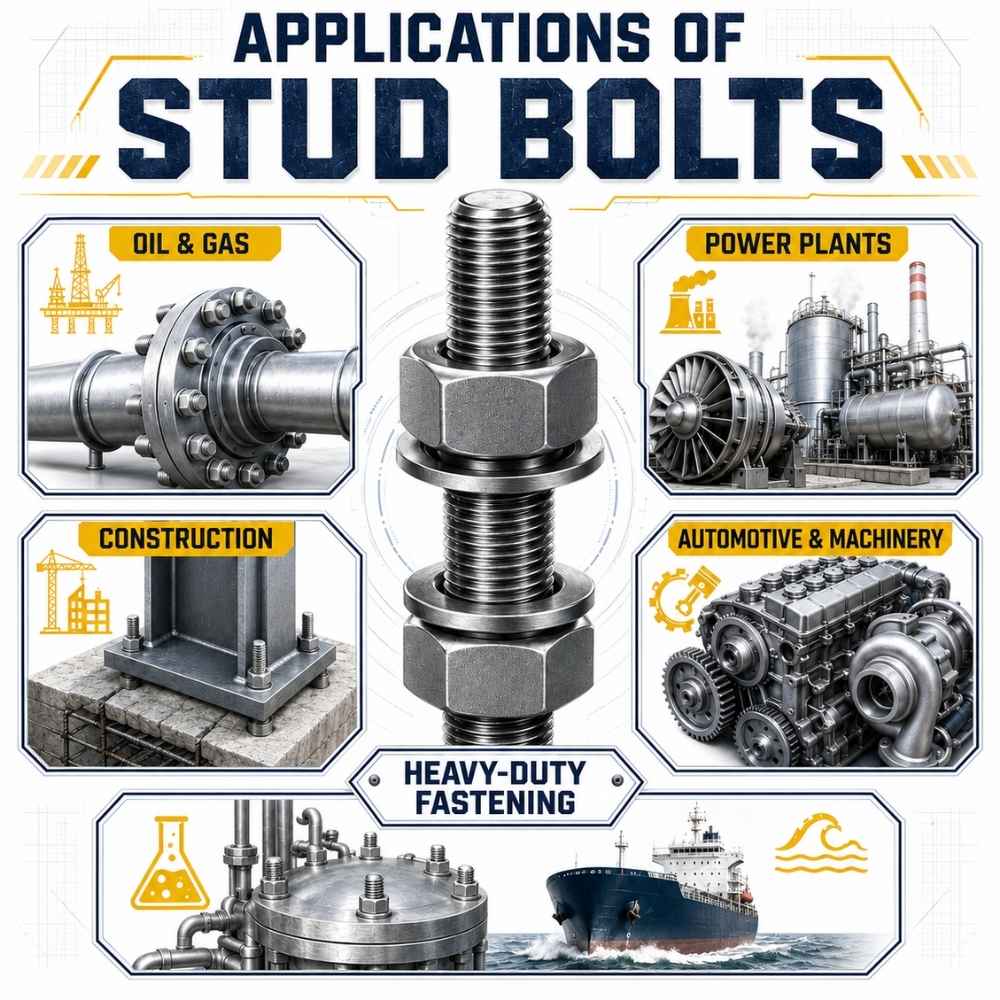
        Applications of Stud Bolts Across Industries

        Applications of Stud Bolts Across Industries - LG Industries

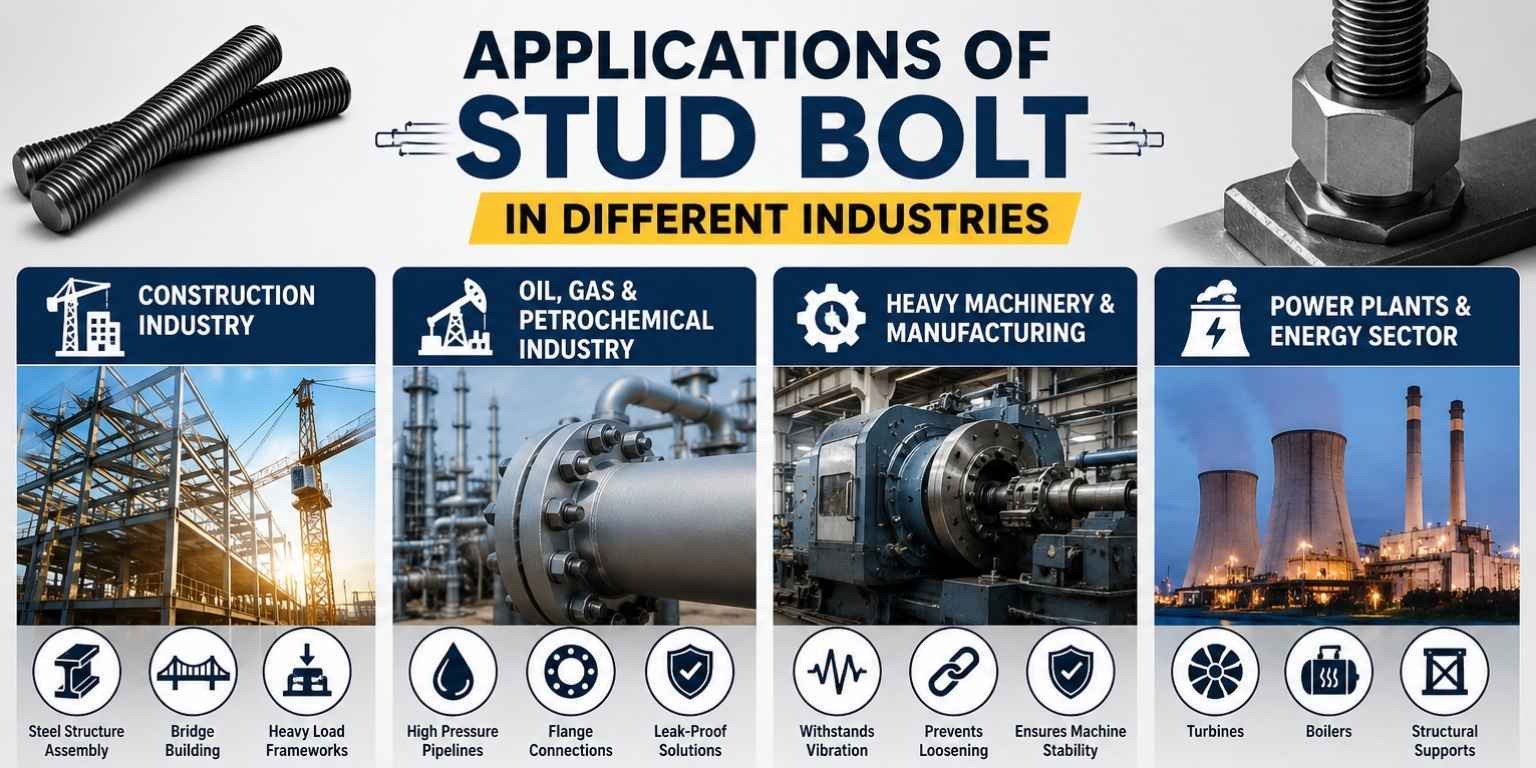
        Stud bolts support countless industrial applications because they offer strong and adaptable fastening. Their use extends from simple brackets to high-pressure equipment.

        01. Oil, Gas, and Pipeline Systems

        Flanges in pipelines require high-strength fastening to prevent leakage under pressure. Stud fasteners are often used with flange nuts and washers to create secure joints. Additionally, corrosion-resistant materials help protect the connection in harsh environments.

        02. Power Plants and Process Industries

        Boilers, turbines, heat exchangers, valves, and pressure vessels rely on dependable fastening systems. Here, correct material grade and thread accuracy become extremely important because high temperatures and vibrations can affect performance.

        03. Construction and Steel Fabrication

        Builders use these bolts to secure beams, columns, brackets, platforms, and base plates. A quality Foundation Bolt helps transfer loads safely from a structure or machine into the concrete base.

        04. Automotive and Engineering Equipment

        Engine assemblies, pumps, compressors, gearboxes, and industrial machines often use stud fasteners because they allow repeated dismantling and reassembly. As a result, maintenance teams can service equipment more conveniently.

        05. Chemical and Marine Environments

        Chemical exposure, saltwater, and high humidity can damage ordinary fasteners. Therefore, stainless steel or specially coated stud products are often selected for chemical plants, coastal facilities, and marine installations.

        How to Select the Right Stud Bolt for Your Project

        Choosing the correct fastener is not only about diameter and length. Instead, buyers should consider the complete application requirement.

        01. Check the Required Material Grade

        First, identify whether the environment requires carbon steel, alloy steel, stainless steel, or another special material. For example, outdoor or chemical applications may require corrosion-resistant grades.

        02. Confirm Thread Type and Pitch

        Thread accuracy ensures that nuts fit properly and tighten smoothly. Coarse threads are commonly used for general applications, whereas fine threads can provide better adjustment and holding power in selected assemblies.

        03. Decide the Correct Length and Diameter

        The required length depends on component thickness, washer thickness, nut height, and installation clearance. Similarly, the diameter must match the expected load and design specification.

        Frequently Asked Questions About Stud Bolts

        It is a threaded metal rod used to securely join industrial components, flanges, machinery, and structural parts.

        Was this helpful?

        A normal bolt has a head on one end. However, this fastener has threads on both ends or across its entire length.

        Was this helpful?

        They are used in machinery installation, steel structures, pipelines, flange connections, construction, and equipment foundations.

        Was this helpful?

        It is an anchoring fastener that secures machines, columns, or base plates firmly to a concrete foundation.

        Was this helpful?

        A full-thread design has threads throughout the rod. Therefore, it allows flexible adjustment of nuts during installation.

        Was this helpful?

        Common material options include carbon steel, alloy steel, stainless steel, and galvanized steel.

        Was this helpful?

        Hot-dip galvanized steel and stainless steel are suitable because they offer better resistance against moisture and corrosion.

        Was this helpful?

        Select the size according to the required load capacity, component thickness, thread type, installation space, and engineering drawing.

        Was this helpful?

        Yes, high-strength grades are widely used in flange joints, pipelines, pressure vessels, and heavy industrial equipment.

        Was this helpful?

        Yes. A manufacturer can supply custom length, diameter, thread pattern, material grade, and surface coating as per project requirements.

        Was this helpful?

        Why Choose a Trusted Stud Bolt Manufacturer?

        A professional manufacturer understands that every project has different specifications. They can provide standard and custom products while maintaining consistent quality checks.

        Look for a supplier that offers:

        • Multiple material grades
        • Custom sizes and threads
        • Accurate dimensional control
        • Quality-tested raw materials
        • Bulk order capability
        • Corrosion-resistant coatings
        • Timely dispatch
        • Technical support for product selection

        Additionally, a dependable supplier can guide you toward the right bolt grade for your exact working environment. This support saves time and helps prevent costly fastening failures.

        Final Thoughts on Stud Bolt 

        A high-quality Stud Bolt creates stronger, safer, and more serviceable industrial connections. Its versatile threaded design makes it suitable for machinery, flanges, steel structures, pipe supports, and foundations. Meanwhile, selecting the correct material, thread type, finish, and grade ensures dependable long-term performance.

        For the best results, choose a manufacturer that understands your project requirements and delivers accurately tested fastening solutions. The right bolt may look like a small component, yet it plays a major role in the strength and stability of your entire installation.

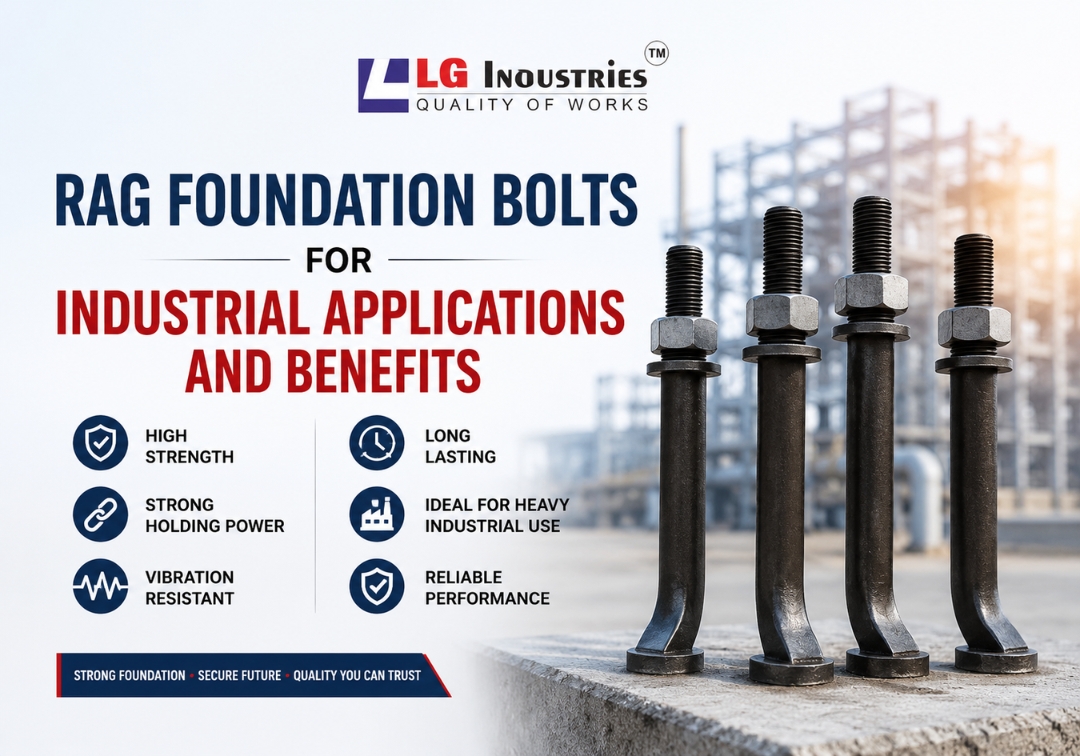
          Rag Foundation Bolt

          Rag Foundation Bolts for Industrial Applications and Benefits

          Why Rag Foundation Bolts Are Essential for Industrial Applications

          Industrial structures demand strong and reliable fastening systems that can withstand heavy loads, continuous vibration, and harsh environmental conditions. Among the most trusted anchoring solutions, Rag Foundation Bolt plays a vital role in securing machinery, steel structures, industrial sheds, transmission towers, and heavy equipment to concrete foundations. Their unique design ensures exceptional grip, outstanding stability, and long-term structural performance.

          Whether you are constructing a manufacturing plant, installing heavy machinery, or developing large-scale infrastructure, selecting the right foundation fastening system directly impacts safety and operational efficiency. High-quality rag foundation bolts provide excellent resistance against movement, reduce maintenance costs, and extend the lifespan of industrial installations.

          This guide explains everything you need to know about rag foundation bolts, including their features, applications, benefits, installation process, material options, maintenance tips, and factors to consider before choosing the right solution for your project.

          What Are Rag Foundation Bolts?

          A rigid foundation bolt is a specially engineered anchor bolt designed to create a secure connection between concrete foundations and structural components. Unlike ordinary bolts, rag bolts feature a forged or ragged end that firmly locks into concrete after installation. This unique shape significantly improves pull-out resistance and ensures excellent load-bearing performance.

          These bolts are commonly used in industries where equipment stability is critical. Their rugged construction allows them to perform efficiently under high compression, vibration, and dynamic loads.

          Because of their exceptional holding capacity, RAG foundation bolts have become one of the preferred anchoring solutions across construction, manufacturing, power generation, mining, petrochemical, and infrastructure sectors.

          Why Rag Foundation Bolts Are Essential for Industrial Applications

          Industrial environments require fastening systems that deliver consistent performance under demanding conditions. Rag foundation bolts provide exactly that.

          Their specialized design helps distribute loads evenly throughout the concrete foundation. As a result, machinery remains stable during operation while minimizing unwanted movement and structural stress.

          Furthermore, these bolts improve workplace safety by reducing the possibility of equipment displacement caused by vibration or heavy operational loads.

          Industries rely on RAG foundation bolts because they offer:

          • Excellent anchoring strength
          • Superior resistance to vibration
          • Long service life
          • High tensile performance
          • Reliable structural stability
          • Reduced maintenance requirements
          • Enhanced operational safety

          Key Features of Rag Foundation Bolts

          Superior Grip Inside Concrete

          The forged rag end creates an exceptionally strong mechanical bond within concrete. This feature prevents bolt loosening even after years of continuous service.

          High Load Carrying Capacity

          These bolts are specifically designed to support heavy industrial equipment, structural columns, and steel frameworks.

          Corrosion Resistance

          Manufacturers produce rag foundation bolts using galvanized steel, stainless steel, or protective coatings to resist corrosion in aggressive industrial environments.

          Long Service Life

          High-quality manufacturing processes ensure durability, even under extreme weather and demanding operating conditions.

          Excellent Dimensional Accuracy

          Precision manufacturing guarantees proper alignment during installation while simplifying equipment positioning.

          Major Benefits of Rag Foundation Bolts

          Superior Structural Stability

          Every industrial project requires a strong connection between machinery and its foundation. Rag foundation bolts prevent unwanted movement while improving overall structural stability.

          This stability reduces operational risks and improves equipment performance.

          High Load Capacity

          Heavy industrial equipment places enormous pressure on concrete foundations.

          A properly manufactured foundation bolt transfers these loads efficiently while preventing structural damage.

          Industries trust these bolts because they support:

          • Heavy machinery
          • Industrial presses
          • Compressors
          • Turbines
          • Generators
          • Storage tanks
          Excellent Vibration Resistance

          Industrial machines continuously generate vibration.

          Without proper anchoring, vibration can loosen fasteners and damage equipment.

          Rag foundation bolts minimize these problems by maintaining secure connections over long periods.

          Long Service Life

          High-quality bolts manufactured from premium steel resist wear and deformation.

          Their durability reduces replacement costs while increasing operational reliability.

          Improved Workplace Safety

          Loose machinery creates serious safety hazards.

          A professionally installed Foundation Bolt helps prevent accidents by keeping equipment securely fixed.

          Types of Rag Foundation Bolts

          Different industrial projects require different bolt designs.

          Standard Rag Foundation Bolt

          Suitable for general industrial construction and equipment installation.

          Heavy-Duty Rag Bolt

          Designed for extremely high load applications.

          Hot Dip Galvanized Rag Bolt

          Offers excellent corrosion resistance for outdoor environments.

          Stainless Steel Rag Bolt

          Ideal for chemical plants, marine applications, and food processing industries.

          Materials Used in Manufacturing

          The quality of raw materials directly affects bolt performance.

          Common materials include:

          • Mild Steel
          • Carbon Steel
          • High-Tensile Steel
          • Stainless Steel 304
          • Stainless Steel 316
          • Alloy Steel

          Protective finishes include:

          • Zinc Plating
          • Hot Dip Galvanizing
          • Black Finish
          • PTFE Coating
          • Electrogalvanizing

          Common Industrial Applications of Rag Foundation Bolts

          Rag foundation bolts are widely used across numerous industries due to their versatility and strength.

          Heavy Machinery Installation

          Industrial machines require stable foundations for precise operation. Rag bolts prevent movement and improve operational accuracy.

          Steel Structure Construction

          Structural steel columns depend on secure anchoring systems to transfer loads safely into concrete foundations.

          Industrial Plants

          Manufacturing facilities use foundation bolts to secure production equipment, conveyor systems, compressors, and processing units.

          Power Generation Facilities

          Power plants rely on strong anchoring systems for turbines, generators, transformers, and support structures.

          Oil and Gas Industry

          Heavy processing equipment and storage systems require dependable fastening solutions capable of handling dynamic loads.

          Cement Plants

          Large rotating machinery produces constant vibration. Rag foundation bolts provide reliable stability throughout continuous operations.

          Warehouses

          Industrial warehouses utilize foundation bolts to secure structural columns and heavy storage systems.

          Infrastructure Projects

          Bridges, metro stations, airports, and transportation facilities depend on heavy-duty anchoring systems for long-term durability.

          How to Select the Right Rag Foundation Bolts

          Choosing the correct foundation bolt involves evaluating several important factors.

          Load Requirements

          Determine static and dynamic loads before selecting bolt dimensions.

          Bolt Diameter

          Larger diameters generally provide greater load capacity.

          Bolt Length

          Proper embedment depth ensures maximum holding strength.

          Environmental Conditions

          Outdoor installations require corrosion-resistant finishes.

          Concrete Grade

          Concrete strength directly influences anchoring performance.

          Industry Standards

          Always select bolts manufactured according to recognized engineering standards.

          Frequently Asked Questions Of Rag Foundation Bolts

          It securely anchors machinery, structural columns, and industrial equipment to concrete foundations while providing excellent load-bearing capacity.

          Rag Foundation Bolts feature a specially forged ragged end that creates a stronger mechanical bond with concrete. This design improves anchoring performance, making them ideal for industrial structures that require long-term stability under heavy loads and continuous vibration.

          Yes. Manufacturers can produce Rag Foundation Bolts in custom lengths, diameters, thread sizes, and finishes to match unique engineering drawings and installation requirements. Custom solutions help ensure accurate fitment and reliable structural performance.

          Heavy machinery generates constant movement and operational stress. Rag Foundation Bolts provide a secure connection between equipment and concrete foundations, helping reduce vibration-related movement while improving overall machine stability and operational efficiency.

          Protective finishes such as hot dip galvanizing, zinc plating, black oxide coating, and PTFE coating help shield bolts from moisture, chemicals, and corrosion. Choosing the right finish extends service life in demanding industrial environments.

          We provide complete business solutions including consultation, planning, design, development, implementation, and support tailored to your project requirements.

          Premium Rag Foundation Bolts offer superior manufacturing accuracy, higher tensile strength, and better corrosion resistance. Investing in quality fastening solutions improves structural safety, enhances equipment reliability, and delivers dependable performance for years.

          Correct positioning is essential because even minor alignment errors can affect equipment installation and structural accuracy. Properly installed Rag Foundation Bolts ensure smooth assembly, balanced load transfer, and dependable long-term performance.

          Absolutely. Rag Foundation Bolts are widely used to secure wind turbine bases, solar mounting structures, and other renewable energy installations where reliable anchoring and structural stability are essential for long-term performance.

          The load-bearing performance depends on several factors, including bolt diameter, embedment depth, steel grade, thread quality, and concrete strength. Choosing the correct combination ensures safe and efficient support for industrial applications.

          Rag Foundation Bolts for Heavy-Duty Industrial Construction

          Selecting the right Rag Foundation bolts is essential for achieving safe, durable, and stable industrial foundations. From heavy machinery and steel structures to infrastructure and manufacturing facilities, these bolts deliver the strength, reliability, and long-term performance that modern engineering projects demand.

          By choosing high-quality materials, following proper installation practices, and performing regular inspections, businesses can reduce maintenance costs, improve operational safety, and extend the lifespan of their equipment and structures. Whether your project involves new construction or industrial expansion, investing in premium rag foundation bolts ensures dependable performance and structural integrity for years to come.

          For the best results, consult experienced engineers or trusted Foundation Bolt manufacturers like LG Industries to choose the right Rag Foundation Bolts for your industrial application.

          Looking for reliable Rag Foundation Bolts for industrial applications? Partner with a trusted manufacturer offering high strength foundation bolts, precision engineering, and customized solutions. Ensure maximum safety, durability, and long lasting performance for every construction and heavy machinery installation project.

            U Bolt Guide for Strong Industrial Foundation Support - LG Industries

            U Bolt Guide for Strong Industrial Foundation Support

            Industrial fastening systems demand precision, durability, and long-term reliability. Among the many fastening components used across industries, the U Bolt plays a critical role in securing pipes, structural members, machinery, and heavy equipment. Although it appears simple, selecting the correct U bolt directly affects the safety, stability, and lifespan of an entire installation.

            Whether you are working on construction projects, industrial plants, power generation facilities, water treatment systems, or infrastructure development, choosing the right fastening solution becomes essential. A properly manufactured U bolt provides excellent grip, distributes load evenly, minimizes vibration, and keeps connected components securely in place even under demanding operating conditions.

            Furthermore, industries increasingly prefer high-quality fastening products because they reduce maintenance costs while improving operational safety. Modern manufacturing techniques, premium raw materials, and strict quality inspections ensure that today’s U bolts deliver superior performance in both indoor and outdoor environments.

            This guide explains everything you need to know about U Bolts, including their applications, advantages, materials, selection criteria, installation methods, and maintenance practices. Additionally, you will learn why industries across India trust experienced manufacturers for dependable fastening solutions.

            What Is a U Bolt and Why Is It Important?

            What Is a U Bolt and Why Is It Important - LG Industries

            A U Bolt is a U-shaped threaded fastener specifically designed to secure cylindrical objects such as pipes, tubes, poles, and structural members. The curved portion wraps around the object while threaded ends pass through a support plate and tighten using nuts and washers.

            Because of this simple yet effective design, industries use U bolts in countless applications requiring dependable clamping strength.

            Unlike conventional bolts, U bolts provide balanced pressure around curved surfaces. Consequently, they prevent movement while protecting connected equipment from unnecessary stress.

            Moreover, manufacturers produce U bolts in various diameters, lengths, thread sizes, and material grades to satisfy different industrial requirements.

            Key Components of a U Bolt

            Every industrial U bolt consists of carefully engineered components that work together for maximum performance.

            01. Curved Body

            The curved section surrounds pipes, rods, or structural components securely without damaging their surfaces.

            02. Threaded Ends

            Precision-machined threads allow smooth nut tightening while maintaining excellent holding capacity.

            03. Nuts

            Heavy-duty nuts generate proper clamping force and keep installations stable during operation.

            04. Washers

            Washers distribute tightening pressure evenly, reducing stress on mounting surfaces while improving fastening reliability.

            Types of U Bolt Used Across Industries

            Types of U Bolt Used Across Industries - LG Industries

            Different industries require different fastening solutions. Therefore, manufacturers design multiple types of U-bolts to meet application requirements.

            01. Round U Bolt

            Round U bolts are ideal for securing pipes, conduits, tubes, and cylindrical equipment.

            Common applications include:

            • Water pipelines
            • Chemical process piping
            • Fire protection systems
            • HVAC installations
            • Plumbing systems

            02. Square U Bolt

            Square U bolts securely hold square tubes, beams, channels, and structural frames.

            Industries commonly use them for:

            • Steel fabrication
            • Construction projects
            • Solar mounting structures
            • Equipment supports
            • Industrial platforms

            03. Semi-Round U Bolt

            Semi-round U bolts provide excellent stability where partial pipe support is required.

            Typical applications include the following:

            • Automotive assemblies
            • Trailer suspension
            • Agricultural equipment
            • Heavy machinery

            04. Heavy-Duty U-Bolt

            Heavy-duty U bolts feature larger diameters and stronger material grades for demanding industrial environments.

            They perform exceptionally well in:

            • Oil and gas plants
            • Petrochemical facilities
            • Power stations
            • Marine engineering
            • Infrastructure projects

            Applications of U Bolts in Modern Industries

            Today, almost every industrial sector relies on U-bolts for secure fastening and dependable structural support.

            01. Construction Industry

            Construction professionals use U bolts to secure steel structures, support pipes, install railings, and stabilize heavy frameworks.

            These fasteners improve structural integrity while simplifying installation.

            02. Electrical and Power Projects

            Electrical infrastructure depends on reliable fastening systems for cable trays, transmission equipment, transformers, and support assemblies.

            Proper fastening minimizes vibration while maintaining long-term operational safety.

            03. Oil and Gas Industry

            Oil refineries and gas processing facilities operate under challenging conditions involving high pressure, extreme temperatures, and continuous vibration.

            Therefore, premium-quality U bolts become essential for maintaining safe pipeline support.

            04. Water Treatment Plants

            Water treatment facilities require corrosion-resistant fastening products because equipment frequently operates in wet environments.

            High-quality U bolts maintain dependable performance despite continuous exposure to moisture.

            05. Chemical Processing Plants

            Chemical industries often handle aggressive substances that demand highly durable fastening solutions.

            Selecting suitable material grades significantly improves equipment reliability while reducing maintenance requirements.

            Benefits of Choosing a High-Quality U Bolt

            Benefits of Choosing a High-Quality U Bolt - LG Industries

            Investing in premium fastening components delivers long-term operational advantages.

            01. Exceptional Holding Strength

            High-quality U bolts provide superior gripping force that prevents movement under heavy loads.

            02. Improved Structural Stability

            Proper fastening keeps pipelines, machinery, and structural members securely positioned throughout continuous operation.

            03. Long Service Life

            Premium materials and precision manufacturing significantly increase product lifespan.

            04. Better Corrosion Resistance

            Galvanized, stainless steel, and coated U bolts resist rust effectively, making them suitable for outdoor and corrosive environments.

            05. Reduced Maintenance Costs

            Reliable fastening minimizes unexpected failures, lowering repair expenses and reducing production downtime.

            06. Easy Installation

            Simple installation procedures save labor time while improving project efficiency.

            07. Excellent Load Distribution

            The U-shaped design spreads clamping force evenly, reducing localized stress and protecting connected components.

            How to Choose the Right U Bolt for Your Application

            Selecting the correct U Bolt is just as important as choosing the right machinery or structural component. Every project has different operating conditions, load requirements, and environmental factors. Therefore, understanding these factors helps you choose a fastening solution that delivers maximum safety and long-term performance.

            01. Consider the Load Capacity

            Begin by evaluating the weight and force the U-bolt will support. Heavy industrial machinery, pipelines, and structural frameworks require stronger bolts with higher tensile strength. Choosing the correct load capacity reduces the risk of failure and improves operational reliability.

            02. Measure Pipe or Rod Diameter Accurately

            Always measure the outside diameter of the pipe, tube, or rod before selecting a U bolt. An incorrect size can lead to loose fastening or excessive pressure, both of which reduce system performance.

            03. Select the Appropriate Material

            Different environments demand different materials. Outdoor installations, marine environments, and chemical plants require corrosion-resistant materials, while general industrial applications may use carbon steel for cost-effective performance.

            04. Check Thread Specifications

            Thread size and length should match the mounting plate and nuts used in the assembly. Proper threading ensures secure tightening and prevents installation problems.

            I. Evaluate Environmental Conditions

            Before making a final decision, consider:

            • Temperature range
            • Moisture exposure
            • Chemical contact
            • Outdoor weather conditions
            • Vibration levels
            • Load variations
            II. Choose Quality Over Initial Cost

            Although low-cost fasteners may seem attractive, premium-quality U bolts reduce maintenance expenses, increase equipment life, and improve overall project safety.

            Materials Used to Manufacture U Bolts

            Materials Used to Manufacture U Bolts - LG Industries

            Material selection directly influences strength, corrosion resistance, and service life. Manufacturers produce U bolts using several material grades to suit different industrial applications.

            01. Stainless Steel U-Bolt

            Stainless steel offers outstanding corrosion resistance and excellent durability.

            Best suited for:

            • Food processing plants
            • Pharmaceutical industries
            • Chemical processing
            • Marine applications
            • Outdoor installations

            02. Carbon Steel U-Bolt

            Carbon steel provides excellent strength at an economical price.

            Common applications include:

            • Structural fabrication
            • Industrial machinery
            • Construction projects
            • Equipment mounting

            03. Galvanized U Bolt

            Galvanized U bolts feature a protective zinc coating that improves resistance against rust and weather exposure.

            Ideal for:

            • Electrical transmission
            • Outdoor pipelines
            • Infrastructure projects
            • Utility installations

            04. Alloy Steel U-Bolt

            Alloy steel delivers exceptional mechanical strength and performs well under extreme loads.

            Industries prefer alloy steel for:

            • Heavy engineering
            • Mining equipment
            • Power plants
            • High-pressure systems

            Comparison Between U-Bolt and Foundation Bolt

            Although both fasteners support industrial structures, they serve different purposes. Understanding these differences helps engineers and contractors choose the correct fastening solution.

            Feature U Bolt Foundation Bolt
            Primary Purpose Clamps pipes, tubes, and round structures Anchors machinery and structures to concrete foundations
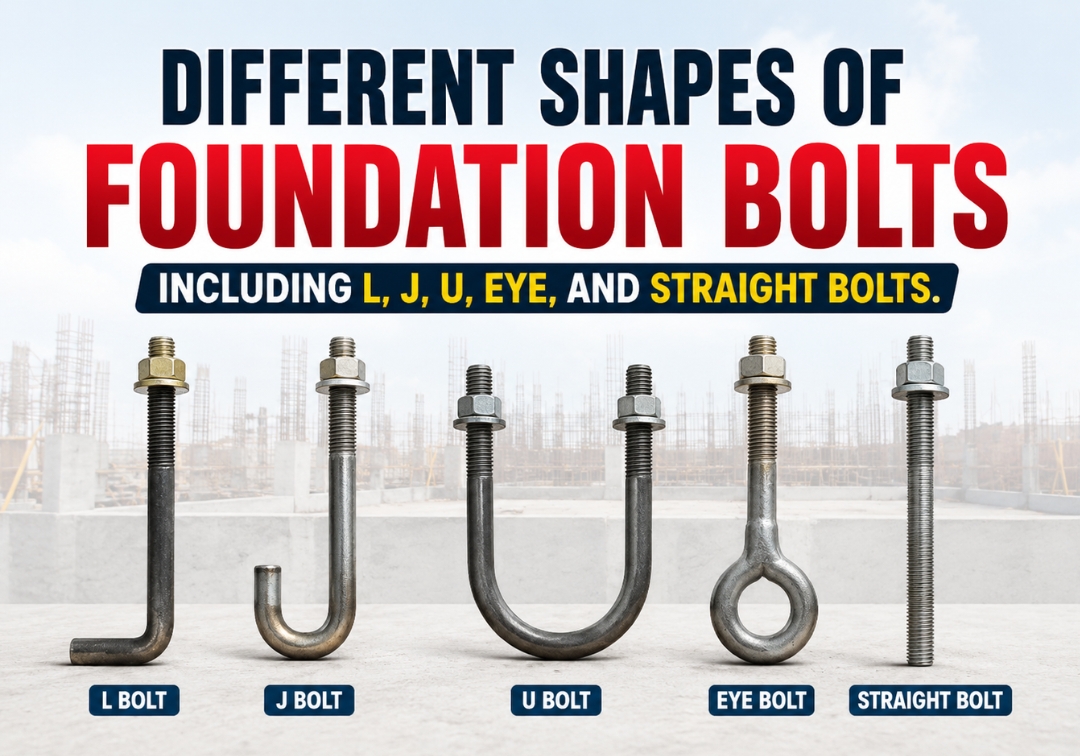
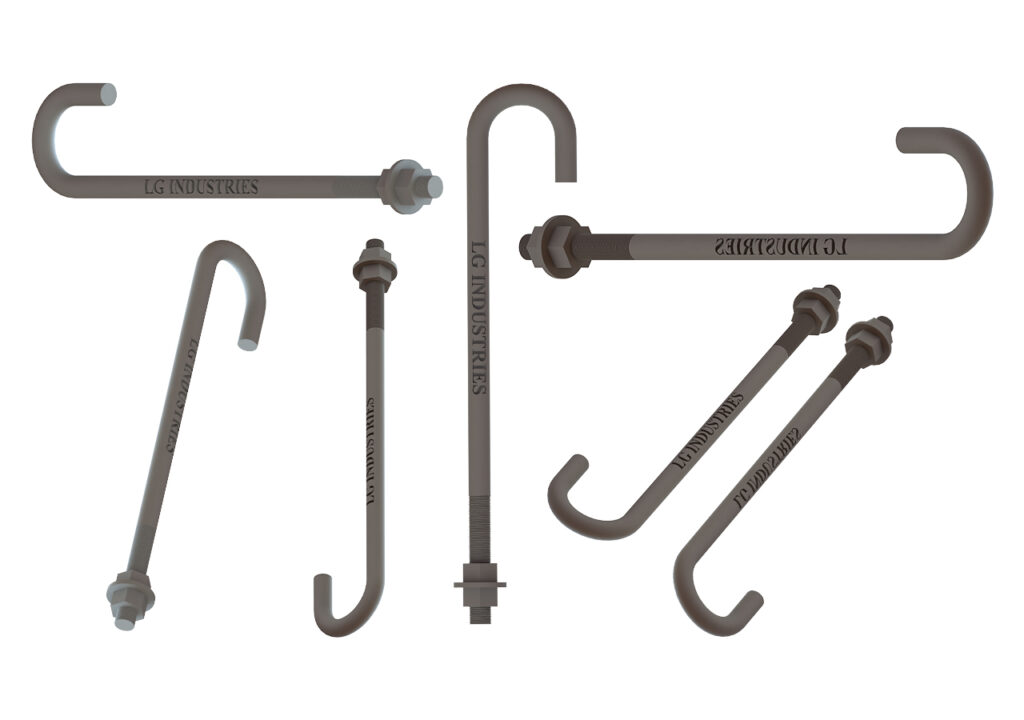
            Shape U-shaped L-shaped, J-shaped, Straight, Eye, or Anchor
            Installation Around cylindrical objects Embedded inside concrete
            Common Applications Pipelines, poles, structural supports Industrial machinery, heavy equipment, buildings
            Flexibility Easy to remove and replace Permanent installation
            Maintenance Simple Limited after installation
            Best For Pipe support and fastening Structural anchoring

            Choosing the right fastening solution ensures both safety and long-term operational efficiency.

            Why Industries Prefer U Bolts in Ahmedabad

            Ahmedabad has become one of India’s leading manufacturing hubs for industrial fasteners. Businesses across India and international markets source fastening products from experienced manufacturers because they receive consistent quality, competitive pricing, and dependable customer support.

            01. Advanced Manufacturing Technology

            Modern production facilities use advanced machinery for the following:

            • CNC thread cutting
            • Precision bending
            • Heat treatment
            • Surface finishing
            • Quality inspection

            These processes ensure every product meets strict dimensional accuracy.

            02. High-Quality Raw Materials

            Reliable manufacturers use certified raw materials that improve strength, durability, and corrosion resistance.

            03. Custom Manufacturing

            Industrial projects often require non-standard sizes. Leading manufacturers provide customized U bolts according to the following:

            • Drawing specifications
            • Pipe diameter
            • Thread length
            • Material grade
            • Surface coating

            04. Strict Quality Inspection

            Every batch undergoes multiple inspections before dispatch.

            Quality checks generally include:

            • Dimensional verification
            • Thread inspection
            • Load testing
            • Surface finish inspection
            • Material verification

            As a result, customers receive dependable fastening products for demanding industrial applications.

            Maintenance Tips to Extend U Bolt Life

            Maintenance Tips to Extend U Bolt Life - LG Industries

            Routine maintenance helps prevent unexpected failures and keeps industrial systems operating efficiently.

            I. Regular Inspection Schedule

            Inspect U-bolts periodically for:

            • Rust formation
            • Loose nuts
            • Thread damage
            • Surface cracks
            • Deformation
            • Excessive vibration
            II. Preventive Maintenance Practices

            For longer service life:

            • Clean accumulated dirt regularly.
            • Apply suitable protective coatings when necessary.
            • Replace damaged fasteners immediately.
            • Avoid over-tightening.
            • Follow manufacturer torque recommendations.
            • Maintain inspection records for critical installations.

            A preventive maintenance routine reduces downtime and improves workplace safety.

            Frequently Asked Questions About U Bolt

            A U Bolt is primarily used to secure pipes, tubes, poles, and structural components to support frames. Industries commonly use it in construction, electrical systems, water pipelines, machinery installation, and heavy engineering projects because it provides a strong and stable fastening solution.

            Was this helpful?

            Manufacturers produce U Bolts using stainless steel, carbon steel, alloy steel, and galvanized steel. The choice of material depends on the application, load capacity, and environmental conditions such as moisture, chemicals, and temperature.

            Was this helpful?

            Select a U Bolt by measuring the outside diameter of the pipe or rod, determining the required thread size, considering the load capacity, and evaluating the installation environment. Choosing the correct size ensures proper clamping strength and long-term performance.

            Was this helpful?

            A U Bolt is designed to clamp pipes, tubes, and round structures, whereas a Foundation Bolt anchors machinery or structural components directly into concrete foundations. Both serve different purposes but are essential for industrial installations.

            Was this helpful?

            Stainless steel U Bolts provide superior corrosion resistance and are ideal for marine, food processing, pharmaceutical, and chemical industries. Carbon steel U Bolts offer excellent strength and are a cost-effective choice for general industrial and construction applications.

            Was this helpful?

            Yes. Professional manufacturers offer customized U Bolts in different diameters, lengths, thread sizes, bending radii, material grades, and surface finishes to meet specific industrial requirements.

            Was this helpful?

            A trusted U-Bolt manufacturer in Ahmedabad offers precision engineering, high-quality raw materials, advanced manufacturing facilities, competitive pricing, and customized fastening solutions for industries across India and international markets.

            Was this helpful?

            Inspect U Bolts regularly for corrosion, loose nuts, damaged threads, cracks, and deformation. Routine inspections help prevent equipment failure, reduce downtime, and improve workplace safety.

            Was this helpful?

            Why Choose LG Industries for Premium U Bolt Solutions

            When selecting a fastening partner, experience, manufacturing quality, and customer support matter just as much as the product itself. LG Industries delivers precision-engineered U bolts that meet the demanding requirements of construction, infrastructure, electrical, industrial, and engineering projects.

            Our commitment to quality includes:

            • Precision manufacturing
            • High-grade raw materials
            • Customized dimensions
            • Consistent product quality
            • Timely delivery
            • Competitive pricing
            • Reliable technical support

            Whether you require standard products or customized fastening solutions, our team works closely with you to deliver products that match your exact application requirements.

            Final Thoughts on Choosing the Right U Bolt

            A high-quality U Bolt is more than a simple fastening component. It is a critical element that enhances structural stability, improves operational safety, and extends the service life of industrial equipment. By selecting the correct size, material, and manufacturing quality, businesses can reduce maintenance costs, minimize downtime, and achieve dependable performance in demanding environments.

            If you are searching for a premium U Foundation Bolt, Foundation Bolt, Foundation Bolts, or U-Bolt in Ahmedabad, choose a trusted manufacturer that combines engineering expertise, strict quality control, and customized manufacturing solutions. Investing in reliable fastening products today ensures stronger, safer, and more efficient industrial operations for years to come.

              Eye Foundation Bolt Benefits for Heavy-Duty Construction

              Eye Foundation Bolt Solutions for Secure Heavy Anchoring

              Every successful construction project begins with a strong foundation. Whether building an industrial plant, warehouse, bridge, power station, or manufacturing facility, every structural component must remain securely anchored under extreme loads. One of the most reliable fastening solutions used in these demanding applications is the Eye Foundation Bolt.

              Unlike conventional anchor bolts, an Eye Foundation Bolt features a forged circular eye at one end that provides exceptional holding strength, secure lifting capability, and dependable anchoring. Its unique design makes it suitable for projects where safety, durability, and structural stability are essential.

              In this guide, you’ll discover the major benefits of an Eye Foundation Bolt, its applications, material options, installation practices, and why engineers and contractors rely on it for heavy-duty construction projects worldwide.

              Why Heavy-Duty Construction Requires Reliable Anchoring

              Heavy-duty construction projects experience constant pressure from:

              • Dynamic machinery loads
              • Wind forces
              • Earthquake movement
              • Heavy equipment vibration
              • Structural weight
              • Temperature fluctuations

              Without reliable anchoring, these forces may compromise structural integrity over time.

              An Eye Foundation Bolt provides dependable performance by maintaining a secure connection between the foundation and the supported structure, helping reduce movement and improve overall stability.

              Eye Foundation Bolt embedded inside a reinforced concrete foundation before pouring concrete.

              Top Benefits of Eye Foundation Bolt for Heavy-Duty Construction

              1: Superior Load-Bearing Capacity

              One of the biggest advantages of an Eye Foundation Bolt is its impressive load-bearing capability.

              Its eye-shaped end distributes forces effectively throughout the concrete foundation, helping reduce stress concentration and improve long-term structural performance.

              This makes it suitable for:

              • Industrial plants
              • Steel fabrication units
              • Power generation facilities
              • Large warehouses
              • Heavy engineering projects

              2: Excellent Structural Stability

              Construction professionals choose an Eye Foundation Bolt because it creates a strong and dependable anchorage.

              The embedded eye provides better resistance against pull-out forces while helping maintain the alignment of structural components during years of operation.


              3: Long-Term Durability

              Heavy-duty construction often exposes fastening systems to:

              • Moisture
              • Chemicals
              • Dust
              • Heat
              • Corrosion
              • Continuous vibration

              Eye Foundation Bolts manufactured from premium-grade steel with protective finishes such as hot-dip galvanization or zinc coating offer enhanced resistance to corrosion and wear, extending their service life.


              4: Improved Safety

              Safety remains one of the highest priorities on every construction site.

              A properly designed and installed Eye Foundation Bolt helps:

              • Prevent structural displacement
              • Reduce equipment movement
              • Improve lifting security
              • Enhance foundation reliability
              • Minimize maintenance risks

              Reliable anchoring contributes to safer working conditions and increased confidence in structural performance.

              Common Applications of Eye Foundation Bolts

              Because of their strength and versatility, Eye Foundation Bolts are widely used across multiple industries.

              1: Industrial Manufacturing Plants

              Heavy machinery generates constant vibration.

              Eye Foundation Bolts securely anchor production equipment, compressors, presses, and fabrication machines, helping maintain operational stability.


              2: Steel Structure Construction

              Large steel columns depend on dependable foundation anchoring.

              Eye Foundation Bolts help maintain alignment and structural integrity while supporting significant vertical and lateral loads.


              3: Power Plants

              Thermal, hydroelectric, and renewable energy facilities require robust fastening systems for turbines, generators, and structural frames.

              Eye Foundation Bolts provide dependable support in demanding operating environments.


              4: Bridge Construction

              Bridge foundations experience continuous stress from:

              • Traffic loads
              • Wind
              • Weather conditions
              • Expansion and contraction

              Eye Foundation Bolts help maintain secure structural connections over extended service periods.


              5: Infrastructure Projects

              Engineers frequently specify Eye Foundation Bolts for:

              • Metro stations
              • Railway infrastructure
              • Airports
              • Ports
              • Water treatment facilities
              • Industrial warehouses

              Their proven strength makes them suitable for critical infrastructure applications.

              Material Options for Eye Foundation Bolt

              Selecting the correct material significantly affects performance and longevity.

              Common materials include:

              1: Mild Steel

              Suitable for standard construction projects where environmental conditions are moderate.

              Benefits include:

              • Cost-effective
              • Easy fabrication
              • Reliable mechanical strength

              2: High Tensile Steel

              Designed for demanding structural applications requiring greater load capacity.

              Advantages include:

              • Higher tensile strength
              • Better fatigue resistance
              • Excellent structural performance

              3: Stainless Steel

              Ideal for corrosive environments such as coastal, chemical, and marine installations.

              Key benefits:

              • Outstanding corrosion resistance
              • Attractive finish
              • Long service life
              • Low maintenance requirements

              Protective Surface Finishes

              Surface treatment enhances the durability of an Eye Foundation Bolt.

              Popular finishes include:

              • Hot-dip galvanized
              • Zinc plated
              • Black oxide
              • Self-color finish
              • Epoxy-coated
              • Custom protective coatings

              Selecting the right finish depends on the project’s environmental conditions and expected service life.

              Installation Process of Eye Foundation Bolts

              Correct installation is just as important as selecting the right bolt.

              Follow these best practices:

              • Verify engineering drawings before installation.
              • Confirm bolt dimensions and specifications.
              • Position bolts accurately using templates.
              • Maintain proper alignment throughout concrete pouring.
              • Protect exposed threads from damage.
              • Tighten nuts according to specified torque values.
              • Conduct final inspection before commissioning.

              Proper installation helps maximize the performance and lifespan of the fastening system.

              How to Choose the Right Eye Foundation Bolt in India?

              Selecting the correct Eye Foundation Bolt involves evaluating several project requirements.

              Consider:

              • Required load capacity
              • Foundation depth
              • Bolt diameter
              • Thread length
              • Eye diameter
              • Steel grade
              • Protective coating
              • Environmental exposure
              • Industry standards
              • Installation method

              Consulting experienced engineers or trusted Foundation Bolt manufacturers, such as LG Industries in India, helps ensure that the selected bolt meets project specifications and performance expectations.

              Frequently Asked Questions Of Foundation Bolts Types in Indian Market

              An Eye Foundation Bolt is designed to provide a strong and dependable anchoring point for heavy equipment, structural steel, and industrial installations. Its eye-shaped end helps create secure lifting or fastening connections while maintaining excellent load-bearing performance.

              Was this helpful?

              Yes. High-quality Eye Foundation Bolts are commonly used in environments where machinery produces continuous vibration. When installed correctly with proper embedment depth, they help maintain structural stability and reduce the risk of loosening over time.

              Was this helpful?

              Many industries depend on Eye Foundation Bolts, including:

              Power generation
              Oil and gas
              Manufacturing plants
              Mining operations
              Chemical processing
              Infrastructure projects

              Their versatility makes them suitable for both industrial and commercial construction.

              Was this helpful?

              Foundation bolts are often exposed to moisture, chemicals, and changing weather conditions. Corrosion-resistant coatings or stainless steel materials help extend service life, reduce maintenance costs, and preserve structural safety for many years.

              Was this helpful?

              Choosing the correct diameter, length, and thread size ensures the bolt can safely transfer design loads into the concrete foundation. An undersized bolt may reduce structural reliability, while an oversized bolt can increase installation costs unnecessarily.

              Was this helpful?

              Yes. Manufacturers can produce Eye Foundation Bolts in customized dimensions, materials, finishes, and thread specifications to meet unique engineering requirements. Custom fabrication ensures compatibility with specialized equipment and foundation designs.

              Was this helpful?

              Proper installation includes:

              Accurate positioning before concrete pouring
              Correct alignment
              Recommended embedment depth
              Secure concrete curing
              Final torque verification

              These practices help maximize long-term structural performance.

              Was this helpful?

              In most permanent foundation applications, reuse is generally not recommended. Engineers usually inspect bolts for thread damage, deformation, corrosion, and fatigue before considering any reuse to maintain structural safety.

              Was this helpful?

              The eye-shaped loop provides a secure attachment point for lifting accessories such as hooks, shackles, or lifting slings. This design allows safer handling during equipment installation, maintenance, and relocation when used within rated load capacities.

              Was this helpful?

              LG Industries is a leading Eye Foundation Bolt manufacturer, supplier, and exporter from Ahmedabad, delivering premium-quality foundation bolts for heavy-duty construction and industrial projects across India. Our precision-engineered Eye Foundation Bolts are manufactured using high-grade raw materials and advanced production techniques to ensure superior strength, durability, and long-lasting performance.

              Was this helpful?

              A high-quality Eye Foundation Bolt improves equipment stability, minimizes maintenance, reduces unexpected downtime, and enhances the service life of heavy-duty structures. Choosing a trusted manufacturer is equally important for long-term reliability.

              Was this helpful?

              If you are looking for reliable Eye Foundation Bolt manufacturers, suppliers, or exporters in India, LG Industries is a dependable choice. Based in Ahmedabad, we manufacture high-strength Eye Foundation Bolts for infrastructure, steel structures, power plants, petrochemical facilities, manufacturing units, and heavy engineering projects.

              We supply our products across major Indian cities, including Mumbai, Pune, Delhi, Noida, Gurugram, Jaipur, Ahmedabad, Surat, Vadodara, Rajkot, Bengaluru, Hyderabad, Chennai, Coimbatore, Kochi, Kolkata, Bhubaneswar, Visakhapatnam, Nagpur, Nashik, Indore, Bhopal, Chandigarh, Ludhiana, Faridabad, Ghaziabad, Lucknow, Kanpur, and many more locations across India.

              Was this helpful?

              Conclusion: Choose the Right Eye Foundation Bolt with Confidence

              An Eye Foundation Bolt plays a vital role in creating safe, durable, and reliable foundations for heavy-duty construction projects. From industrial facilities and bridges to power plants and steel structures, its unique eye-shaped design provides strong anchoring, excellent load distribution, and dependable structural support.

              By selecting the appropriate material, protective finish, and installation method, project teams can improve long-term performance while supporting safer and more resilient construction. Whether your project involves new infrastructure or equipment installation, choosing a high-quality Eye Foundation Bolt is an important step toward achieving dependable structural stability and a long service life.

              Looking for premium-quality Eye Foundation Bolts for your next heavy-duty construction project? Choose a trusted manufacturer that offers certified materials, precision engineering, and customized fastening solutions to meet your project requirements. Investing in quality today helps build stronger, safer, and longer-lasting structures for the future.

                Foundation Bolts Types Best Guide for Stronger Structures India

                Foundation Bolts Types: Best Guide for Stronger Structures

                Foundation Bolts Types: Complete Guide for Modern Projects

                Every strong structure begins with a solid foundation, but the foundation alone is not enough. The connection between the foundation and the structure is equally important. That is where Foundation Bolts Types play a critical role. Whether you are constructing factories, bridges, warehouses, power plants, transmission towers, or commercial buildings, selecting the correct foundation bolt directly affects safety, durability, and structural performance.

                Understanding various Foundation Bolts Types helps engineers, contractors, architects, and project managers choose the right fastening solution for every application. Each bolt type is designed for specific load conditions, environmental factors, and installation methods.

                What Are Foundation Bolts?

                Foundation bolts are heavy-duty fasteners embedded into concrete foundations before or during construction. Their primary purpose is to securely connect steel structures, machinery, equipment, and support columns to concrete foundations.

                A properly selected foundation bolt provides:

                • High tensile strength
                • Excellent load-bearing capacity
                • Long-term structural stability
                • Resistance against vibration
                • Reliable performance under heavy loads
                Different shapes of foundation bolts including L, J, U, Eye, and Straight bolts

                Why Choosing the Right Foundation Bolts Types Matters in India

                Selecting the proper Foundation Bolts Types offers several important benefits.

                1: Enhanced Structural Safety

                Proper bolts minimize movement and improve building stability during operational loads.

                2: Better Load Distribution

                Foundation bolts transfer structural loads evenly into concrete.

                3: Longer Service Life

                Quality bolts reduce maintenance costs and improve durability.

                4: Increased Installation Accuracy

                Correct bolt selection ensures easier alignment of structural components.

                Different Foundation Bolts Types in India

                1. L Type Foundation Bolt

                The L Type Foundation Bolt is one of the most commonly used foundation bolts in construction. Its 90-degree bent end provides excellent anchorage within concrete, making it ideal for permanent installations.

                Applications:

                • Industrial buildings
                • Steel columns
                • Warehouses
                • Manufacturing plants

                Advantages:

                • Strong anchoring performance
                • Easy to manufacture and install
                • Cost-effective solution
                • Excellent load-bearing capacity

                2. J Type Foundation Bolt

                The J Type Foundation Bolt features a hook-shaped end that increases pull-out resistance. It is widely used where high-strength anchoring is required.

                Applications:

                • Heavy machinery foundations
                • Industrial sheds
                • Power plants
                • Commercial buildings

                Advantages:

                • Superior grip inside concrete
                • High tensile strength
                • Reliable under vibration
                • Long service life

                3. U Type Foundation Bolt

                The U Type Foundation Bolt is designed in a U-shaped configuration with threaded ends. It is commonly used to secure pipes, poles, and structural components.

                Applications:

                • Pipe support systems
                • Utility poles
                • Steel structures
                • Industrial equipment

                Advantages:

                • Even load distribution
                • Easy installation
                • High durability
                • Excellent clamping strength

                4. Anchor Foundation Bolt

                The Anchor Foundation Bolt is specially designed to create a secure connection between structural steel and concrete foundations. These bolts are available in several configurations, including cast-in-place and mechanical anchor designs.

                Applications:

                • Steel frame buildings
                • Bridges
                • Industrial plants
                • Heavy equipment installation
                • Infrastructure projects

                Advantages:

                • Exceptional holding power
                • High resistance to uplift forces
                • Suitable for heavy structural loads
                • Long-term structural stability

                5. Stud Bolt

                A Stud Bolt is a fully threaded fastener with no head, secured using nuts on both ends. While commonly used in piping and flange connections, heavy-duty stud bolts are also used in foundation and structural applications.

                Applications:

                • Industrial machinery
                • Flanged joints
                • Structural steel assemblies
                • Petrochemical plants
                • Power stations

                Advantages:

                • Uniform load distribution
                • Easy replacement
                • High-strength fastening
                • Suitable for high-pressure applications

                6. Plate Type Foundation Bolt

                The Plate Type Foundation Bolt incorporates a welded anchor plate at the embedded end, providing superior resistance against pull-out forces.

                Applications:

                • High-rise buildings
                • Bridges
                • Large industrial structures
                • Infrastructure developments

                Advantages:

                • Maximum anchoring strength
                • Excellent load transfer
                • Increased concrete bonding
                • Reliable performance under heavy loads

                7. Pipe Foundation Bolt

                A Pipe Foundation Bolt is specially manufactured to secure pipelines, pipe racks, pipe supports, and process piping systems to concrete foundations. These bolts help maintain alignment and reduce movement caused by vibration or thermal expansion.

                Applications:

                • Oil and gas pipelines
                • Chemical plants
                • Water treatment facilities
                • Power plants
                • Industrial piping systems

                Advantages:

                • Strong pipe support
                • Excellent vibration resistance
                • Improved pipeline stability
                • Long-lasting performance

                8. Sleeve Foundation Bolt

                The Sleeve Foundation Bolt is an expansion-type fastener designed for fixing structural components into existing concrete. As the bolt is tightened, the sleeve expands to create a secure grip.

                Applications:

                • Retrofitting projects
                • Equipment installation
                • Existing concrete structures
                • Industrial renovations

                Advantages:

                • Quick installation
                • Strong expansion grip
                • Suitable for existing concrete
                • Reliable holding strength

                9. MS Stiffener Foundation Bolt

                The MS Stiffener Foundation Bolt uses mechanical expansion to lock securely inside drilled concrete holes. It is widely used when cast-in-place bolts cannot be installed.

                Applications:

                • Machinery foundations
                • Steel structures
                • Industrial platforms
                • Commercial buildings

                Advantages:

                • High pull-out resistance
                • Fast installation
                • Excellent load capacity
                • Suitable for retrofit applications

                10. Galvanized Sag Rod Foundation Bolt

                The Galvanized Sag Rod Foundation Bolt features a rough or forged embedded end that creates a strong mechanical bond with concrete. It is commonly used for heavy-duty industrial installations.

                Applications:

                • Heavy engineering projects
                • Industrial machinery
                • Factory foundations
                • Large equipment bases

                Advantages:

                • Superior anchoring
                • High tensile strength
                • Excellent durability
                • Reliable long-term performance

                Materials Used for Foundation Bolts

                Manufacturers produce foundation bolts using various materials depending on project requirements.

                Common materials include:

                • Mild Steel
                • Carbon Steel
                • Stainless Steel
                • High Tensile Steel
                • Alloy Steel
                • Galvanized Steel

                Each material offers different levels of corrosion resistance, mechanical strength, and durability.

                Applications of Foundation Bolts Types

                Foundation bolts are used in numerous industries.

                Major applications include:

                • Steel structures
                • Commercial buildings
                • Industrial plants
                • Transmission towers
                • Wind turbines
                • Railway infrastructure
                • Petrochemical facilities
                • Power generation plants
                • Warehouses
                • Heavy machinery installation

                Key Factors When Selecting Foundation Bolts Types

                Before purchasing foundation bolts, consider the following.

                1: Load Capacity

                Understand tensile, shear, and compression loads.

                2: Bolt Diameter

                Larger diameters generally provide greater strength.

                3: Embedment Depth

                Proper embedment ensures secure anchorage.

                4: Corrosion Protection

                Use galvanized or stainless steel in corrosive environments.

                5: Concrete Strength

                Concrete grade directly influences bolt performance.

                6: Environmental Conditions

                Consider moisture, chemicals, and temperature exposure.

                Frequently Asked Questions Of Foundation Bolts Types in Indian Market

                The best Foundation Bolts Types depend on your project requirements. L Type, J Type, Anchor Foundation Bolts, Plate Foundation Bolts, Pipe Foundation Bolts, Stud Bolts, and U Bolts are widely used for securing heavy machinery, steel structures, transmission towers, and industrial foundations. Selecting the correct type ensures long-term structural safety and performance.

                Was this helpful?

                Consider the structure's load capacity, concrete grade, bolt diameter, embedment depth, environmental conditions, and corrosion resistance. Consulting an experienced manufacturer helps ensure the selected bolt meets engineering specifications and project safety standards.

                Was this helpful?

                Foundation bolts are extensively used in construction, oil & gas, petrochemical plants, power generation, renewable energy, railway infrastructure, telecommunications, heavy engineering, cement plants, and manufacturing industries where strong anchoring is essential.

                Was this helpful?

                Yes. Foundation bolts can be manufactured in custom diameters, lengths, thread sizes, materials, grades, and surface finishes to match project drawings. Custom fabrication is ideal for infrastructure, industrial, and commercial construction projects requiring precise dimensions.

                Was this helpful?

                LG Industries is a trusted manufacturer, supplier, and exporter of Foundation Bolts based in Ahmedabad, Gujarat. The company manufactures L Type, J Type, Anchor, Plate, Pipe, Stud, and other customized foundation bolts for customers across India and international markets, with products available in multiple grades and finishes.

                Was this helpful?

                LG Industries supplies high-quality foundation bolts from Ahmedabad to major industrial cities including Mumbai, Pune, Delhi, Noida, Gurugram, Jaipur, Ahmedabad, Surat, Vadodara, Rajkot, Indore, Bhopal, Hyderabad, Chennai, Bengaluru, Coimbatore, Kochi, Kolkata, Bhubaneswar, Visakhapatnam, Nagpur, Lucknow, Kanpur, Chandigarh, and Ludhiana, along with customers across India.

                Was this helpful?

                Foundation bolts are commonly produced using Mild Steel, Carbon Steel, Alloy Steel, Stainless Steel, and High Tensile Steel. Depending on the application, they may also be supplied with hot-dip galvanizing, zinc plating, primer coating, or black finishes for improved corrosion resistance.

                Was this helpful?

                Certified foundation bolts provide confidence in strength, dimensional accuracy, and material quality. For critical applications, many manufacturers offer quality documentation, including third-party inspection (TPI) and NABL-approved laboratory test reports, helping meet project quality requirements.

                Was this helpful?

                Yes. Many Indian manufacturers export foundation bolts worldwide for infrastructure, engineering, and industrial projects. LG Industries also serves international customers while supplying projects throughout India, supported by manufacturing and logistics capabilities from Ahmedabad.

                Was this helpful?

                LG Industries combines modern manufacturing, customization, strict quality control, and timely delivery to provide reliable fastening solutions. Whether you need Anchor Foundation Bolts, L Type, J Type, Plate Type, Pipe Foundation Bolts, U Bolts, or Stud Bolts, the company delivers precision-engineered products for projects ranging from small commercial buildings to large industrial facilities across India and export markets.

                Was this helpful?

                Conclusion: Foundation Bolts Types That Improve Structural Safety Today

                Choosing the LG Industries’ Foundation Bolts is one of the most important decisions in any construction or industrial project. The right bolt improves structural integrity, enhances safety, minimizes maintenance, and increases the lifespan of buildings and heavy machinery installations.

                Whether your project requires L Type, J Type, U Type, Eye, Straight, or Plate Foundation Bolts, selecting high-quality products and following proper installation practices ensure dependable long-term performance.

                Looking for premium-quality Foundation Bolts? Contact a trusted manufacturer like LG Industries that delivers certified, precision-engineered fastening solutions designed for maximum strength, reliability, and long-lasting structural performance.

                  High-Tensile Stud Bolt for Industrial Assembly Use Cases - LG Industries

                  High-Tensile Stud Bolt for Industrial Assembly Use Cases

                  Stud Bolt for Heavy Engineering 

                  Stud Bolt for Heavy Engineering - LG Industries

                  In modern engineering and construction industries, strong and reliable fastening systems play a crucial role in ensuring safety, durability, and structural stability. Among these essential components, the Stud Bolt stands out as one of the most trusted and widely used fastening solutions.

                  From heavy machinery assembly to steel structure installation and foundation anchoring, a Threaded Stud Rod delivers exceptional performance under extreme pressure, vibration, and load conditions. Moreover, industries prefer it because it provides superior grip strength and long-term reliability compared to conventional bolts.

                  In this comprehensive guide, we will explore everything about Stud Bolts, including their types, applications, advantages, installation processes, and why they are widely used in modern industrial projects.

                  What is a Stud Bolt, and why is it Widely Used in Engineering?

                  A Stud Bolt is a threaded fastener that does not have a head like a standard bolt. Instead, it is a straight rod with threads on both ends or throughout its length. It is typically used with two nuts on either side to secure heavy-duty connections.

                  Because of its unique design, an Industrial Fastener distributes load evenly, ensuring strong clamping force and stability. As a result, it is widely used in industries where safety and strength are critical.

                  Key Characteristics of Stud Bolt

                  A Stud Bolt is designed with precision to handle industrial-grade applications. Some of its core features include:

                  • High tensile strength for heavy loads
                  • Full thread or double-end threading options
                  • Excellent resistance to vibration and loosening
                  • Suitable for high-pressure and high-temperature environments
                  • Long service life with minimal maintenance

                  Furthermore, its design allows easy installation in confined spaces where traditional bolts cannot be used effectively.

                  Types of Stud Bolt Used in Industrial Applications

                  Types of Stud Bolt Used in Industrial Applications - LG Industries

                  Different industries require different fastening solutions. Therefore, several variations of Stud Bolt are manufactured to meet specific engineering needs.

                  01. Full Thread Stud Bolt

                  A Full Thread Stud Bolt is threaded along its entire length, offering maximum grip and flexibility in load distribution. It is commonly used in structural steel joints, flanges, and heavy equipment assembly.

                  02. Double-End Stud Bolt

                  This type of Stud Bolt has threads on both ends with an unthreaded middle section. It is widely used in flange connections, pipeline systems, and engine assemblies.

                  03. Tap End Stud Bolt

                  A Tap End Threaded Stud Rod has one short threaded end and one long threaded end. It is often used where one side is permanently fixed into a tapped hole, while the other side is secured with a nut.

                  04. Foundation Bolt (Stud Foundation Bolt)

                  A Stud Foundation Bolt is specifically designed for anchoring heavy structures to concrete foundations. It ensures maximum stability and load transfer between machinery and base structures.

                  I. Why Foundation Bolt is Critical in Construction

                  • Prevents structural movement
                  • Enhances earthquake resistance
                  • Ensures precise machine alignment
                  • Provides long-term installation strength
                  II. Industry Usage

                  Foundation bolts are widely used in:

                  • Industrial plants
                  • Power stations
                  • Bridge construction
                  • Heavy machinery foundations

                  Applications of Stud Bolts in Different Industries

                  Applications of Stud Bolt in Different Industries - LG Industries

                  The Stud Bolt is a versatile fastener used across multiple industries due to its strength and reliability. Its applications extend far beyond basic construction work.

                  01. Construction Industry

                  In construction projects, Foundation Bolts are used for steel structure assembly, bridge building, and heavy load-bearing frameworks. Their ability to withstand safe stress makes them essential for infrastructure development.

                  02. Oil, Gas & Petrochemical Industry

                  In high-pressure environments like pipelines and refineries, Stud Bolts ensure leak-proof flange connections. Because safety is critical in this sector, only high-quality bolts are used.

                  03. Heavy Machinery & Manufacturing

                  Machines that operate under vibration and continuous load require strong fastening systems. Threaded stud rods prevent loosening and ensure machine stability during operation.

                  04. Power Plants & Energy Sector

                  Power plants use industrial fasteners in turbines, boilers, and structural supports. Since these systems operate under extreme conditions, reliability becomes essential.

                  Advantages of Using Stud Bolts in Industrial Projects

                  Choosing the right fastening solution directly impacts the performance and safety of any structure. The Stud Bolt offers several advantages that make it a preferred choice.

                  01. Superior Load Distribution

                  Unlike conventional bolts, Foundation Bolts distribute stress evenly across the joint, reducing the risk of failure.

                  02. High Strength & Durability

                  Threaded Stud Rods are manufactured using high-grade materials such as carbon steel, alloy steel, and stainless steel, ensuring long-lasting performance.

                  03. Easy Installation and Maintenance

                  Because Foundation Bolts do not have a head, they can be installed in tight spaces. Additionally, maintenance becomes easier since only nuts need replacement.

                  04. Resistance to Corrosion and Temperature

                  In harsh environments, Stud Bolts maintain their structural integrity, especially when coated or made from stainless steel.

                  Stud Bolt Installation Process – Step-by-Step Guide

                  Stud Bolt Installation Process – Step-by-Step Guide - LG Industries

                  Proper installation ensures maximum performance and safety. The Stud Bolt installation process must be carried out carefully to avoid structural issues.

                  Step 1 – Surface Preparation

                  Before installation, ensure that all surfaces are clean, aligned, and free from dust or rust.

                  Step 2 – Positioning the Stud Bolt

                  Insert the Foundation Bolt into the designated hole or structure carefully without damaging the threads.

                  Step 3 – Nut Tightening

                  Place nuts on both ends and tighten them evenly to ensure balanced load distribution.

                  Step 4 – Torque Application

                  Apply the correct torque value using industrial tools to achieve proper fastening strength.

                  Important Installation Tips
                  • Always use calibrated tools
                  • Avoid over-tightening
                  • Inspect threads before installation
                  • Follow manufacturer guidelines

                  Stud Foundation Bolt in Heavy Structural Applications

                  A Stud Foundation Bolt plays a critical role in securing heavy equipment and structures to concrete foundations. It ensures that machines remain stable even under high vibration and dynamic loads.

                  01. Importance in Industrial Stability

                  Without proper foundation bolts, machinery alignment can shift over time, leading to performance issues and safety risks.

                  02. Where Stud Foundation Bolts Are Used

                  • Wind turbine installations
                  • Industrial machinery foundations
                  • Steel column anchoring
                  • Bridge support systems

                  03. Material Selection for Foundation Bolts

                  Different materials are selected based on load requirements:

                  • Mild steel for general construction
                  • Alloy steel for heavy-duty applications
                  • Stainless steel for corrosion resistance

                  FAQs About Stud Bolt

                  What is a Stud Bolt?

                  A Stud Bolt is a headless threaded fastener with threads on both ends or along its full length, used with nuts to create strong and secure joints in industrial and construction applications.

                  Where is Stud Bolt commonly used?

                  Stud Bolts are widely used in construction, oil & gas pipelines, petrochemical plants, power plants, heavy machinery, and structural steel work due to their high strength and durability.

                  What is the difference between a Stud Bolt and a normal bolt?

                  A normal bolt has a head on one side, while a Stud Bolt has no head and is fully or partially threaded. Stud Bolts provide better load distribution and are preferred for heavy-duty applications.

                  What is a Full Thread Stud Bolt?

                  A Full Thread Stud Bolt is threaded throughout its entire length, allowing flexible fastening and better grip in high-load applications such as flanges and structural joints.

                  What is a Stud Foundation Bolt used for?

                  A Stud Foundation Bolt is used to anchor heavy machinery and structures to concrete foundations, ensuring stability, alignment, and resistance to vibration and movement.

                  Which material is used for Stud Bolt manufacturing?

                  Stud Bolts are commonly made from carbon steel, alloy steel, stainless steel, and high-tensile steel, depending on the application and environmental conditions.

                  How does Stud Bolt improve safety in structures?

                  Stud Bolts distribute load evenly, reduce joint failure risk, resist vibration loosening, and ensure long-term structural stability, making them ideal for critical industrial applications.

                  Can Stud Bolts be reused?

                  Yes, in some cases, Stud Bolts can be reused if the threads are not damaged and the bolt has not been overstressed. However, in critical applications, replacement is recommended for safety.

                  What sizes are available in Stud Bolts?

                  Stud Bolts are available in a wide range of sizes, from small diameters for machinery to large heavy-duty sizes for industrial and structural applications, depending on project requirements.

                  Why choose Stud Bolts over other fasteners?

                  Stud Bolts are preferred because they offer higher strength, better load distribution, corrosion resistance (if coated), and reliable performance in extreme conditions.

                  How Stud Bolts Improve Structural Safety and Performance

                  Structural safety is one of the top priorities in engineering. The Stud Bolt significantly contributes to improving safety standards.

                  Firstly, it minimizes joint failure risks by providing uniform tension. Secondly, it enhances vibration resistance, which is essential for rotating machinery. Finally, it ensures long-term reliability, reducing maintenance costs.

                  Moreover, in critical industries such as oil refineries and power plants, Stud Bolts are often mandatory due to their proven safety performance.

                  Why Choose a High-Quality Stud Bolt for Your Project?

                  Selecting the right Stud Bolt is not just a technical decision—it is a long-term investment in safety and performance.

                  High-quality Stud Bolts:

                  • Reduce maintenance downtime
                  • Improve operational efficiency
                  • Increase structural lifespan
                  • Ensure compliance with engineering standards

                  In addition, certified manufacturing ensures that each Threaded Stud Rod meets international quality requirements, making it suitable for both domestic and export use.

                  Conclusion – Stud Bolt as a Backbone of Modern Engineering

                  In conclusion, the Stud Bolt is an essential component in modern engineering and construction industries. Its strength, durability, and versatility make it a preferred fastening solution across multiple sectors.

                  Whether it is a Full Thread Stud Bolt, a Stud Foundation Bolt, or a standard industrial fastening application, each type plays a crucial role in ensuring safety and performance.

                  As industries continue to evolve, the demand for reliable fastening systems like Industrial Fastener will continue to grow. Therefore, choosing the right quality and specification becomes extremely important for long-term success.

                  Get in Touch with LG Industries Today

                    Buy MS Foundation Bolt Online India Reliable & Heavy-Duty Bolts

                    Buy Strong & Durable MS Foundation Bolt Online at Best Price

                    Buy MS Foundation Bolt Online India | Reliable & Heavy-Duty Bolts

                    When you search for MS Foundation Bolt, you want more than just a piece of steel. You want strength, durability, and reliability. In construction and heavy industrial work, foundation bolts secure structures to their base. They ensure stability, safety, and long-lasting performance. Among the many options, MS (Mild Steel) Foundation Bolts stand out for their cost-effectiveness, versatility, and strength.

                    This blog explores the importance of MS foundation bolts, their types, uses, and why choosing the right supplier makes a difference.

                    What is an MS Foundation Bolt?

                    An MS Foundation Bolt is a fastener made from mild steel. It anchors heavy machinery, structural beams, and concrete bases. Builders and industries choose it because it provides both strength and affordability. Unlike high-tensile bolts that may be costly, MS bolts deliver reliable performance at competitive prices.

                    Transitioning from small residential projects to large-scale industrial installations becomes seamless with MS foundation bolts.

                    Why Choose MS Foundation Bolt for Construction?

                    Searching for the best MS foundation bolt leads to one conclusion: mild steel offers excellent performance in a wide range of applications. Here are the top reasons:

                    1. Cost-Effective and Reliable

                    Mild steel foundation bolts cost less compared to stainless steel or alloy bolts, yet they provide strong anchoring.

                    2. Easy Availability

                    When you look for MS foundation bolt near me, you will always find multiple suppliers. Mild steel remains widely available in every region.

                    3. Durable Performance

                    Although not as corrosion-resistant as stainless steel, MS bolts still deliver long life when galvanized or coated.

                    4. Flexible Applications

                    From buildings and bridges to pipelines and machinery, MS foundation bolts adapt to all types of projects.

                    MS_Foundation_Bolts_Ahmedabad

                    Benefits of Using MS Foundation Bolt in Projects

                    The popularity of MS foundation bolts continues to grow because they balance quality and price. Let’s look at the benefits:

                    1: Long-Lasting Stability

                    They anchor heavy equipment securely, ensuring safety and stability.

                    2: Wide Industrial Use

                    They are used in construction, oil & gas, power plants, and infrastructure projects.

                    3: Easy Installation

                    With standardized threading and precise dimensions, MS bolts are simple to install.

                    4: Cost Savings

                    Because they are economical, you save money while ensuring reliable results.

                    Different Types of MS Foundation Bolts Available Online Near Me

                    When you search for foundation bolt near me, knowing the exact type of bolt you need helps you save both time and money. Different bolts are designed for specific purposes, and choosing the right one ensures strength, safety, and long-lasting performance. Below are the most common and in-demand foundation bolts available near you:

                    1. Anchor Foundation Bolt

                    Anchor bolts are the most widely used type in construction. They are embedded into concrete to hold structures firmly, making them ideal for heavy machinery and industrial applications.

                    2. U-Bolt

                    U-bolts are shaped like the letter “U” and are perfect for securing pipes, tubes, and round objects. They are often used in plumbing, pipelines, and structural supports.

                    3. U-Type Foundation Bolt

                    Similar to U-bolts, U-type foundation bolts are mainly designed for construction anchoring. They are commonly used for supporting concrete structures, machinery, and steel frameworks.

                    4. Double Plate Foundation Bolt

                    As the name suggests, these bolts come with two plates for extra strength and durability. They are ideal for projects that require additional load-bearing capacity.

                    5. C-Type Square Foundation Bolt

                    This bolt is shaped like the letter “C” but has a square end for strong grip. It is mostly used in construction and industrial projects where a secure base is required.

                    6. C-Shape Plate Foundation Bolt

                    C-shape bolts come with a plate design, ensuring they fit firmly into concrete foundations. They provide excellent hold for medium to heavy structures.

                    7. C-Plate Welded Foundation Bolt

                    These bolts have welded C-plates, adding extra stability and strength. They are widely used for industrial machinery and equipment installations.

                    8. Full Thread Stud Bolt

                    Full Thread Stud bolts are threaded along their entire length, making them versatile and easy to use. They are commonly used for flanges, machinery, and pipeline connections.

                    9. Pipe Foundation Bolt

                    Pipe foundation bolts are specially designed for supporting pipelines and large cylindrical structures. They are strong, durable, and resistant to vibration.

                    10. Plate Foundation Bolt

                    These Plate Foundation bolts come with a plate at one end, providing a secure grip when fixed into concrete. They are commonly used in bridges, buildings, and heavy-duty foundations.

                    MS_Foundation_Bolts_India

                    Industries That Use MS Foundation Bolt India

                    Different industries depend on MS foundation bolts for safety and efficiency:

                    • Construction – buildings, bridges, and infrastructure.

                    • Energy – wind turbines, solar plants, and thermal power stations.

                    • Oil & Gas – rigs, pipelines, and refineries.

                    • Manufacturing – anchoring heavy machinery.

                    • Telecommunications – towers and steel structures.

                    How to Select the Right MS Foundation Bolt Supplier India

                    Your project’s success depends not only on the bolt but also on the supplier. Here’s how to select the best source:

                    1: Check Certifications

                    Look for suppliers with ISO and quality certifications.

                    2: Compare Prices

                    Always compare multiple quotations before purchasing.

                    3: Ask for Customization

                    A good supplier will provide custom MS foundation bolts.

                    4: Verify Delivery Timelines

                    Ensure your project doesn’t stall due to late deliveries.

                    MS_Foundation_Bolts_Manufacturer_India

                    MS Foundation Bolt – The Strong Backbone of Every Construction Project

                    Construction projects demand stability, reliability, and durability. Among the many unseen heroes, MS Foundation Bolt plays a crucial role in holding the entire structure together. Whether you are setting up machinery, constructing industrial projects, or securing heavy equipment, these bolts ensure long-lasting strength.

                    When it comes to MS Foundation Bolts in India, reliability, durability, and affordability matter the most. We ensure you get high-strength bolts at factory-direct prices with nationwide delivery.

                    If you are searching for “Buy Strong & Durable MS Foundation Bolt Online at Best Price India”, your search ends here with LG Industries. Contact us today and make your project stronger than ever.

                    Buy MS Foundation Bolt Online at Best Price in India

                    Looking for MS Foundation Bolt near you? Don’t waste time searching offline when you can buy online at the best price. LG Industries is the No. 1 and most trusted manufacturer and supplier of Foundation Bolts across India, providing ISO-certified, high-quality MS bolts with timely delivery.

                    Benefits of Buying Online With LG Industries MS Foundation Bolts

                    • Wide variety of sizes and shapes available.

                    • Direct factory price with no middlemen.

                    • Easy nationwide shipping.

                    ×

                    Buy MS Foundation Bolt at Best Prices Across India